As an Amazon Associate we earn from qualifying purchases. Prices and availability are accurate as of the date shown and are subject to change.
Three mistakes send most honey shoppers back to the store: confusing "raw" with "organic," panicking at crystallization, and judging value by jar price instead of price per ounce. Avoid those, and the rest is straightforward.
Finding the best organic raw honey means cutting through a lot of marketing noise. “Raw” means the honey was never pasteurized and retains its natural enzymes and pollen. “Organic” means it carries a USDA (or equivalent) certification confirming the bees foraged pesticide-free areas. Those two claims are independent — a honey can be one without the other. Several products in this roundup are raw and unfiltered but do not carry a USDA Organic seal; that distinction is called out clearly in each review so you can choose based on your own priorities. The picks here were evaluated across sourcing transparency, owner feedback patterns, packaging quality, and per-ounce value. From Florida Keys wildflower in an eco-pouch to MGO-certified New Zealand Manuka in a traceable jar, there is a genuinely useful option for every budget and use case. This guide is published on muslimrestaurant.com, where honest, no-fluff product analysis is the standard.
Key Takeaways
- "Raw" and "organic" are not the same: A honey can be unpasteurized (raw) without any organic certification — always check the label before assuming both claims apply.
- Crystallization proves purity, not spoilage: Real raw honey crystallizes over time; it is a reliable sign that no corn syrup or additives were blended in, and gentle warming reverses it completely.
- Per-ounce price swings dramatically: A multi-pack squeeze bottle can cost a fraction of the per-ounce price of a specialty 12 oz jar — calculate cost per ounce before checkout.
- Monofloral honey has a distinct flavor profile: Acacia, buckwheat, and Manuka each taste very different from a standard wildflower blend; buy a smaller jar first if you are trying a variety for the first time.
- Packaging affects daily usability more than you expect: Squeeze bottles make everyday drizzling effortless; wide-mouth jars suit spreading or spooning; pouches are compact but less convenient for frequent use.
Our Top Picks for Organic Raw Honey
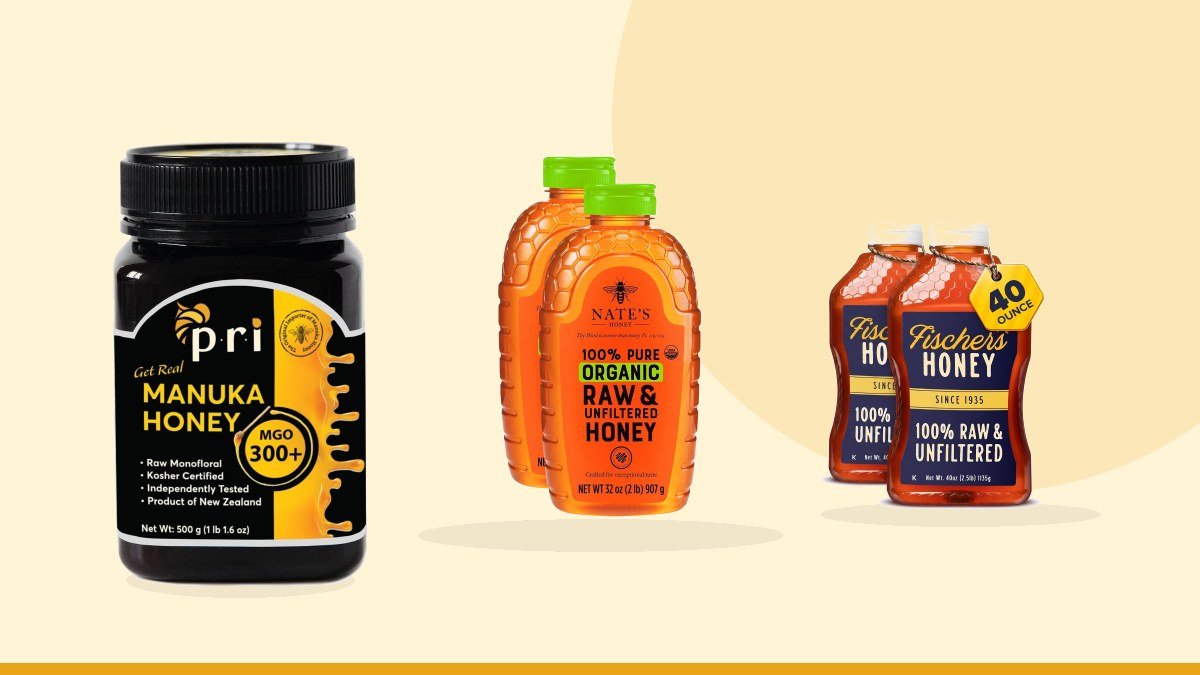
- Best Overall — Nature Nate’s Organic (B0D14Y23XF): USDA Certified Organic, a purity guarantee backed by nearly 38,000 reviews, and outstanding per-ounce value in a 64 oz two-pack.
- Best Premium — P.R.I Manuka Honey MGO 300+ (B07H3BV15M): Independently lab-tested potency, a QR-traceable batch code, and cool-processed handling that sets it apart from every other option here.
- Best Value — Fischer’s Raw Honey 40 oz x2 (B0FBZ9H7FV): Over 4,700 owners rate it highly, the price per ounce is among the lowest in the roundup, and the squeeze bottle design is genuinely practical — though it is not USDA Organic certified.


Prices as of October 31, 2026
The Best Organic Raw Honey: Reviewed
1. Nature Nate's Organic Raw Honey — Best All-Round Value
- Brand
- Nature Nate's
- Rating
- Highlights
- USDA Organic64 oz TotalSqueeze BottleRaw & Unfiltered
Verdict: USDA Certified Organic, raw, unfiltered, and available in a 64 oz two-pack squeeze bottle. Nearly 38,000 owner ratings back up the quality claims, and the per-ounce cost is hard to beat for a certified organic product.
Nature Nate’s is the product most people should buy first when searching for the best organic raw honey. It carries full USDA Organic certification, which means the sourcing has been independently verified — not just claimed on a label. The honey is never pasteurized, pollen is left intact, and no additives or preservatives are used. A two-pack yields 64 oz total, which makes the per-ounce cost very competitive for a certified organic option.
The squeeze bottle format is practical for everyday use: drizzle on oatmeal, stir into coffee, or portion into a recipe without sticky overflow. The brand publishes a purity guarantee and conducts rigorous internal and third-party testing, which is a level of transparency that most smaller brands skip.
The main caveat worth taking seriously: a portion of owners report receiving jars where the honey had already crystallized. This is chemically normal for raw honey and fully reversible with warm water, but it can be inconvenient if you expected a pourable liquid on arrival. Overall, the combination of certification, scale, and track record makes this the most dependable daily-use organic raw honey in the roundup.
What Owners Say
Owners consistently describe this as the best-tasting honey they have tried and highlight its USDA organic certification as a key reason for repeat purchases. The two most common positive themes are clean flavor and strong perceived value for the quantity. On the negative side, crystallization on arrival is the recurring complaint — several owners confirm it is real honey because of this, while others express frustration at receiving a solidified product. No owners report off-flavors or adulteration concerns.
Pros
- USDA Certified Organic with third-party purity testing
- 64 oz two-pack delivers excellent per-ounce value
- Squeeze bottle is practical for daily use
- No additives, preservatives, or pasteurization
- Consistent flavor praised across a very large owner base
Cons
- Some buyers receive crystallized honey on arrival (normal for raw, but inconvenient)
- Sourced from global beekeepers — not a single-origin product
Best for: Everyday household use, families who go through honey quickly, anyone prioritising USDA Organic certification with strong value per ounce Not for: Shoppers wanting a distinctive monofloral flavour or a single-origin story
| Flavor | Bottle |
|---|---|
| Brand Name | Nature Nate's |
| Container Type | Botella |
| Specialty | Gluten Free |
| Country as Labeled | United States |
| Diet Type | Gluten Free |
| Honey Type | Wildflower |
| Package Type Name | Bottle |
| Recommended Uses For Product | Sweetener |
| Allergen Information | Gluten Free |
2. P.R.I Manuka Honey MGO 300+ — Premium Traceable Potency
- Brand
- P.R.I
- Rating
- Highlights
- MGO 300+QR TraceableNew ZealandCool-Processed
Verdict: Independently lab-verified MGO 300+ Manuka honey from New Zealand, cool-processed to retain enzymes, and fully traceable via a QR code on the lid. The most specialized and transparent product in this roundup.
Manuka honey occupies its own category, and P.R.I’s MGO 300+ is the strongest-potency option here. MGO (methylglyoxal) is the compound that distinguishes Manuka from standard raw honey; a 300+ rating means the concentration has been independently tested and confirmed — not self-certified. P.R.I has been importing Manuka to the US market since 1987, and the QR code on every lid links to batch-specific lab results. That level of traceability is rare and genuinely useful for anyone buying Manuka for its specific properties rather than just as a sweetener.
The honey is cool-processed rather than heated, preserving natural enzymes and the characteristics that make Manuka distinct. Owners frequently praise its soothing quality and describe the texture as thick and caramel-like. It works well in tea, drizzled over yogurt, or taken straight from a spoon.
Two honest caveats: pricing puts this firmly in premium territory, and the thick consistency divides owners — some find it luxurious, others find it difficult to dispense cleanly. If your use case is purely sweetening coffee, a more affordable raw honey makes more practical sense here.
What Owners Say
Owners describe this honey as delicious and effective, with sore throat relief and general wellness support mentioned repeatedly as reasons for repurchase. The caramel-like consistency receives praise from many, though a meaningful share of owners flag it as too thick for easy dispensing. Value opinions are split: buyers who use it as a targeted wellness product consider the price justified; those comparing it as a straight sweetener find it expensive relative to the quantity provided.
Pros
- MGO 300+ independently lab-tested and certified
- QR code links to batch-specific test results
- Cool-processed to preserve natural enzymes
- Sourced from New Zealand under strict beekeeping regulations
- Trusted brand with decades of Manuka-specific experience
Cons
- Premium price with no listed retail price — confirm current cost before ordering
- Thick consistency reported as difficult to dispense by some owners
Best for: Wellness-focused buyers who want verified Manuka potency, people using honey for sore throat or gut support, gift buyers Not for: Shoppers wanting a budget everyday sweetener or a large-quantity purchase
| Flavor | MGO 300+ |
|---|---|
| Brand Name | P.R.I |
| Container Type | Jar |
| Specialty | Cool Processed, MGO Certified, Monofloral Manuka Honey, QR Traceable |
| Country as Labeled | New Zealand |
| Diet Type | Kosher |
| Honey Type | Manuka |
| Package Type Name | Jar |
| Recommended Uses For Product | Drizzle over yogurt or oatmeal, Mix into tea or warm beverages, Spread, Sweetener |
| Allergen Information | Allergen-Free |
3. Fischer's Raw Honey 40 oz x2 — Best Bulk Value
- Brand
- Fischer's
- Rating
- Highlights
- 80 oz TotalRaw & UnfilteredSince 1935Squeeze Bottle
Verdict: A family-operated Arkansas honey brand since 1935. Raw, unfiltered, and available in a two-pack of 40 oz squeeze bottles at a very low per-ounce cost. Note: this product is not USDA Organic certified.
Fischer’s delivers the lowest per-ounce cost of any option in this roundup, and over 4,700 owner ratings confirm the quality holds up at scale. The honey is 100% raw, unfiltered, and unpasteurized, with no additives or syrups — the brand is explicit about this. The Arkansas-based operation has been running since 1935 and sources from a network of personally-known beekeepers, which adds a layer of accountability that generic bulk honey brands typically lack.
The 40 oz squeeze bottle is genuinely convenient. Owners praise the rich flavor and consistent use across tea, baking, yogurt, and toast. The dark color and full flavor profile suggest good pollen density — typical of quality unfiltered honey.
One important clarification: Fischer’s does not carry a USDA Organic certification. If organic certification is a hard requirement for you, this is not the right pick regardless of its other qualities. For buyers who prioritize raw and unfiltered over organic labeling, the value proposition is difficult to match. Thickness receives mixed feedback — some owners describe it as nicely medium, others say it pours thinner than expected.
What Owners Say
Owners consistently highlight the rich flavor and excellent price-per-ounce as reasons they return to Fischer’s. Health benefit mentions — particularly anti-inflammatory uses and tea sweetening — appear frequently. Thickness is the main point of division: several owners describe a pleasant medium consistency while others report it runs thinner than a typical raw honey. No owners raise concerns about purity or adulteration.
Pros
- Exceptional price per ounce for 80 oz total quantity
- Raw, unfiltered, and unpasteurized with no additives
- Established brand with verifiable 1935 heritage
- Squeeze bottle format is practical for daily use
- Consistently positive flavor feedback across a large owner base
Cons
- Not USDA Organic certified — a notable gap vs certified alternatives
- Consistency reported as thinner than expected by some owners
Best for: High-volume users, families, bakers, anyone who wants raw unfiltered honey at the lowest practical cost per ounce Not for: Shoppers who require USDA Organic certification or a single-origin flavour experience
| Flavor | Honey |
|---|---|
| Brand Name | Fischer's |
| Container Type | Bottle |
| Specialty | No Added Sugar |
| Country as Labeled | United States |
| Honey Type | Wildflower |
| Package Type Name | Bottle |
| Allergen Information | Allergen-Free |
| Item Form | Liquid |
| Unit Count | 80 Ounce |
4. Heavenly Organics Raw White Honey — Best Creamy Texture
- Brand
- Heavenly Organics
- Rating
- Highlights
- USDA OrganicWild HimalayanCreamy TextureGlyphosate-Free
Verdict: A naturally creamy, white-hued raw honey harvested from wild Himalayan forest beehives. USDA Organic certified, glyphosate-free, and unlike anything from a conventional hive-farm operation.
Heavenly Organics’ white honey is a genuinely unusual product: its pale color and creamy, spreadable texture come from the wild forest flora the bees forage in the Himalayan foothills, not from any processing or whipping. It is never heated — only lightly filtered — which preserves natural enzymes and keeps the texture intact. USDA Organic certification, glyphosate-free status, and Kosher certification all appear on the label.
Owners are enthusiastic about the flavor, with descriptions like “a mouthful of flowers” appearing in the feedback. The smooth, velvety consistency makes it a strong choice for spreading on bread or toast, where a runny honey would soak in and disappear. It also dissolves well in warm drinks without clumping.
The main trade-off is quantity for price: a 12 oz jar puts this in premium-per-ounce territory, and owner opinions on value are genuinely split. Availability fluctuates — the listing sometimes shows limited stock. For a shopper who wants something distinctive and fully certified, it earns its place; for an everyday-volume buyer, the value equation is harder to justify.
What Owners Say
Owners frequently describe this as among the best honey they have tasted, with floral complexity singled out repeatedly. The creamy texture draws consistent praise from those using it as a spread. On the downside, a segment of owners considers the 12 oz jar expensive relative to other options, making value the most common source of hesitation. No owners raise concerns about adulteration or off-flavors.
Pros
- USDA Organic certified and glyphosate-free
- Unique naturally creamy texture from wild Himalayan beehives
- Never heated — lightly filtered only
- Distinctive floral flavor praised by a clear majority of owners
Cons
- Premium per-ounce cost draws mixed value opinions
- 12 oz jar is a small quantity for regular users
- Stock levels can be limited
Best for: Spreading on toast, gifting, buyers who want a distinctive certified organic honey with an unusual texture Not for: High-volume everyday users or shoppers focused on lowest cost per ounce
| Flavor | White Honey |
|---|---|
| Brand Name | Heavenly Organics |
| Container Type | Jar |
| Specialty | Kosher Certified |
| Country as Labeled | United States |
| Diet Type | Kosher |
| Honey Type | Wildflower |
| Package Type Name | Jar |
| Item Form | Cream |
| UPC | 897988000029 |
5. Islamorada Honey — Best Single-Origin Florida Keys Pick
- Brand
- ISLAMORADA HONEY COMPANY
- Rating
- Highlights
- Florida KeysOrganicEco PouchKosher
Verdict: A small-batch raw organic honey from the hardwood hammocks of the Florida Keys. Organic, kosher certified, and packaged in a resealable eco-pouch — a regionally distinctive option at an accessible price.
Islamorada Honey Company sources from the hardwood hammock ecosystems of the Florida Keys, which gives this honey a provenance story that multi-source blends cannot replicate. The honey is organic, unfiltered, and never pasteurized, delivering a floral character that owners describe as refined and smooth rather than assertively sweet. Kosher certification and eco-conscious pouch packaging round out the credentials.
The pouch format is compact and stores flat, which is useful in a crowded pantry. It is less convenient than a squeeze bottle for drizzling, however, and requires more care when dispensing to avoid mess — a real practical consideration for daily use.
With only 78 reviews, this is a newer product with a much thinner feedback base than the category leaders. The reviews that exist are positive, but the sample is small enough that patterns are harder to confirm. At its price point, it is a low-risk way to try something genuinely local and distinctive. If single-origin provenance and eco-packaging matter to you, this is the standout option in the roundup.
What Owners Say
Owners describe the honey as refined and high quality, noting its purity and clean sweetness without being overpowering. The feedback base is small but consistently positive, with no recurring complaints about flavor or purity. No notable negative patterns emerge, though the low review count means conclusions should be held with appropriate caution.
Pros
- Genuine single-origin provenance from Florida Keys hardwood hammocks
- Organic, unfiltered, and never pasteurized
- Kosher certified and eco-conscious packaging
- Accessible price for a certified organic product
Cons
- Pouch format is less convenient for daily drizzling than a squeeze bottle
- Only 78 reviews — limited owner feedback to validate quality consistency
Best for: Shoppers who value single-origin terroir, eco-packaging, and a regionally distinctive organic honey Not for: High-volume daily users or those who need a large established review base for confidence
| Flavor | Hardwood Hammock Floral |
|---|---|
| Brand Name | ISLAMORADA HONEY COMPANY |
| Container Type | Pouch |
| Specialty | Additive Free, Kosher Certified, Organic Honey, Raw Honey, Unfiltered Honey |
| Honey Type | Raw |
| Package Type Name | Pouch |
| Recommended Uses For Product | Allergies, Baking, Cooking, Salad Dressing, Snack, Spread, Sweetener, Tea |
| Item Form | Liquid |
| UPC | 860014226304 |
| Unit Count | 16 Fluid Ounces |
6. Heavenly Organics Acacia Honey — Best for Acacia Lovers
- Brand
- Heavenly Organics
- Rating
- Highlights
- Acacia VarietyWild HimalayanFair TradeUSDA Organic
Verdict: Raw, USDA Organic, Non-GMO, and Fair Trade certified acacia honey from wild Himalayan beehives. Multiple certifications, a delicate fruity flavour profile, and bee-friendly smoke-free harvesting — but opinions on whether it authentically represents acacia are mixed.
Heavenly Organics’ acacia offering carries a more complete certification stack than almost anything else in this roundup: USDA Organic, Non-GMO Project Verified, Fair Trade, and OU Kosher. It is harvested from wild beehives in the Jammu region of the Himalayas using smoke-free methods, which protects the colonies and the forest ecosystem. The honey is raw and lightly filtered, preserving the full enzyme and pollen content.
Acacia honey is typically prized for its delicate, fruity character and light color. Heavenly Organics describes theirs as dark with a mild, tangy finish, which reflects the wild, multi-source nature of the beehives rather than a single controlled acacia grove. This is worth knowing before you buy: the flavor experience may differ from what you expect of a classic acacia honey.
Owner reviews are largely positive about quality, but a visible segment questions whether the flavor and appearance match conventional acacia honey. For shoppers prioritising the certification credentials and ethical sourcing over strict acacia varietal accuracy, this is a strong option. For those who specifically want the classic pale, delicately sweet acacia profile, the mixed feedback is a real caution.
What Owners Say
Owners consistently rate the honey as genuine and high quality, with several describing it as among the best they have tried. Flavor feedback is largely positive but divided: a meaningful portion of buyers note that the honey does not smell or look like the acacia variety they expected, suggesting the wild multi-flora sourcing produces a product closer to a wildflower profile. No concerns about purity or additives appear in the feedback.
Pros
- USDA Organic, Non-GMO Project Verified, and Fair Trade certified
- Smoke-free, bee-friendly wild harvesting
- Raw and lightly filtered to retain enzymes and pollen
- Kosher certified for broad dietary compatibility
Cons
- Some owners report it does not match the expected acacia flavor or appearance
- 12 oz is a small quantity at a premium per-ounce price
- Mixed value opinions given the jar size
Best for: Shoppers who want the most complete organic and ethical certification package, buyers curious about Himalayan wild-harvested honey Not for: Those expecting a classic pale European acacia profile or buyers needing large quantity
| Flavor | Acacia Honey |
|---|---|
| Brand Name | Heavenly Organics |
| Container Type | Jar |
| Specialty | Certified Organic, Gluten |
| Country as Labeled | United States |
| Diet Type | Kosher |
| Honey Type | Acacia |
| Package Type Name | Jar |
| Item Form | Syrup |
| UPC | 897988000098 |
7. Gunter's Buckwheat Honey — Best Bold-Flavour Variety
- Brand
- Gunter's
- Rating
- Highlights
- Buckwheat VarietyU.S. Grade ADeep Dark ColorKosher
Verdict: A deeply dark, molasses-toned buckwheat honey from a US producer. Not USDA Organic certified, but consistently praised for its bold flavor, genuine thickness, and versatility — including soothing nighttime cough relief.
Buckwheat honey is the most flavour-forward variety in this roundup. Gunter’s version is a deep, dark amber with a richness that owners compare to molasses, and it behaves differently in recipes than lighter wildflower honeys — it adds depth rather than just sweetness. Owners regularly use it in coffee, oatmeal, and buckwheat tea, and several specifically mention its effectiveness for nighttime cough relief.
The honey is labeled 100% Natural U.S. Grade A and Kosher, but it does not carry USDA Organic certification. For shoppers where that certification is a non-negotiable, this does not qualify as an organic raw honey pick. That is a straightforward disqualifier worth stating plainly.
Aroma is the other point of division: buckwheat honey has a distinctively strong, earthy scent that some owners find wonderful and others describe as strange. This is normal for the variety — it is not a quality defect — but if you have never tried buckwheat honey before, ordering a small quantity first is a sensible approach. At its price, the risk is low.
What Owners Say
Owners praise the dark color, genuine thickness, and bold flavor, with versatility across beverages and foods mentioned frequently. Cough-soothing properties are a repeated highlight. The aroma divides owners cleanly — some describe it as wonderful and authentic, others find it unusual or off-putting. No concerns about purity or adulteration appear in the feedback.
Pros
- Distinctive bold buckwheat flavor unlike any other option in this roundup
- Genuine thickness praised by the majority of owners
- Budget-friendly entry price
- Kosher certified, US-sourced
Cons
- Not USDA Organic certified — does not meet the organic standard
- Strong, earthy aroma is polarising among first-time buckwheat honey buyers
Best for: Adventurous flavour seekers, buckwheat honey fans, anyone wanting a deep dark honey for baking or cough relief Not for: Shoppers who require USDA Organic certification or those new to buckwheat honey without a plan to try a small amount first
| Flavor | Buckwheat |
|---|---|
| Brand Name | Gunter's |
| Container Type | Bottle |
| Specialty | No Added Sugar |
| Country as Labeled | United States |
| Diet Type | Kosher |
| Honey Type | Buckwheat |
| Package Type Name | Bottle |
| Item Form | Syrup |
| UPC | 786173829401 786173829395 021273210163 |
8. Nate's Louisiana Honey — Budget-Friendly Regional Pick
- Brand
- Nate's Honey
- Rating
- Highlights
- Louisiana SourcedBudget-FriendlyKosherGluten-Free
Verdict: A Louisiana and US-sourced raw honey from the well-known Nature Nate's family of products. Budget-priced, Kosher and gluten-free certified, and consistently tasty — but not USDA Organic certified and gently warmed rather than strictly unprocessed.
Nate’s Louisiana Honey sits at the budget end of the roundup and delivers on taste and everyday convenience. It is sourced from Louisiana and US beekeepers and carries OU Kosher and Gluten-Free certifications. The 16 oz squeeze bottle is practical and easy to use for daily drizzling or cooking.
There are two important caveats for shoppers researching the best organic raw honey. First, this product is not USDA Organic certified. Second, the brand describes it as “gently warmed and strained” — which technically differs from a strictly raw, never-heated honey. These distinctions matter if you are buying specifically for enzyme content or organic verification.
Owners enjoy the flavor and consistently point to good value as a reason to repurchase. Crystallization is the most common complaint — several buyers report it sets quickly. As noted above for all raw honey, crystallization is a natural process, but the frequency of mentions here is slightly higher than in other products in this group. For a budget everyday honey where organic certification is not a requirement, this is a solid, dependable choice.
What Owners Say
Owners rate the taste positively and frequently cite value for money as the purchase driver. Crystallization is the most consistent complaint, with several buyers noting that it sets more quickly than expected. No concerns about flavor authenticity or purity appear in the feedback. Overall satisfaction is positive but tempered by the crystallization issue for a portion of buyers.
Pros
- Budget-friendly price point for a 16 oz bottle
- Good taste and everyday versatility praised by owners
- Kosher and gluten-free certified
- Trusted brand with a clear purity commitment
Cons
- Not USDA Organic certified
- Described as 'gently warmed' — not strictly raw by the strictest definition
- Quicker-than-expected crystallization reported by multiple owners
Best for: Budget-conscious shoppers wanting a reliable everyday honey who do not require organic certification Not for: Shoppers prioritising USDA Organic status, strict raw honey, or those who find frequent crystallization inconvenient
| Flavor | Bottle |
|---|---|
| Brand Name | Nate's Honey |
| Container Type | Bottle |
| Specialty | Kosher Certified |
| Country as Labeled | United States |
| Diet Type | Gluten Free, Kosher |
| Honey Type | Blended |
| Package Type Name | Bottle |
| Recommended Uses For Product | Sweetener |
| Allergen Information | Gluten Free |
How They Compare
Four of the eight products carry verified USDA Organic certification: Nature Nate’s Organic, Heavenly Organics White Honey, Heavenly Organics Acacia, and Islamorada. If that certification is your baseline requirement, those are the only four that qualify. Fischer’s, Gunter’s Buckwheat, and Nate’s Louisiana are raw and unfiltered but do not hold organic certification. P.R.I Manuka carries New Zealand beekeeping standards and MGO certification, which is its own distinct verification system.
On per-ounce value, Fischer’s and Nature Nate’s Organic lead by a significant margin thanks to their large multi-pack formats. Specialty jars (Heavenly Organics, Islamorada, Acacia) sit in premium per-ounce territory. P.R.I Manuka operates in its own premium category where per-ounce comparison to general raw honey is less meaningful. Flavor variety also separates the field cleanly: Manuka, buckwheat, acacia, and white honey are distinct enough that they serve different use cases rather than competing directly with a standard wildflower blend.
What to Look for in Organic Raw Honey
Organic Certification
USDA Organic certification is the most verifiable indicator that honey was sourced from bees foraging pesticide-free areas. Without it, 'natural' or 'pure' claims are unverified marketing language.
Look for: USDA Organic seal on the label, or equivalent certified body for international products (e.g., New Zealand's Manuka standards)
Avoid: Products that use 'organic' language in the product name or description but list no certifying body — a common labelling shortcut
Raw vs Processed
Raw honey is never pasteurized, preserving natural enzymes, pollen, and antioxidants. Some brands 'gently warm' honey to improve flow, which technically alters the raw profile.
Look for: Explicit 'unpasteurized' or 'never heated' language; unfiltered pollen content mentioned
Avoid: Labels that say 'gently warmed' or 'lightly processed' if strictly raw enzyme content is your purchase reason
Honey Variety and Flavour Profile
Wildflower blends are mild and versatile. Buckwheat is bold and earthy. Acacia is delicate and fruity. Manuka is medicinal-tasting with verified potency. White honey is creamy and floral. Choosing the right variety affects enjoyment significantly.
Look for: Clear variety labelling (monofloral vs blended), flavour description that matches your intended use
Avoid: Buying a distinctive variety (acacia, buckwheat, Manuka) without tasting it first if you are unfamiliar — start with a small jar
Packaging and Quantity Value
Price per jar is not price per ounce. A multi-pack squeeze bottle can cost dramatically less per ounce than a specialty small jar. Packaging format also determines daily usability.
Look for: Per-ounce cost comparison across options; squeeze bottle format for daily use; jar format for spreading or gifting
Avoid: Judging value by jar price alone — always calculate cost per ounce before comparing products
Crystallization Behaviour
Real raw honey crystallizes over time. Faster crystallization is not a defect; it often indicates high glucose content and confirms no liquid adulterants were added. It reverses easily with gentle warmth.
Look for: Brands that acknowledge crystallization as natural and provide simple instructions to reliquefy
Avoid: Treating a crystallized jar as spoiled — it is a quality indicator, not a problem
Organic Raw Honey Buying Guide
Raw vs Organic: Understand the Difference First
This is the single most important thing to grasp before buying. “Raw” means the honey was never pasteurized — enzymes, pollen, and natural antioxidants are left intact. “Organic” means the sourcing has been independently certified to confirm that bees foraged areas free from pesticides and synthetic chemicals. These are entirely separate standards. A honey can be raw without being organic (Fischer’s, Gunter’s, Nate’s Louisiana in this roundup) or organic without being truly raw in the strictest sense. The best organic raw honey combines both properties, and the label should explicitly state both certifications rather than just implying them. If a brand uses “organic” in its product name but lists no certifying body, treat that with scepticism.
How to Read Honey Certifications
USDA Organic is the most commonly recognised mark for honey sold in the United States, and it requires independent auditing of the entire supply chain. Non-GMO Project Verification adds a secondary check on genetic modification in the bees’ forage environment. Fair Trade certification addresses the ethical treatment and compensation of beekeepers — particularly relevant for internationally sourced products like the Himalayan options in this guide. Manuka honey operates under its own distinct verification system: MGO (methylglyoxal) ratings are independently lab-tested to confirm bioactive potency. A product carrying all of these marks — like Heavenly Organics Acacia — has a more thorough accountability trail than one carrying only a single label.
Choosing the Right Honey Variety for Your Use Case
Wildflower blends are the practical all-rounders: mild, versatile, and well-suited to coffee, baking, and everyday sweetening. If that is your use case, Nature Nate’s Organic or Fischer’s will serve you well at the best value. White honey (Heavenly Organics) has a creamy texture that makes it distinctly better for spreading than drizzling. Acacia honey offers a delicate, fruity character that suits delicate teas and light yogurt toppings. Buckwheat honey (Gunter’s) is a bold flavour designed for those who want depth in baking and sauces — or a strong cough-soothing option. Manuka (P.R.I) is the speciality wellness pick where verified MGO potency is the point. Buy according to use, not just certification.
Packaging: Practical Differences That Matter Daily
Squeeze bottles (Fischer’s, Nature Nate’s Organic, Nate’s Louisiana) are consistently the most convenient for everyday drizzling and portioning. They prevent the sticky mess of wide-mouth jar lids and allow you to control the flow. Wide-mouth jars (Heavenly Organics, P.R.I Manuka) suit spreading, spooning, or measuring into recipes, but require a separate spoon or honey dipper. The eco-pouch (Islamorada) is compact and resealable but less ergonomic for frequent daily use. For a household going through honey regularly, the squeeze bottle format is the practical winner.
Getting the Best Value Per Ounce
The price difference between a specialty 12 oz jar and a multi-pack 80 oz option can be dramatic on a per-ounce basis. Multi-pack squeeze bottles from Nature Nate’s Organic and Fischer’s represent the lowest cost per ounce among all products here — and Nature Nate’s also carries full USDA Organic certification, which makes it exceptional value in the certified segment. Specialty varieties (Manuka, white, acacia) cost significantly more per ounce, but serve distinct purposes that justify the premium for the right buyer. The mistake is paying specialty-jar pricing for a standard wildflower blend when a multi-pack option would deliver the same thing at a fraction of the per-ounce cost.
How We Picked
Each product was evaluated by cross-referencing stated specifications and brand claims against owner feedback patterns from verified purchase reviews. Where certifications are claimed (USDA Organic, MGO rating, Non-GMO, Fair Trade), this was checked against the product listing details rather than taken from the product name alone. Owner feedback was analysed for recurring themes — both positive and negative — to distinguish genuine quality patterns from individual outliers.
Rankings prioritise USDA Organic certification and sourcing transparency first, then owner satisfaction at scale, then per-ounce value and packaging practicality. Specialty products (Manuka, acacia, buckwheat, white honey) are ranked within the context of their own use case rather than compared directly to everyday wildflower blends. No physical testing was conducted; this guide reflects careful spec and feedback analysis.
Frequently Asked Questions
What makes a honey both raw and organic?
Raw honey is never pasteurized, keeping its natural enzymes, pollen, and antioxidants intact. Organic honey is sourced from bees that forage pesticide-free areas, verified by an independent certifying body such as the USDA. A honey qualifies as both only when it is unpasteurized and holds a valid organic certification. Several popular raw honeys do not carry USDA Organic status, so checking the label carefully matters.
Why has my raw honey turned solid or grainy?
Crystallization is a natural chemical process in real raw honey, caused by glucose separating from water over time. It does not mean the honey has spoiled or gone bad — in fact, it is a reliable indicator that no liquid adulterants like corn syrup were added. To return it to a pourable state, place the jar in warm (not boiling) water for a few minutes. Never microwave honey, as this destroys the enzymes that make raw honey valuable.
Is Manuka honey worth the premium over standard raw honey?
It depends entirely on why you are buying honey. If you want an everyday sweetener, standard raw organic wildflower honey delivers very similar nutritional properties at a fraction of the cost. Manuka honey is specifically valued for its verified MGO (methylglyoxal) content, which gives it properties not found in standard honey. Look for an independently certified MGO rating — such as P.R.I’s MGO 300+ — rather than unverified Manuka claims.
Does organic certification guarantee the honey is from local bees?
No. USDA Organic certification verifies the sourcing standards and supply chain integrity, but the bees and hives can be located anywhere in the world — including India, New Zealand, or South America. Some products in this roundup are USDA Organic certified but sourced internationally. If local or regional provenance matters to you (for supporting local beekeepers or potential seasonal allergy considerations), look specifically for single-origin labelling alongside the organic certification.
How should I store raw organic honey to preserve its quality?
Store raw honey at room temperature, away from direct sunlight and heat sources. Refrigeration is unnecessary and actually accelerates crystallization. A sealed squeeze bottle or lidded jar stored in a pantry or cupboard will keep raw honey stable for an extended period — honey does not technically expire due to its low moisture content and natural antimicrobial properties. The main enemies are heat, moisture, and prolonged sun exposure, all of which degrade enzyme content over time.
Final Thoughts
Nature Nate's Organic is the clearest recommendation for most shoppers: USDA certified organic, raw, unfiltered, and available in a large quantity at a competitive per-ounce cost. If you want a premium wellness honey with verified potency, P.R.I Manuka MGO 300+ is the standout. For pure per-ounce value without the organic requirement, Fischer's is difficult to beat. Whichever you choose, buy based on certification, variety, and real per-ounce cost — not jar price or label language.
- Check for a named certifying body before trusting any 'organic' claim — label language alone is not certification.
- Calculate cost per ounce rather than cost per jar; multi-packs from certified brands often beat specialty jars on both price and quality.
- Match the honey variety to your actual use case: wildflower for everyday sweetening, Manuka for wellness, buckwheat for bold baking, white or acacia for something distinctly different.
Buying the best organic raw honey is simpler once you separate certification from marketing. Three products stand clear: Nature Nate’s Organic for daily certified use, P.R.I Manuka for verified wellness applications, and Fischer’s for high-volume value without the organic requirement. The rest of the field serves specific flavor preferences or regional interests worth exploring once you have a baseline jar you trust. Ignore the packaging hype, calculate per-ounce cost, and verify the certification body — those three habits will serve you far better than any claim on a label.