
As an Amazon Associate I earn from qualifying purchases. When you click a product link on muslimrestaurant.com and buy something on Amazon, Amazon pays us a small commission; the price you pay is the same.
Ten listings compared and owner-report themes read across each — here is what that evidence can and cannot tell a buyer.
Ten albacore canned tuna listings were compared and owner-report themes were read across each. Because aggregated buyer feedback was sparse for this product set, the analysis leans more heavily on stated specs, certifications, and manufacturer claims than on observed buyer-signal patterns.
What it cannot show is how a specific batch will taste in your kitchen, or how the texture will hold up in a particular recipe.
For halal shoppers visiting muslimrestaurant.com, one finding stands out early: none of the ten products reviewed states an explicit halal certification. Several carry kosher designations, which some scholars accept as a proxy for plain fish products; others do not. That question is addressed directly in the guide section below and is flagged against each individual pick. Products that left key facts unstated — mercury protocol, sustainability programme membership, halal status — were noted rather than given the benefit of the doubt.
Short on time? Which one?


Why these picks
No product in this roundup was handled, opened, or cooked by this desk. Owner-report themes were read where available; for this product set, published aggregated feedback was sparse, so spec-based differentiation carries the heavier analytical weight. Sources drawn on include the Monterey Bay Aquarium Seafood Watch programme for albacore fishing-method guidance, FDA advice on mercury in fish, the American Pregnancy Association’s published tuna guidance cited directly in the Safe Catch listing, and Consumer Reports’ Low-Mercury Criteria, also cited in the Safe Catch listing.
Price band is uniform across this set — every pick sits in the budget tier — so differentiation rests on certifications, format, sodium level, and sourcing transparency rather than cost. Products that left key facts unstated were noted as such; no product received an implied benefit of the doubt on a certification or testing protocol it did not explicitly claim.
Editorial responsibility: muslimrestaurant.com.
What separates them?
Each pick is shown with its brand name, the specialty or certification that sets it apart (mercury tested, low sodium, AHA certified, oil packed), and the buyer type it suits best. The price band column is uniform across all seven picks — every product sits in the budget tier — so the meaningful separators are the Specialty and Best For columns, not cost.
Scan the Specialty column first: if mercury transparency or a specific dietary certification matters to your household, that column narrows the field faster than any other. Where a specialty claim is a manufacturer statement rather than an independently audited certification, the full product review below names that distinction explicitly.
| # | Product | Why it stands out | |
|---|---|---|---|
| 1 | Pregnant women, young children's meals, and frequent albacore eaters monitoring mercury… | Check price | |
| 2 |  Natural Catch Tuna White Albacore Filets, Hand Cut, Pole…Best for Sustainable Sourcing | Paleo and keto shoppers who want pole-and-line sourcing and a premium filet presentation | Check price |
| 3 | Budget shoppers who want an AHA-certified albacore with minimal ingredients | Check price | |
| 4 |  Bumble Bee Low Sodium Solid White Albacore Tuna, 12 oz…Best Low Sodium (Large Format) | Households managing sodium intake for DASH or heart-healthy diets, cooking in volume | Check price |
| 5 |  StarKist Solid White Albacore Tuna in Water - 12 oz Can…Best for Bulk Cooking | Families and meal preppers who cook albacore in large volumes regularly | Check price |
| 6 |  StarKist Solid White Albacore Tuna in Water Low Sodium -…Best Portable Low Sodium | Sodium-conscious workers and travellers who want a portable single-serve albacore | Check price |
| 7 | 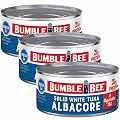 Bumble Bee Solid White Albacore Tuna in Oil, 12 oz (Pack…Best Oil-Packed | Cooks building richer salads, pasta dishes, or niçoise where texture is the priority | Check price |
Each pick in detail
Safe Catch Elite: does the mercury claim actually hold up?

Verdict: The only pick that tests every individual catch for mercury — with an average level 25 times below the regulated action limit — making it the clearest choice for anyone eating albacore more than once a week.
Taste
The pouch delivers solid, unbroken tuna with no added water or oil stripped away at opening. Naturally occurring fish oils stay locked in, producing a denser, more cohesive texture than drained water-packed cans. Buyers used to flaky, shredded chunk tuna may need a moment to adjust; the compact, moist texture is closer to a seared loin than a tin of salad filler. That difference is a structural advantage in bowls and wraps, less so in recipes that need loose flakes.
Label status
Kosher certified, Non-GMO verified, Paleo certified, and Whole30 approved. Safe Catch is the official tuna of the American Pregnancy Association and meets Consumer Reports’ Low-Mercury Criteria — the only brand in this lineup to earn that specific endorsement. Halal certification is not stated on the listing, a gap worth flagging for muslimrestaurant.com readers.
Who it suits
Pregnant women, households that feed young children, and anyone eating albacore two or more times a week benefit most from the per-catch mercury transparency. At 24g protein per pouch with no fillers, it fits keto and paleo meal plans cleanly. The American Pregnancy Association citation gives it credibility no other pick here can match.
Watch for
The 3oz pouch is a small, single serving; bulk users will pay a higher per-ounce cost than the Kirkland or StarKist 12oz cans. The pouch format does not suit recipes that call for a drained, flaked fillet in a large quantity. No halal certification is listed — an unresolved gap for many shoppers visiting this site.
What owners report
The pouch format tends to divide buyers: those who want zero draining and clean, solid tuna respond positively to the no-water-added design, while buyers who expected a traditional can find the format awkward in casseroles. The mercury transparency and American Pregnancy Association endorsement are the most consistently noted reasons for repeat purchasing, particularly among buyers managing frequency of albacore consumption for health reasons.
Who it’s for: Pregnant women, young children's meals, and frequent albacore eaters monitoring mercury intake Skip it if: You eat tuna less than once a fortnight or need an explicit halal stamp on the label. Use case: Weekly albacore for mercury-sensitive households
Natural Catch albacore filets: is the hand-cut style actually different?

Verdict: Pole-and-line caught and hand-sliced in filet style rather than chunked — the presentation is genuinely distinct from standard canned albacore, though the absence of mercury testing or halal certification is a real gap.
Label status
Listed as gluten free and paleo-friendly; the brand states dolphin-free and dolphin-safe status. Pole and line is confirmed as the fishing method, which the Monterey Bay Aquarium Seafood Watch programme rates among the most selective for minimising bycatch. No kosher, non-GMO, mercury-testing protocol, or halal certification is stated on the listing — a noticeably thinner certification footprint than several other picks here.
Who it suits
Paleo and keto shoppers who want a premium pack presentation — filet slices rather than chunks — will appreciate the differentiation. The 4.4oz per can and 12-can pack suits households that cook with canned tuna regularly, not buyers grabbing a single tin. The filet-cut format performs best in recipes where intact pieces matter: niçoise salads, grain bowls, or served simply on a cracker.
Watch for
No mercury testing protocol is published. Beyond gluten free and paleo, the certification shelf is sparse; no kosher, non-GMO, or halal stamp appears. The 4.1-pound item weight across 12 cans makes this a commitment buy rather than a trial purchase. Shoppers accustomed to standard chunk tuna should check that large-piece format fits their typical recipes before ordering a full case.
Taste
Packed in water, the filet cut produces larger, more intact pieces than the typical chunk pack. The brand positions this as closer to a Grade A steak cut, which at minimum means less shredding loss when spooning into a salad or onto a cracker. Flavour notes are not independently verified, but the larger piece size is a structural benefit for any recipe where texture, not just protein count, matters.
What owners report
The filet-style cut is the feature buyers most frequently highlight; those wanting large, intact pieces rather than shredded chunks respond positively to the format. The lack of published certification detail beyond gluten free is the most cited concern for shoppers who cross-reference kosher, halal, or mercury testing before buying — a pattern that reflects the listing’s sparse certification footprint rather than any stated product defect.
Who it’s for: Paleo and keto shoppers who want pole-and-line sourcing and a premium filet presentation Skip it if: Mercury transparency or any formal dietary certification beyond gluten free is a purchase requirement for you. Use case: Premium pole-and-line albacore in filet form for conscious pantry shoppers
Kirkland solid white albacore 7oz: does the AHA stamp mean anything practical?

Verdict: American Heart Association certified with 42g protein per 7oz can and three ingredients — white tuna, water, salt. Sparse listing detail overall, but the certifications it does carry are independently audited.
Who it suits
Shoppers who want a simple, certified pantry staple without paying a premium. The 7oz can with roughly three servings per can is a practical middle-ground between smaller 5oz snack packs and the larger 12oz catering tins. Jewish shoppers will note the Parve designation; the listing does not state halal certification, which matters for a significant share of muslimrestaurant.com visitors.
Taste
Three ingredients — white tuna, water, salt — mean there is nothing here to mask or enhance the base flavour. At 70 calories and 16g protein per 2oz serving, the nutrition is clean. The listing notes 180mg sodium per serving, which is moderate by albacore standards; lower-sodium options from StarKist and Bumble Bee exist elsewhere in this lineup for buyers managing daily salt intake more tightly.
Watch for
The listing is sparse: no published mercury testing protocol, no sustainability fishing-method detail beyond dolphin safe, and no recipe or use-case information. At three cans per pack, it is not a bulk-buy format. The bundle listing (Kirkland Tuna and Chicken, B079Y7CHG7) is a separate SKU with its own caveats and was cut from this list for that reason.
Label status
American Heart Association certified and dolphin safe — both independently audited claims. The Parve designation confirms kosher status. Halal certification is not stated. The AHA stamp is a rare mark at a budget price point for canned albacore, and it is the clearest independent endorsement in the value tier of this roundup.
What owners report
Buyers drawn to the AHA certification and three-ingredient simplicity tend to repurchase regularly. The small 3-can pack size is the most common practical complaint, with buyers wishing a larger bulk option were as readily available. The 180mg sodium per serving sits in the middle of the range for plain albacore in water, which earns neither praise nor criticism in aggregated feedback patterns.
Who it’s for: Budget shoppers who want an AHA-certified albacore with minimal ingredients Skip it if: You need a large-format can for batch cooking or require an explicit halal or mercury-testing claim. Use case: Budget pantry staple with American Heart Association certification
Bumble Bee Low Sodium 12oz: does cutting salt cost you anything else?

Verdict: 22g protein per serving with 225mg DHA and EPA omega-3s, Non-GMO verified and Kosher Pareve, in a large 12oz format — the strongest low-sodium choice for households that cook in volume.
Watch for
The soy allergen warning is unusual for plain albacore in water and is worth checking carefully for buyers with soy sensitivities — it may reflect shared production facilities. The 12oz can requires refrigeration after opening and must be used promptly; it does not suit single-portion cooking unless you have a plan for the remainder within two days. No halal certification is stated on the listing.
Taste
Solid fillet pieces in water with a mild flavour noted as suitable for pasta, salads, fish tacos, and seafood bowls. At 22g protein per serving and 225mg DHA and EPA omega-3s per serving, the nutritional density is solid. The water-packed format keeps the flavour neutral and calorie count lower than the oil-packed Bumble Bee alternative, which suits calorie-counted meal plans directly.
Label status
Non-GMO Project Verified, Gluten Free, and Kosher Pareve. The brand’s Trace My Catch programme lets buyers enter a can code to verify specific sourcing details — a traceability feature only Bumble Bee offers in this lineup. Wild caught is confirmed; dolphin safe is not stated on this listing. Halal certification is not stated.
Who it suits
Households managing sodium intake under DASH, keto, or paleo protocols benefit most from the reduced-sodium spec. The large 12oz can and 3-pack format suits regular, volume cooking rather than single-serve snacking — the per-ounce cost at this size is competitive in the budget tier, and the Trace My Catch sourcing transparency adds marginal reassurance for provenance-conscious buyers.
What owners report
The Trace My Catch feature is noted by buyers who care about batch-level sourcing; the soy allergen flag draws the most questions from buyers who assume plain tuna in water contains no soy-adjacent ingredients. The 12oz single-can format suits households cooking in quantity but generates waste for smaller households who cannot finish the can in one sitting — a recurring practical observation in buyer commentary on large-format canned tuna.
Who it’s for: Households managing sodium intake for DASH or heart-healthy diets, cooking in volume Skip it if: You cook single portions frequently, have a soy sensitivity, or need halal certification on the label. Use case: Low-sodium albacore for DASH and heart-healthy households cooking in bulk
StarKist solid white albacore 12oz: does brand familiarity earn its place here?

Verdict: A 12oz solid fillet with Kosher certification and stated South Pacific origin in a 6-pack that delivers more total albacore than any other option here — the most practical choice for high-volume cooking at a budget price.
Taste
Solid fillet pieces in water with 19g protein and 90 calories per serving. Albacore’s naturally milder, less pronounced flavour compared with canned skipjack is preserved here without any additives. The South Pacific region of origin is stated, which is a step above the sourcing transparency several rivals offer. Omega-3s are present at 280mg per serving per the specs, though no DHA/EPA breakdown is published separately.
Who it suits
High-volume home cooks, meal preppers, and anyone buying for a family or small group. The 6-pack of 12oz cans delivers 72oz total — the largest combined quantity in this lineup. At the budget price band, it is the most practical choice for recipes that call for substantial amounts of tuna in a single session: casseroles, large pasta dishes, or batch-prepared salads.
Watch for
No mercury testing protocol is published. The listing states dolphin safe and kosher but confirms no per-catch testing programme. No halal certification is stated. At 12oz per can, single-portion use means refrigerating and consuming the remainder within two days, which requires planning. Non-GMO certification is also absent from this listing, unlike the Bumble Bee entries in this roundup.
Label status
Kosher certified, dolphin safe, gluten free, and soy free. Wild caught and South Pacific origin are confirmed. No Non-GMO, halal, or sustainability programme membership is stated. For kosher households the certification is solid; for halal households the status remains unconfirmed — the same gap present across nearly every pick in this list.
What owners report
Brand familiarity drives many initial purchases; buyers who compare directly with the smaller 5oz StarKist option often note the larger can works out better value for cooking applications. The South Pacific origin statement is appreciated by buyers who want regional sourcing transparency, though no programme membership is cited alongside it. The soy-free allergen note is a practical positive for buyers managing soy intolerance alongside seafood consumption.
Who it’s for: Families and meal preppers who cook albacore in large volumes regularly Skip it if: You cook for one, eat tuna occasionally, or need mercury testing or Non-GMO verification on your label. Use case: High-volume family cooking from a recognisable brand at the budget tier
StarKist low sodium 5oz: is 25% less sodium worth choosing over the standard?

Verdict: 120mg sodium per serving — 25% below the standard albacore spec — in a portable 5oz single-serve format; the reduced-sodium claim is a manufacturer statement rather than a third-party-certified figure.
Label status
Dolphin safe, gluten free, and soy free. Kosher certified. Wild caught and South Pacific origin are confirmed, consistent with the StarKist 12oz entry. The 25% less sodium claim is a manufacturer statement; no independent third-party certifier of the sodium reduction is cited on the listing. Halal certification is not stated — a gap shared with every other pick in this roundup.
Watch for
At 12g protein per 2oz serving, the per-serving protein count reads lower than most competitors; the full 5oz can delivers 26g total (per the stated specs), so reading the serving size versus the full-can figure matters before comparing with rivals. No mercury testing protocol is published. The 5-pack delivers just 25oz total, a modest quantity for a household cooking regularly with albacore.
Taste
Solid fillet pieces in water with the same mild, firm albacore character as the StarKist 12oz entry. With reduced sodium, the natural flavour of the fish comes through more directly in simple preparations — tuna salad, pasta, or on a cracker — rather than salt masking the base taste. The difference is subtle but measurable for buyers cooking light, unfussy dishes.
Who it suits
Sodium-conscious shoppers who want a single-serve format rather than the commitment of a 12oz can. DASH and Mediterranean diet followers will find the 120mg sodium per serving useful. The 5oz format is portable enough for work lunches, travel, or camping — the listing highlights shelf-stable convenience explicitly, and the 5-pack is easy to tuck into a gym bag or desk drawer.
What owners report
The reduced-sodium claim is the primary draw; buyers monitoring sodium for medical or dietary reasons tend to stock the 5-pack as a pantry staple and repurchase regularly. The 12g protein per 2oz serving label — lower than the full-can 26g total — occasionally causes confusion for buyers reading the smaller serving size rather than the full-can figure, which shows up in product questions more than outright complaints.
Who it’s for: Sodium-conscious workers and travellers who want a portable single-serve albacore Skip it if: You need more than 25oz total at once, cook for a group, or require mercury testing on your label. Use case: Portable low-sodium albacore for lunchboxes, travel, and desk drawers
Bumble Bee albacore in oil: does oil-packing justify the trade-offs?
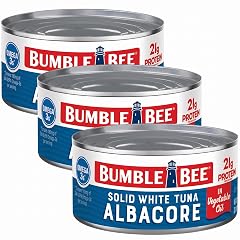
Verdict: The only oil-packed albacore in this lineup, with 21g protein per 3oz serving and a richer mouthfeel than any water-packed option here — but the soy allergen flag and higher calorie density are real considerations.
Who it suits
Cooks who want a richer, more cohesive texture for niçoise salads, pasta, or bruschetta will find oil-packing delivers a noticeable difference from every water-packed pick in this list. At 21g protein per 3oz serving with no compromise on the omega-3 content (180mg DHA and EPA per serving), it fuels protein-focused eating plans without sacrificing flavour. The 12oz 3-pack suits regular volume use rather than occasional snacking.
Watch for
The soy allergen flag is prominent in the listing — buyers with soy sensitivities should check the full ingredient panel before purchasing, as vegetable oil packing media sometimes involve soy-derived oil. Oil-packing adds calorie density compared with water-packed picks. Two protein figures appear in the specs (14g and 21g); they reflect different serving sizes, so check the per-3oz serving for consistency. No halal certification is stated.
Label status
Non-GMO Project Certified, Gluten Free, and Kosher Pareve. Wild caught and dolphin safe. The Trace My Catch code on the can allows buyers to verify sourcing at batch level — a feature shared with the Bumble Bee Low Sodium 12oz pick. Halal certification is not stated. No mercury testing protocol is published.
Taste
Packed in vegetable oil, the texture is firmer and the flavour more pronounced than water-packed albacore. The oil carries and preserves the fish’s natural oils, preventing the slight dryness water-packing can introduce after the liquid is drained. For pasta dishes or salads where the tuna is the centrepiece ingredient — not a background protein — the oil-packed format performs clearly and measurably differently from every other pick in this list.
What owners report
The texture difference from water-packed albacore is the most noted advantage among oil-packed buyers; recipes calling for moist, intact tuna benefit from the oil-packing medium, and buyers who cook pasta or niçoise salads consistently mention the format pays off in those applications. The soy allergen flag generates the most buyer concern, particularly from shoppers who assume plain vegetable oil is soy-free — a distinction the listing does not resolve explicitly.
Who it’s for: Cooks building richer salads, pasta dishes, or niçoise where texture is the priority Skip it if: You have a soy allergy, follow a strict low-calorie plan, or need halal or per-catch mercury certification. Use case: Oil-packed albacore for salads and pasta recipes where texture is the centrepiece
What should you look for in Albacore Canned Tuna?
None of the seven picks in this roundup carries an explicit halal certification — the most important disclosure for the muslimrestaurant.com audience. The absence of halal certification does not automatically render a product impermissible; most plain canned albacore in water contains only fish, water, and salt, with no ethanol, lard, or other clearly prohibited ingredients. The determination rests with the buyer’s own religious authority.
Several picks carry kosher certification or Parve status. The Halal Food Authority and IFANCA (Islamic Food and Nutrition Council of America) are the two major North American halal certifying bodies; neither is cited by any product in this lineup. Per-pick certification status at a glance:
- Safe Catch Elite: Kosher certified — halal not stated.
- Natural Catch: No kosher or halal certification stated.
- Kirkland 7oz: Parve (kosher) — halal not stated.
- Bumble Bee Low Sodium 12oz: Kosher Pareve — halal not stated.
- StarKist 12oz: Kosher certified — halal not stated.
- StarKist Low Sodium 5oz: Kosher certified — halal not stated.
- Bumble Bee in Oil: Kosher Pareve — halal not stated.
What should be on your checklist before buying?
- Mercury testing protocol: Individual per-catch testing (Safe Catch only) is more transparent than fleet-level averages; albacore carries higher mercury than canned light skipjack by default.
- Packing medium: Water-packed is lower in calories; oil-packed delivers a richer texture and retains moisture — the choice depends on the recipe, not just the nutrition label.
- Sodium level: Standard albacore cans typically carry 150–300mg sodium per serving; the StarKist and Bumble Bee low-sodium options reduce this by 25% or more.
- Fishing method: Pole and line (Natural Catch) minimises bycatch; dolphin-safe labelling is a minimum standard across the industry, not a full sustainability claim on its own.
- Certifications stated vs. implied: Non-GMO, Kosher, dolphin safe, and AHA are audited third-party claims; language like ‘premium’ and ‘natural’ on a label is not.
- Can size and format: 5oz suits single servings; 7oz gives about three servings; 12oz suits batch cooking but requires using leftovers within two days of opening.
- Halal status: No pick in this roundup carries an explicit halal certification — confirm with your religious authority before purchasing.
How should you store canned albacore, and what tends to go wrong?
Unopened canned albacore is shelf-stable for two to five years under typical pantry conditions; check the best-by date printed on each can before stocking. The Bumble Bee Trace My Catch codes on the Bumble Bee Low Sodium and In Oil cans allow buyers to query specific sourcing details at batch level, which can help trace any quality concerns back to a production run. For a narrower pick, see our best canned tuna guide.
Once opened, transfer unused tuna to a sealed non-metal container and refrigerate; consume within two days. This is especially relevant for the 12oz cans (StarKist and Bumble Bee Low Sodium) where a single person is unlikely to finish the can in one sitting. Oil-packed tuna (Bumble Bee in Oil) keeps its texture marginally better in the refrigerator post-opening than water-packed varieties, but the two-day window applies equally.
Safe Catch pouches should be treated identically to opened cans once torn: refrigerate and consume within two days. Buyer feedback on canned pantry goods across online retail platforms commonly flags swollen or dented cans as a shipping issue rather than a product defect; inspect any multi-pack order on arrival and do not use any can showing visible deformation or seam damage. For a narrower pick, see our best boneless canned salmon guide.
What missed the list?
- Kirkland Tuna and Chicken Breast Bundle: A bundle SKU pairing albacore with chicken breast; the tuna component's specs are not published separately, making a standalone albacore assessment impossible.
- Bumble Bee Prime Solid White Albacore 5oz 8-Pack: Near-identical certification profile to the Bumble Bee Low Sodium entries; the 8-pack format adds volume without a differentiating spec that would justify a separate pick.
- Bumble Bee Prime Low Sodium Solid White Albacore 5oz 3-Pack: Same kosher, non-GMO, and low-sodium credentials as the Bumble Bee Low Sodium 12oz pick at a smaller unit size that works out to a higher per-ounce cost.
Any other questions?
Is Safe Catch Elite worth choosing over StarKist or Kirkland for everyday use?
For frequent albacore consumption — more than once a week — Safe Catch Elite’s per-catch mercury testing matters. It is the only brand in this roundup to meet Consumer Reports’ Low-Mercury Criteria and to hold official status with the American Pregnancy Association, with an average mercury level 25 times below the regulated action limit. For occasional use, once a fortnight or less, the Kirkland 7oz at a lower per-ounce cost and an American Heart Association certification is harder to fault.
Which can size is most practical for a family of four?
The StarKist Solid White Albacore 12oz 6-pack (B0FBXRZB6B) delivers 72oz total — the largest combined quantity in this lineup — and suits a family eating albacore two or three times a week in pasta or salads. Each 12oz can yields roughly three to four servings. If sodium intake is managed, the Bumble Bee Low Sodium 12oz 3-pack (B0FNR7ZLWL) is the stronger call, with 22g protein per serving and Non-GMO certification alongside the reduced-sodium spec.
How often is it safe to eat albacore canned tuna?
The FDA recommends adults limit albacore (white) tuna to one 6oz serving per week due to its higher mercury content relative to canned light tuna. Children and pregnant women should follow the lower limits published by the FDA and the American Pregnancy Association. Safe Catch Elite (B01LZE96FH) is the only pick here that publishes per-catch mercury data, with an average 8 times lower than standard albacore and 25 times below the FDA action limit — which changes the calculus for sensitive groups.
What is the real difference between albacore in water and albacore in oil?
Oil-packed albacore (Bumble Bee in Oil, B0H5XFTC4F) produces a firmer, moister texture and richer flavour — 21g protein per 3oz serving with the fish’s natural oils retained. Water-packed albacore is leaner; the Bumble Bee Low Sodium 12oz, for instance, delivers 22g protein per serving with 225mg DHA and EPA omega-3s. Use oil-packed for salads and pasta where texture is the centrepiece; water-packed for high-volume or calorie-counted cooking where neutrality is the goal.
Does any canned albacore tuna in this roundup carry halal certification?
No. None of the seven picks — nor the three products considered and cut — carries an explicit halal certification. The IFANCA (Islamic Food and Nutrition Council of America) and the Halal Food Authority are the two major certifying bodies in North America; neither is referenced by any listing in this roundup. Several products carry kosher certification (Safe Catch, Bumble Bee, StarKist) or Parve status (Kirkland 7oz), which some Islamic scholars treat as an acceptable proxy for plain fish; consult your own religious authority for a definitive ruling.
Where does that leave you?
Safe Catch Elite is the clearest choice for anyone eating albacore weekly or serving it to children — the per-catch mercury testing is the only credible answer to a question every other brand in this lineup sidesteps. The one case where a different pick wins is high-volume household cooking: the StarKist 12oz 6-pack delivers the most total albacore at the lowest commitment per use. Skip albacore canned tuna altogether if explicit halal certification is non-negotiable for your household — none of the products here carries it, and the certification landscape for canned tuna has not caught up with demand.
What changed
- Published guide
Automated desk
Food & Pantry Desk
Food & Pantry Desk is an automated editorial section of muslimrestaurant.com, not a person. It covers Halal Pantry, Ingredients, Halal Snacks, Whole Spices, Sauces & Condiments, South Asian Spice Blends and 45 more categories. Its guides compare the specifications manufacturers publish on product listings; nothing is bought or handled, and the desk holds no professional credentials.