
As an Amazon Associate we earn from qualifying purchases. Prices and availability are accurate as of the date shown and are subject to change.
Shopping for sooji sounds simple until you find that "semolina" ranges from powder-fine to pizza-peel coarse. Here is how four popular bags compare, so you buy the right grind the first time.
If you want the best fine semolina sooji for halwa, upma, semolina pudding or couscous, the grind matters more than the brand name. Fine sooji cooks fast and turns smooth. Coarse semolina stays grainy and is better for dusting, pasta and rustic bread.
We compared four products on grind, pack size, certification, ratings and what owners say. Two are true semolina from well-known brands, one is a dedicated Indian fine sooji, and one is a rice-based rava that is easy to confuse with the others. We lead with the best all-round pick, then work through the alternatives. This guide is brought to you by muslimrestaurant.com, and every verdict below comes from specs and owner feedback, not lab work.
Key Takeaways
- Grind Decides Everything: Only one pick here is labelled fine grade semolina, while the most-reviewed bag is explicitly coarse ground.
- Review Counts Vary Wildly: One option has thousands of ratings, while two of the four have only a handful, so their scores are less reliable.
- Rava Is Not Always Semolina: The idli rava listed here is described as cracked rice, so it will not behave like wheat sooji in halwa or pudding.
- Value Opinions Are Split: Owners of both semolina brands disagree on whether the price is fair, so compare the total weight in each pack.
Our Top Picks for Fine Semolina Sooji
- Best Overall: Sadaf Durum Semolina Fine, because it is the only true fine-grade semolina with solid owner ratings.
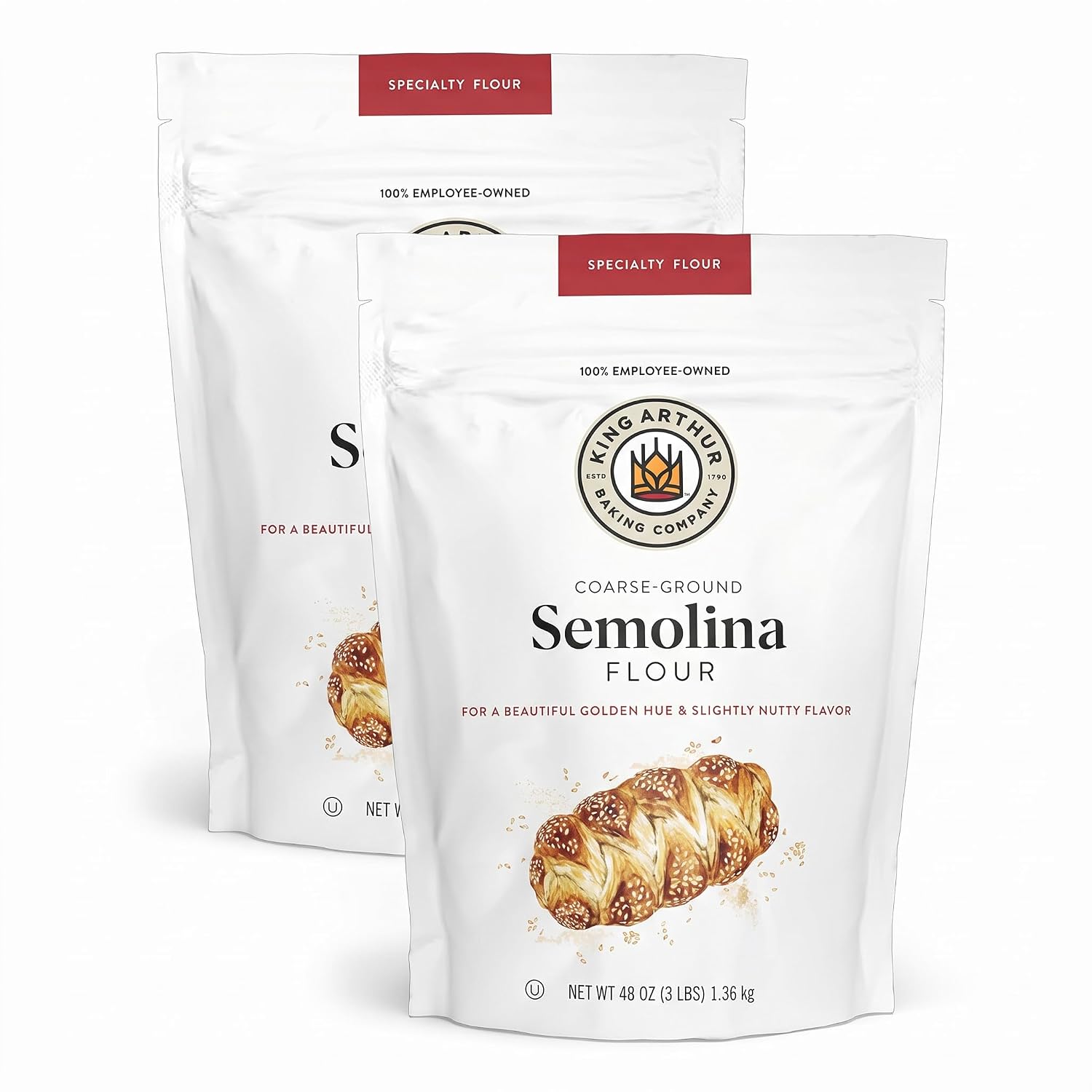
- Runner-Up: King Arthur Premium Semolina, thanks to a 4.8 rating from over 2,000 reviews, though it is coarse.
- Best for Indian Sooji: Laxmi Sooji Fine, a bag made for everyday Indian cooking with a large 4 lb size.



The Best Fine Semolina Sooji: Reviewed
1. Sadaf Durum Semolina Fine: The Right Grind for Puddings and Couscous
- Brand
- Sadaf
- Rating
- Highlights
- Fine gradeKosher2 x 24 ozResealable
Verdict: The only option explicitly sold as fine-grade durum semolina, with a respectable 4.5 rating and a resealable bag. Pick it when texture matters.
Sadaf is the clearest match for what most people mean by fine semolina. The listing states fine grade, durum wheat, and an enriched formula, and it points to Middle Eastern staples like couscous, tabbouleh and semolina pudding. That makes it a safe starting point for a first-time buyer.
The pack is two 24 oz resealable bags, 48 oz in total. Splitting it into two bags is practical: you can keep one sealed until you need it, which helps freshness. It is also Kosher certified, which matters for many households.
With a 4.5 rating across 224 reviews, it is well tested by buyers, though not as heavily as the King Arthur bag. Owners call it one of their favorites for baking. The main hesitation is price: opinions are mixed, with some seeing good value and others finding it expensive for the quantity.
For halwa, kheer-style puddings, cakes and fine-textured dishes, this is where we would start.
What Owners Say
Owners say it is one of their favorites for baking, and the rating of 4.5 backs that up. The recurring caveat is value: some buyers think it is good value, while others consider it overpriced for what you get.
Pros
- Labelled fine grade durum semolina
- Two resealable 24 oz bags keep stock fresh
- Kosher certified
- Owners rate it a favorite for baking
- Suits couscous, puddings and desserts
Cons
- Value opinions are mixed, with some calling it overpriced
- Fewer reviews than the King Arthur bag
- Enriched formula may not suit those wanting unenriched sooji
Best for: Fine-textured desserts, puddings, couscous and baking Not for: Shoppers who want a coarse upma-style or pasta-dusting grind
- Brand Name
- Sadaf
- Specialty
- Kosher Certified
- Diet Type
- Kosher
- Manufacturer
- Sadaf
- Container Type
- bag
- Cuisine
- Middle Eastern
- Item Weight
- 3 pounds
- Item Package Weight
- 1.38 kg
- Number of Items
- 2
- Unit Count
- 48 Ounce
2. King Arthur Premium Semolina: Most Trusted, but Coarse
- Rating
- Highlights
- Coarse groundHigh protein2 x 3 lbKosher
Verdict: A 4.8 rating from over 2,000 reviews makes this the most proven bag here, but it is sold as coarse ground, so it is not a true fine sooji.
King Arthur has the strongest track record of the group: 4.8 stars across 2,166 reviews. It is made from USA-grown durum wheat, has a high protein content, and comes in a 3 lb resealable bag, sold here as a pack of two for 6 lb in total.
The listing is clear that this is coarse ground. That is ideal for pizza dough, pasta, and bread, and owners say it makes great dough and even keeps dough from sticking to a peel. It is less ideal if you want the smooth set of a fine halwa.
Interestingly, owners disagree about the coarseness, so the texture may vary from what you expect. Value opinions are also split, with some saying it is worth every penny and others calling it expensive.
Choose it if you bake more than you make desserts. If fine sooji is non-negotiable, Sadaf is the closer fit.
What Owners Say
Owners praise excellent results for dough, pasta and pizza, and several enjoy the flavor and color. A common complaint is that the grind is not always as coarse as marketed, and value opinions are mixed between worth every penny and expensive.
Pros
- 4.8 rating from over 2,000 reviews
- High protein, great for pasta, pizza and bread
- Large 6 lb total across two resealable bags
- Owners praise flavor and color
- Helps stop dough sticking to a peel
Cons
- Sold as coarse ground, not fine sooji
- Owners disagree about how coarse it really is
- Value opinions are mixed
- Italian-style focus, less suited to Indian sweets
Best for: Pizza, pasta and bread bakers who want a trusted brand Not for: Anyone needing a smooth, fine grind for halwa or pudding
- Brand Name
- King Arthur
- Allergen Information
- Wheat
- Specialty
- Kosher Certified
- Diet Type
- Kosher
- Item Form
- Powder
- Manufacturer
- King Arthur Baking Company
- Container Type
- resealable bag
- Cuisine
- Italian cuisine
- Model Number
- TS0417-A700ML-M209
- Set Name
- Pack of 2
3. Laxmi Sooji Fine: Everyday Indian Sooji in a Big Bag
- Brand
- LAXMI BRAND
- Rating
- Highlights
- Fine sooji4 lbIndian cuisineNon-GMO
Verdict: A dedicated fine sooji in a generous 4 lb bag, but with only 10 ratings and no detailed owner feedback, it is harder to recommend with confidence.
Laxmi Sooji Fine is the most literal match for the search term: it is named sooji, labelled fine, and made for Indian cuisine. The 4 lb (64 oz) bag is listed at 60-65 servings, which suits regular halwa, upma and snack batters.
The listing is sparse. It has no feature list or description, so details such as milling, additives or resealability are not stated. The brand is also listed under a non-GMO label in the title.
The 3.9 rating from just 10 reviews is the main concern. That is too small a sample to draw firm conclusions, and there is no sentiment breakdown to lean on. A single bad batch could swing the score.
It is a reasonable pick if you cook Indian food often and want the larger size. If you want more certainty about texture and packaging, Sadaf has more proof behind it.
What Owners Say
There is no detailed owner sentiment for this product, and the 3.9 rating comes from only 10 reviews. Treat the score as a loose signal rather than a pattern.
Pros
- Named and labelled as fine sooji
- Large 4 lb bag with 60-65 servings listed
- Made for Indian cuisine
- Single bag is easy to store and use through
Cons
- Only 10 ratings, so the 3.9 score is unreliable
- Listing gives few details on milling or packaging
- No clear mention of a resealable bag
- Lower rating than the top two picks
Best for: Regular Indian home cooks making upma, halwa and snacks Not for: Shoppers who need proven consistency or detailed product info
- Brand Name
- LAXMI BRAND
- Serving Range
- 60-65 servings
- Coin Variety 1
- wheat
- UPC
- 723246131429
- Manufacturer
- House of Spices (India), Inc.
- Age Range Description
- All Ages
- Cuisine
- Indian cuisine
- Number of Items
- 1
- Unit Count
- 64 Ounce
- Item Package Quantity
- 1
4. Deep Idli Rava: A Rice-Based Specialist, Not True Sooji
Verdict: A narrow-purpose cracked rice product for rava idli. It is not wheat semolina, so it is a poor fit for general sooji recipes.
Deep Idli Rava is the odd one out. The listing describes it as flour of cracked rice, and the product is categorized under rice flour. That means it will behave differently from durum semolina in halwa, pudding or baking.
Its stated purpose is simple: making rava idli. If that is what you cook, the 2 lb (32 oz) bag is a manageable size. The listing does not say whether it is resealable, so plan to transfer it into an airtight container.
Ratings are thin: 3.7 stars from only 5 reviews, with no detailed sentiment. That is not enough to judge consistency.
We include it because shoppers searching for sooji often land on rava products. For anyone after wheat-based fine semolina, skip it. For idli-specific use, it is worth a look, but with realistic expectations.
What Owners Say
There is no detailed owner sentiment available, and the 3.7 rating rests on just 5 reviews, so no clear praise or complaint pattern can be drawn.
Pros
- Purpose-built for rava idli
- Compact 2 lb bag is easy to store
- Rice-based, so a different option from wheat sooji
Cons
- Described as cracked rice, not wheat semolina
- Only 5 ratings, with a 3.7 average
- Sparse listing with no packaging details
- Not suited to halwa, pudding or baking
Best for: Cooks who specifically want to make rava idli Not for: Anyone wanting true wheat semolina for desserts or baking
- Brand Name
- Deep
- Item Form
- Raw
- UPC
- 011433115322
- Manufacturer
- Deep
- Cuisine
- Indian
- Item Type Name
- Food
- Part Number
- IB-0241
- Item Weight
- 2 pounds
- Item Package Weight
- 0.91 kg
- Number of Items
- 1
How They Compare
Grind is the clearest dividing line. Sadaf is labelled fine, Laxmi is labelled fine sooji, King Arthur is coarse ground, and Deep is cracked rice. For the same reason, they are not interchangeable.
On pack size, King Arthur gives 6 lb across two bags, Laxmi gives 4 lb, Sadaf gives 3 lb across two bags, and Deep gives 2 lb. On proof, King Arthur leads by far, Sadaf comes second, and the other two have too few reviews to be conclusive.
What to Look for in Fine Semolina Sooji
Grind Size
Fine sooji cooks quickly and sets smooth, while coarse semolina stays grainy.
Look for: Labels such as fine grade or fine sooji for halwa, pudding and cakes
Avoid: Coarse ground bags if you want a smooth dessert texture
Wheat vs Rice Base
Some rava products are made from cracked rice rather than durum wheat.
Look for: Durum wheat semolina stated in the title or description
Avoid: Cracked rice products for halwa, pudding or bread
Pack Size and Resealability
Semolina can absorb moisture and odors once opened.
Look for: Resealable bags or multi-bag packs you can open one at a time
Avoid: Large bags with no storage details if you cook only occasionally
Review Volume
A high rating means little when it rests on a handful of reviews.
Look for: Ratings backed by hundreds of reviews and consistent comments
Avoid: Judging a product on fewer than a dozen ratings
Fine Semolina Sooji Buying Guide
How to Pick the Best Fine Semolina Sooji
Start with the dish. Halwa, kheer, cakes and semolina pudding want a fine grain that softens quickly. Pizza, pasta and rustic bread work better with coarse semolina. Once you know the dish, the grind label becomes your first filter.
Fine vs Coarse: What Changes in the Pan
Fine sooji absorbs liquid fast, so it gives a smooth, even texture and needs less cooking time. Coarse semolina holds its shape, which is why it grips pizza dough and adds bite to bread. If you swap one for the other, expect different texture and timing, so adjust liquid and cook time.
Check the Base Ingredient
Not every rava is wheat. The Deep product here is described as cracked rice, which suits rava idli but not general sooji recipes. Read the title and category, not just the word “rava” or “sooji”.
Pack Size and Storage
Big bags look economical, but only if you use them. Semolina keeps best sealed and dry. Resealable bags, or packs split into two bags, make it easier to keep spare flour fresh. If you cook sooji monthly, a smaller pack often wastes less.
Read Ratings with Context
A 4.8 from thousands of buyers tells you more than a 3.9 from ten. Look for repeated comments about texture, flavor and consistency. Also check that praise applies to your use case, because a bag loved for pizza may disappoint for halwa.
How We Picked
We compared the four products on grind description, base ingredient, pack size, certifications, packaging, and rating history. Where owner sentiment was available, we weighted repeated praise and complaints over one-off comments.
We did not run lab or kitchen tests. Rankings reflect how well each listing matches the “fine semolina sooji” need, balanced against the reliability of its reviews and price-to-quantity value.
Frequently Asked Questions
What is the difference between sooji and semolina?
In practice, they are close relatives. Sooji is the Indian name for semolina, usually milled from wheat. The key difference is grind. Sooji is often sold fine or medium for halwa and upma, while many Western semolina bags are coarser and aimed at pasta and bread.
Can I use coarse semolina instead of fine sooji?
You can, but expect a grainier result. Coarse semolina absorbs liquid more slowly, so desserts like halwa may need extra liquid and a longer cook. For smooth puddings or cakes, a fine grade works better and gives more predictable texture.
Is idli rava the same as sooji?
Not always. The Deep Idli Rava in this list is described as cracked rice, which is different from wheat semolina. Some idli rava is rice-based, so check the label. For halwa, pudding or baking, choose a durum wheat semolina or sooji instead.
How should I store semolina after opening?
Keep it sealed in a cool, dry place away from moisture. A resealable bag helps, but an airtight container is a safe upgrade if your bag has no zip. Use a clean, dry spoon each time to avoid introducing damp.
Which option is best for a first-time buyer?
Sadaf Durum Semolina Fine is the safest start. It is clearly labelled fine grade, has a 4.5 rating across 224 reviews, and works for desserts, couscous and baking. If you mainly bake pizza or bread, King Arthur is the better fit.
Final Thoughts
Sadaf Durum Semolina Fine is the best match for most people who want a smooth, fine grain. King Arthur suits bakers, Laxmi suits regular Indian cooking, and Deep is only for idli. Match the grind to your dish and the right bag becomes obvious.
- Sadaf is the best fine-grade pick overall
- King Arthur is most trusted but coarse
- Laxmi and Deep have too few reviews to be sure
For the best fine semolina sooji, start with Sadaf, then choose King Arthur if baking is your priority. Laxmi is worth considering for everyday Indian cooking once more reviews build up. We will keep this list at muslimrestaurant.com updated as owner feedback grows.