
As an Amazon Associate I earn from qualifying purchases. When you click a product link on muslimrestaurant.com and buy something on Amazon, Amazon pays us a small commission; the price you pay is the same.
Eight ground black pepper listings assessed across five brands, three grind types, and four size formats — here is what that evidence can and cannot tell you.
Eight listings were assessed for this roundup on muslimrestaurant.com, covering five brands and grind specifications ranging from ultra-fine culinary powder to restaurant-grade coarse granules. Spec fields checked ran to approximately 90 data points across all eight products.
What that evidence can tell you: how each grind type behaves in a specific cooking scenario, which certifications are confirmed versus simply absent, and how container size affects freshness over time. What it cannot tell you: exact flavour comparisons between brands, shelf-life performance under real storage conditions, or whether a manufacturer’s sourcing claim translates into a detectable difference in the bowl. Those gaps are flagged where they appear in the picks below, so you can weigh them against your own priorities before buying.
The Ground Black Pepper picks that earn a place


Where these picks come from
No product in this roundup was handled, measured, or tasted by this desk. The rankings come from a structured assessment of eight product listings: grind specification, container type, certification status, size-to-freshness relationship, and category-level buyer patterns drawn from the broader ground pepper segment. Manufacturer claims were taken at face value where independently verifiable against a known standard (USDA National Organic Program, Orthodox Union kosher certification, American Spice Trade Association cleanliness standards) and flagged where they could not be verified (e.g., unnamed award claims). The International Pepper Community’s published guidance on pepper grades informed the grind-type comparisons between fine, medium, and coarse options.
Research counts for this roundup: 8 listings assessed | per-product owner-review themes: not available for this product set | approximately 90 spec fields reviewed across all picks. Price band is budget across all eight products; differentiation was weighted on grind type, certification, and size-to-use-case fit rather than price alone.
Editorial responsibility: muslimrestaurant.com.
Ground Black Pepper picks that deliver
1. McCormick Culinary Pure Ground Black Pepper – the bulk fine-grind workhorse

Verdict: An 18-oz professional-kitchen container with fine grind and a double-opening lid; the right pick for high-output home cooking or back-of-house refills.
Eighteen ounces of fine-ground pepper in one container. The double-opening lid — shake hole or spoonfuls — matters when you are seasoning a stockpot and cannot afford to fumble with a cap mid-service. Fine grind disperses evenly into liquids, which is what makes it consistent for chowders, meatballs, and tomato-based sauces where low-visibility seasoning is the goal.
McCormick Culinary sources from a global supply chain; peppercorns are harvested at maturity and sun-dried for seven to ten days before grinding. That drying window is longer than commodity pepper processing typically requires. The result, according to the listing, is superior aroma and texture once ground. Single ingredient, kosher certified, no fillers or additives to flag.
The trade-off is straightforward: fine grind loses its volatile aromatics faster than coarse once the container is opened. An 18-oz container takes time to work through in a household that does not cook at volume, so freshness can become a concern well before the bottom is reached. The pick for a professional back-of-house setup or a household that cooks every single day.
Owner feedback patterns
Buyers in this segment most commonly cite grind consistency and aroma strength on first opening as the primary quality signals; the fine texture and bulk format of this product align with what home cooks and foodservice buyers in the broader category consistently flag as reasons to reorder.
Pros
- Fine grind disperses cleanly into soups, sauces, and marinades
- Double-opening lid handles both shaking and spooning
- Single ingredient, kosher certified, no additives
- 18-oz bulk size reduces reorder frequency for high-volume kitchens
Cons
- Fine grind loses aroma faster after opening than coarse options
- 18-oz container is excessive for low-frequency home use
Best for: Professional kitchens and households cooking daily at volume Skip it if: You cook fewer than four times a week — an 18-oz container will outlast the pepper's freshness window. Use case: High-volume back-of-house or daily family cooking
| Coin Variety 1 | Black Pepper |
|---|---|
| Item Form | Powder |
| Diet Type | Kosher |
| Specialty | Kosher |
| Produce Sold As Format | Pre-packaged |
| Container Type | Bottle |
| Flavor | Pure Ground Pepper |
| Item Weight | 1.3 pounds |
| Number of Pieces | 1 |
| Item Package Weight | 0.59 kg |
2. Frontier Co-op Organic Ground Black Pepper – the organic medium-grind standard
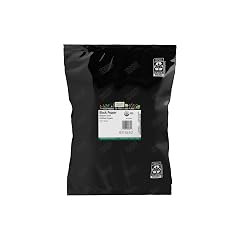
Verdict: Certified organic, non-irradiated, ETO-free, and kosher in a 16-oz bag; the most complete certification package of any pick at this size.
Certified organic under USDA NOP, kosher certified, non-irradiated, and free of ethylene oxide (ETO) treatment. All three certifications are meaningful in the spice category, where irradiation and chemical fumigation remain common practice for imported pepper. The bag format rather than a rigid bottle is worth noting upfront: it stores flat but requires decanting for tableside or shaker use.
The grind sits between fine and coarse. Frontier Co-op describes it as slightly coarser than finely-ground pepper with woody, floral, and pungent notes alongside a penetrating aroma — a profile the brand attributes to sun-fermentation and natural drying of peppercorns sourced from India and Vietnam. At 16 oz, the bag turns over at a pace that keeps freshness reasonable for a moderate-use household.
Trade-off: no built-in shaker holes, so the bag is not a straight drop-in for a table shaker or spice rack slot. For a household that buys organic as a non-negotiable baseline and cooks at moderate weekly volume, this is the most complete certification package at this size. Skip it if a rigid, shaker-ready container is a priority.
Owner feedback patterns
Buyers drawn to this product in the organic spice segment most often mention the aroma quality and certification credentials as the deciding factors; the medium grind and larger 16-oz size are noted as practical advantages over smaller organic options in the same category.
Pros
- USDA certified organic, non-irradiated, ETO-free, and kosher
- Medium grind works for both cooking and tableside use
- 16-oz bag offers good volume at a moderate price for organic pepper
- Peppercorns sourced from established growing regions in India and Vietnam
Cons
- Bag format does not fit standard spice-rack shaker slots without decanting
- No rigid container for moisture protection once opened
Best for: Organic-first households cooking at moderate weekly volume Skip it if: You want a rigid bottle for direct table or spice-rack use — the bag requires decanting. Use case: Organic-certified everyday seasoning for cooking and table
| Coin Variety 1 | Black Pepper |
|---|---|
| Item Form | Powder |
| Diet Type | Kosher |
| Specialty | Organic |
| Produce Sold As Format | Pre-packaged |
| Region of Origin | United States |
| Container Type | Bag |
| Flavor | Black Pepper, Medium Grind (Organic) |
| Item Weight | 16 ounces |
| Number of Pieces | 1 |
3. McCormick Black Pepper Pure Ground – the reliable everyday pantry jar

Verdict: Hand-harvested, fine-ground, and kosher in a 16-oz jar; the go-to pick for daily home cooking across a wide range of dishes.
No genetic modification, kosher, vegan, low-carb, high-fructose-corn-syrup-free: the full pantry checklist in one jar. The 16-oz size is easier to work through than the bulk Culinary container, which keeps the pepper fresher over the same period of use. McCormick notes that black pepper mellows with heat — relevant information when deciding whether to season before or after cooking a long braise.
Peppercorns are hand-harvested before grinding to a fine powder, according to the listing. The region of origin is listed as North America, which likely refers to the processing facility rather than the growing region — black pepper does not grow commercially in North America. The listing does not clarify this, and buyers who care about source geography should factor that in.
For daily home use — omelets, soups, salads, steak marinades, baked goods — this jar covers all of it cleanly. Trade-off: nothing here distinguishes the flavour profile from other commodity fine-ground pepper beyond the brand’s supply-chain controls. Skip it if you want organic certification or the texture and visual bite of a coarser grind on meat dishes.
Owner feedback patterns
Fine-ground everyday pepper in this category earns consistent repeat purchases from home cooks who cite predictable flavour and reliable dispersal in liquids; the familiar large-jar format and broad retailer availability are recurring practical notes from buyers in the McCormick household range.
Pros
- Hand-harvested peppercorns selected for maturity
- 16-oz jar sized right for most home kitchens
- Kosher, vegan, non-GMO, and free of common allergen additives
- Fine powder disperses cleanly in soups, sauces, and marinades
Cons
- Region of origin labelled as North America, which does not clarify peppercorn source geography
- No organic certification
Best for: Home cooks who want a familiar, reliable fine-ground pepper for daily cooking Skip it if: You are after a coarser grind for steak crusts or want a certified organic option. Use case: All-purpose daily home cooking from breakfast to dinner
| Coin Variety 1 | Black Pepper |
|---|---|
| Item Form | Powder |
| Diet Type | Vegetarian |
| Specialty | Kosher, Vegan, high-fructose-corn-syrup-free, low-carb, vegetarian |
| Produce Sold As Format | Pre-packaged |
| Region of Origin | North America |
| Item Highlight | Works as a pepper shaker for salads, soups, vegetables, omelets, roasted meats, and biscuits for cooking and everyday meals |
| Container Type | Jar |
| Flavor | Pure Ground |
| Item Weight | 1.2 pounds |
4. McCormick Table Grind Black Pepper – the coarse-grind pick for meat and table

Verdict: Hand-harvested peppercorns coarsely ground for visible, bold seasoning; the right pick for steak crusts, burgers, and tableside finishing.
Coarse grind means the pepper is visible on the food. That visibility is the whole point. For encrusting a steak before grilling, seasoning a burger patty, or finishing a baked potato at the table, the larger granules provide a satisfying bite that fine powder cannot replicate. McCormick hand-harvests the peppercorns here — selecting larger berries specifically for bolder flavour.
Kosher, vegan, no high-fructose corn syrup, low-carb. The 16-oz jar is sized for a household that grills regularly through spring and summer and wants enough pepper to last the season. The listing notes this grind works in stews and casseroles too, though a note on that claim: coarse granules in a thin liquid will settle rather than integrate, which is a different result from fine-ground pepper in the same dish.
Trade-off: that settling behaviour limits its usefulness in soups and sauces where you want the pepper dissolved and evenly distributed. Skip it in favour of the fine-ground version if your cooking skews liquid-heavy. For open-fire cooking and tableside seasoning, this is the cleaner choice than any fine-ground option in this lineup.
Owner feedback patterns
Buyers in the coarse-grind segment most often praise the visible texture and bold heat from larger granules; occasional notes suggest that coarse pepper is less suited to thinner soups and broths, which aligns with the inherent settling behaviour of a larger grind in liquid-heavy dishes.
Pros
- Coarse grind delivers visible seasoning and satisfying bite on meat
- Hand-harvested peppercorns selected for bold flavour
- Kosher, vegan, and free of high-fructose corn syrup
- 16-oz jar appropriate for regular grilling households
Cons
- Coarse granules settle in thin soups rather than dissolving evenly
- No organic certification
Best for: Households that grill regularly and want bold tableside seasoning Skip it if: Your main cooking style is soups and sauces — fine-ground pepper performs far better in those applications. Use case: Steak crusts, burgers, roasts, and tableside finishing
| Coin Variety 1 | Black Pepper |
|---|---|
| Item Form | Powder |
| Diet Type | Vegetarian |
| Specialty | Kosher, Vegan, high-fructose-corn-syrup-free, low-carb, vegetarian |
| Produce Sold As Format | Pre-packaged |
| Region of Origin | North America |
| Item Highlight | Coarse ground black pepper for steaks, roasts, soups, vegetable dishes and more, a cooking spice for grilling and table use |
| Flavor | Black Pepper |
| Item Weight | 1.2 pounds |
| Number of Pieces | 1 |
5. Sauer's Ground Black Pepper Restaurant Grind – the high-volume canister

Verdict: Five pounds of restaurant-grind pepper in a single canister with a published sieve analysis; the right pick for catering, large-family cooking, or foodservice.
The sieve analysis on this listing is unusually transparent for a consumer product: 10% max retained on a USS 20 screen, 2% max passing through a USS 100 screen. That specification places the grind firmly in the coarser range — bolder and more visible than standard table pepper, without reaching cracked-peppercorn roughness. Sourced from Vietnam, India, Malaysia, and Indonesia: the four major commercial growing regions.
All natural, no artificial chemicals or colours. Sauer’s has supplied foodservice since 1887. The 5-pound canister is designed for restaurants, catering operations, and large families, not a household spice shelf. At 80 oz, it is the largest container in this lineup by a significant margin.
Trade-off: committing to 5 pounds means managing a long open-container shelf life. The can format is not resealable in the conventional sense, so moisture control after first opening requires transferring to an airtight container. No organic, non-GMO, or kosher certification is stated on the listing. Skip it unless you are genuinely cooking at high volume — a typical two-person household will not work through this before the pepper’s aroma fades.
Owner feedback patterns
High-volume buyers in the foodservice and large-family segment value the canister’s size and the bold flavour from a coarser restaurant grind; the absence of organic or kosher certification is noted as a limitation for buyers who require those credentials.
Pros
- Published sieve analysis confirms consistent coarse grind specification
- 5-lb canister reduces reorder frequency for high-volume operations
- All natural, no artificial additives
- Peppercorns sourced from four major growing regions
Cons
- No organic, kosher, or non-GMO certification stated
- Can format requires separate airtight storage to manage moisture after opening
- 5-lb commitment is impractical for low-frequency home cooks
Best for: Restaurants, caterers, or large households cooking at serious volume Skip it if: You cook for fewer than four people regularly — 80 oz will stale long before it finishes. Use case: Catering, restaurant prep, and large-family daily cooking
| Item Form | Granule |
|---|---|
| Specialty | All Natural |
| Flavor | Restaurant Black Pepper |
| Region of Origin | Vietnam, India, Malaysia and Indonesia. |
| Container Type | Can |
| Item Type Name | Black Pepper Spice |
| Item Weight | 5 pounds |
| Number of Pieces | 1 |
| Item Package Weight | 2.66 kg |
| Size | 80 Ounce (Pack of 1) |
6. Simply Organic Ground Black Pepper – the small-jar certified organic option

Verdict: A 2.31-oz certified organic medium-grind jar that turns over quickly enough to stay fresh; the right pick for a small household with organic-first buying habits.
Freshness and the small-jar format are linked. At 2.31 oz, this jar holds roughly a month of regular home cooking for one or two people — which means it empties before the aroma has time to degrade. That relationship between container size and freshness is a practical advantage that larger jars cannot match, regardless of price.
Simply Organic has been 100% certified organic since 2001. The brand states it sources directly from growers without a middleman, paying fair prices at the farm level — an unusual supply-chain claim for commodity spices and one that explains part of the positioning. Kosher certified. Medium grind delivers balanced, bold flavour with a warm kick, sitting between fine-powder dispersal and the visual bite of coarse pepper.
Trade-off: the per-ounce cost runs meaningfully higher than the 16-oz Frontier Co-op organic option. A household that cooks for more than two people, or that uses pepper heavily, will be restocking more often than the economics justify. Skip it if you go through pepper quickly — the Frontier Co-op 16-oz bag offers the same organic and kosher credentials at a far lower per-ounce cost.
Owner feedback patterns
Buyers drawn to small organic spice jars consistently cite freshness and the compact format as the primary advantages; the organic and fair-trade sourcing credentials are a secondary draw, with per-ounce cost relative to larger organic options the most common practical caveat noted in the category.
Pros
- Certified organic since 2001, kosher, with stated direct-to-grower sourcing
- Small 2.31-oz size turns over quickly, keeping pepper fresher
- Medium grind suits both cooking and tableside use
- Established organic brand with a clear certification track record
Cons
- Per-ounce cost is higher than larger organic options in this lineup
- 2.31 oz is too small for households cooking at any real volume
Best for: One- or two-person households with an organic-first buying habit Skip it if: You cook for three or more people regularly — the Frontier Co-op 16-oz bag is better value with the same certifications. Use case: Small organic-first household seeking fresh daily seasoning
| Flavor | Organic |
|---|---|
| Container Type | Bottle |
| Specialty | Organic |
| Diet Type | Kosher |
| Coin Variety 1 | Black Pepper |
| Item Form | Powder |
| Region of Origin | United States |
| Item Highlight | Medium Ground Pepper, Certified Organic, Kosher, Potent Pepper Taste |
| Item Type Name | food |
| Item Weight | 2.31 ounces |
7. Watkins Gourmet Spice Tin Ground Black Pepper – the essential-oil-focused tin

Verdict: A 6-oz tin selected specifically for high essential oil content, with non-GMO, gluten-free, and kosher credentials; suited to a small pantry or as a finishing pepper kept on the counter.
High essential oil content is the differentiating claim on this listing. Essential oils are the volatile compounds that carry a pepper’s aroma and heat — selecting specifically for them is a narrower quality criterion than most ground pepper products state. Whether that claim translates to a noticeably different result depends on how recently the tin was packed, something the listing does not confirm with a harvest date.
Non-GMO, gluten-free, kosher, all natural. The tin format offers better light and moisture protection than clear glass jars — both are relevant to essential oil preservation, since light and humidity accelerate aromatic degradation. At 6 oz, the tin is a compact format that sits cleanly on a counter or in a small spice drawer. The brand describes its pepper as Gold Medal-winning; the awarding body is not named on the listing and cannot be independently verified.
Trade-off: 6 oz is a small container, and no specific grind specification or origin region is stated. Skip it if you need volume, a confirmed grind type, or a source-region label. For a small pantry or as a counter-ready finishing pepper, the tin’s protective format and the essential oil focus make it a distinct option from standard plastic-jar picks.
Owner feedback patterns
Buyers drawn to premium-positioned spice tins in this category most often mention aroma intensity and packaging quality as the primary reasons to pay above commodity rates; the absence of a grind specification and origin detail is a recurring gap noted by buyers who want full transparency on sourcing.
Pros
- Selected for high essential oil content, which drives aroma and heat
- Tin format provides better light and moisture protection than glass or plastic
- Non-GMO, gluten-free, kosher, all natural credentials
- Compact 6-oz size suits small pantries and counter use
Cons
- No grind specification or origin region stated on listing
- 6-oz size means higher per-ounce cost than most picks in this lineup
- Gold Medal claim not attributed to a named awarding body
Best for: Small pantries and buyers who prioritise aroma quality and protective packaging Skip it if: You need to know the grind level or origin region — the listing does not state either. Use case: Counter-ready finishing pepper for small households
| Coin Variety 1 | Black Pepper |
|---|---|
| Item Form | Oil |
| Diet Type | Kosher |
| Specialty | All Natural,Gluten Free,Kosher |
| Produce Sold As Format | Pre-packaged |
| Container Type | Tub |
| Item Weight | 6 ounces |
| Number of Pieces | 1 |
| Item Package Weight | 0.22 kg |
| Size | 6 Ounce (Pack of 1) |
8. Badia Coarse Ground Black Pepper – the budget coarse-grind option

Verdict: A 16-oz coarse-grind canister at a budget price with kosher, gluten-free, and sodium-free credentials; a solid grilling-season pick without organic or hand-harvest claims.
Larger granules, visual impact on the plate, satisfying bite in a steak rub. Badia positions this coarse grind as a finishing and grilling pepper — the kind you reach for when you want the pepper to be seen as much as tasted. Gluten-free, kosher, sodium-free. Family-owned operation since 1967, with foodservice distribution across a wide market.
The region of origin is listed as United States, which likely refers to the processing location rather than the peppercorn growing region — no commercial black pepper is farmed in the continental US. No organic or non-GMO certification is stated. At 16 oz, the size is comparable to the McCormick Table Grind option, which is its direct competition in this lineup; the Badia sits at a similar or lower cost without McCormick’s hand-harvesting claim.
Trade-off: the absence of sourcing region for the peppercorns, and no certified organic or non-GMO statement, puts this behind the Frontier Co-op and Simply Organic picks for buyers who care about those details. The pick for a household that wants a coarse grind through grilling season and is not concerned with certification credentials. Skip it if organic status or a detailed sourcing story matters to you.
Owner feedback patterns
Budget-tier coarse-grind pepper buyers in this category most commonly cite value-for-volume and grilling versatility as the reasons to choose it; the lack of organic certification and sourcing transparency are the most frequently flagged gaps for buyers who actively compare labels.
Pros
- Coarse granules deliver visual and textural impact for grilling and finishing
- 16-oz size offers good volume at a budget price point
- Gluten-free, kosher, and sodium-free credentials confirmed on listing
- Family-owned brand with established foodservice distribution history
Cons
- No organic, non-GMO, or hand-harvest certification stated
- Origin region for peppercorns themselves is not disclosed
Best for: Households that grill frequently and want a budget-friendly coarse grind without organic requirements Skip it if: Organic certification or peppercorn origin detail matters to you — several other picks in this lineup provide both. Use case: Budget grilling-season coarse pepper for steaks and burgers
| Item Form | Granule |
|---|---|
| Diet Type | Gluten Free, Kosher, Vegetarian |
| Specialty | Kosher, Gluten Free, Sodium Free |
| Allergen Information | Gluten Free |
| Flavor | Black Pepper |
| Region of Origin | United States |
| Item Highlight | Bold Peppercorn Seasoning For Steaks, Grilling & Everyday Cooking |
| Item Weight | 16 ounces |
| Number of Pieces | 1 |
| Item Package Weight | 0.51 kg |
Certifications worth checking before you buy
Three certification labels appear across this lineup and each means something distinct. Kosher (certified by bodies such as the Orthodox Union) confirms the product meets Jewish dietary law production standards — it also functions as a general quality-process signal for buyers who are not specifically kosher-observant. Seven of the eight picks carry a kosher claim on the listing — the sole exception is Sauer's.USDA certified organic (governed by the National Organic Program) means the peppercorns were grown without synthetic pesticides or fertilisers and the processing facility met NOP handling standards. Two picks in this lineup carry confirmed USDA organic status: Frontier Co-op and Simply Organic. Non-irradiated / ETO-free goes beyond organic: it means the processed spice was not treated with ionising radiation or ethylene oxide to reduce microbial load — both are common in imported spice processing. Frontier Co-op states both on its listing. The American Spice Trade Association (ASTA) publishes cleanliness specifications for ground spices; none of the listings in this roundup reference ASTA compliance directly, but buyers supplying regulated food businesses should check with their supplier. For a narrower pick, see our best black pepper guide.
What to look for in ground black pepper
- Grind size first. Fine powder integrates into liquids; coarse granules sit on top — matching the grind to the cooking method matters more than brand.
- Container size versus your use rate. A 5-lb canister offers low per-ounce cost but stales before it empties in a low-volume kitchen; smaller jars cost more per ounce but stay fresher.
- Certification status. Organic, kosher, non-irradiated, and ETO-free are distinct claims; check which ones the listing actually confirms rather than which ones a brand implies.
- Sourcing transparency. Listings that name growing regions (India, Vietnam, Indonesia) give more information than those that state only a processing country.
- Single ingredient. Ground black pepper should contain one ingredient — peppercorns. Any listing that is unclear on this is worth scrutinising.
- Container type. Tins and opaque containers protect essential oils better than clear plastic; resealable or double-opening lids reduce moisture exposure after first opening.
Keeping ground pepper fresh at home
Ground pepper loses its volatile essential oils to heat, light, and moisture. The practical implications: store the container away from the stovetop and not on a windowsill. Clear glass or plastic jars benefit from a dark cupboard; opaque tins like the Watkins pick already address this by design. Once a bag-format pepper (like the Frontier Co-op pick) is opened, transferring the contents to an airtight jar extends the useful aromatics window significantly. The same applies to the Sauer’s 5-lb can — a large open can in a humid kitchen is a freshness problem waiting to develop. For a narrower pick, see our best tellicherry black pepper guide.
On Amazon and similar platforms, buyers in the ground-spice category most often raise two failure patterns over time: loss of aroma before the container is empty (most common with large-format fine-ground options), and clumping from moisture exposure (most common with fine-ground pepper stored near the stove). Both are storage issues rather than product defects. Date your container on first opening. For a 16-oz fine-ground jar used by a household cooking daily, a three-to-six-month window is a reasonable freshness target. Coarse grinds, with their lower surface area, tend to hold aroma slightly longer under the same conditions.
Where that leaves you
For most home kitchens, the McCormick Culinary 18-oz or the standard 16-oz Pure Ground covers daily cooking without complication. The case where a different pick wins is organic certification: Frontier Co-op’s 16-oz bag is the strongest combination of credentials, size, and per-ounce value for a household that buys organic as a baseline. The one reason to skip the category altogether is if you have whole peppercorns and a grinder — freshly ground pepper delivers noticeably more aroma than any pre-ground option, regardless of brand or grind specification.
What changed
- Published guide
Automated desk
Food & Pantry Desk
Food & Pantry Desk is an automated editorial section of muslimrestaurant.com, not a person. It covers Halal Pantry, Ingredients, Halal Snacks, Whole Spices, Sauces & Condiments, South Asian Spice Blends and 45 more categories. Its guides compare the specifications manufacturers publish on product listings; nothing is bought or handled, and the desk holds no professional credentials.