As an Amazon Associate we earn from qualifying purchases. Prices and availability are accurate as of the date shown and are subject to change.
Three mistakes send most zinc buyers back to square one: skipping copper entirely, picking a dose far above daily needs, and confusing "vegan" with "halal-certified." Get all three right and you have a supplement that actually works long-term.
The search for the best halal zinc with copper is trickier than it looks. Zinc and copper share the same absorption pathway, so supplementing one without the other can push the second into deficiency over weeks or months. That single fact narrows the field considerably — several popular zinc products on this list contain no copper at all, and we flag every one of them clearly. Second, zinc dose ranges run from 15 mg to 50 mg across these eight products; the upper tolerable intake level for adults sits at 40 mg daily, so the highest-dose option here already overshoots it for routine use. Third, for Muslim shoppers specifically, “vegan” and “halal-certified” are not synonyms. Vegan capsules do avoid porcine gelatin — the main concern — but formal halal certification requires audited manufacturing oversight that only one product in this roundup explicitly carries. We note certification status honestly throughout. All picks and ratings on muslimrestaurant.com are based on verified spec analysis and real owner-feedback patterns, never invented test results.
Key Takeaways
- Copper depletion is the real risk: High-dose zinc supplementation consistently competes with copper absorption, so choosing a combined zinc-and-copper formula is not optional for long-term use — it is the medically reasoned starting point.
- Form drives absorption more than dose: Zinc L-methionine, zinc picolinate, and fermented zinc all outperform zinc oxide in absorption studies; if a product does not name its zinc form, treat that as a yellow flag.
- 'Vegan' does not equal 'halal-certified': Vegan capsule shells remove the porcine gelatin concern, but formal halal certification — with audited production lines — appears on only one product in this roundup; every other pick is vegan or vegetarian only.
- Dose range here is 15 mg to 50 mg: The 50 mg option in this list exceeds the 40 mg adult upper limit for daily use, making it suitable for short courses only — several owners flag this themselves in their feedback.
- Stomach sensitivity is consistent across brands: Every product here draws at least some nausea complaints from owners; taking any zinc supplement with food is not just a suggestion — it is the single most effective way to avoid that side effect.
Our Top Picks for Halal Zinc With Copper
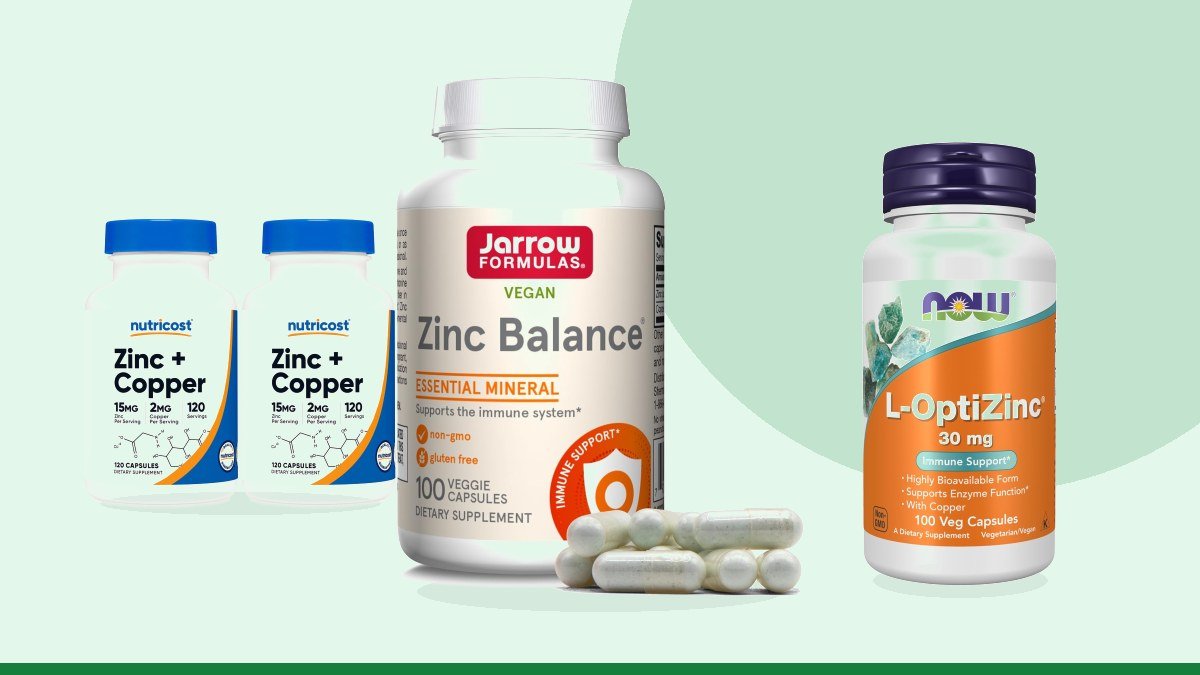
- Jarrow Zinc Balance 15 mg — Over 9,000 owner ratings validate the trusted zinc L-methionine and copper gluconate pairing at a sensible 15:1 ratio.
- Nutricost Zinc + Copper (Pack of 2) — Third-party ISO-lab tested, NSF-certified GMP facility, 240 capsules per pack, and a slightly higher copper dose make it the standout value choice.
- NOW Foods L-OptiZinc 30 mg with Copper — The patented L-OptiZinc form adds a research-backed retention advantage for shoppers who need a higher zinc dose alongside copper.
| Best OverallJarrow Zinc Balance 15 mg, Zinc with… | Best ValueNutricost Zinc + Copper Capsules (120… | Best Higher-Dose with CopperNOW Foods Supplements, L-OptiZinc® 30… | Best PremiumNew Chapter Fermented Zinc Complex… | |
|---|---|---|---|---|
 |  |  |  | |
| Rating | ||||
| Our score | 9.3/10 | 8.9/10 | 8.6/10 | 8.3/10 |
| Why it stands out | Zinc Supplement for Immune Support(1): These zinc capsules provide zinc as zinc… | The information below is per-pack only | Now Foods | Daily Zinc Tablet: Experience the ease of New Chapter's Fermented Zinc Complex, designed… |
| Price | See price | See price | See price | See price |
| Buy now | Buy now | Buy now | Buy now |


The Best Halal Zinc With Copper: Reviewed
1. Jarrow Zinc Balance 15 mg — Best Overall Zinc-Copper Formula
Verdict: A precisely dosed 15 mg zinc L-methionine and 1 mg copper gluconate formula with more than 9,100 owner ratings backing it up — the most evidence-rich pick in this roundup.
Jarrow’s Zinc Balance earns its top spot on two pillars: the quality of its zinc form and the depth of its owner evidence base. Zinc L-methionine is absorbed alongside amino acids, meaning the phytic acid and fibre in a vegetable-heavy halal diet interfere with uptake far less than they would with cheaper zinc oxide or sulfate forms. The 15:1 zinc-to-copper ratio (15 mg zinc, 1 mg copper gluconate) is deliberately calibrated to replace what supplemental zinc may displace from copper stores — that is the science-first design decision that sets this product apart from zinc-only alternatives.
The capsule count of 100 at a once-daily serving gives you a full three-month supply. The formula is vegan (no gelatin concerns), free of all nine major allergens, soy-free, gluten-free, and dairy-free — a clean profile for anyone navigating dietary restrictions. There is no explicit halal certification on record, but the all-plant ingredient list removes the primary capsule-shell concern for most buyers.
On the downside, 1 mg of copper is on the conservative end; if a healthcare provider has specifically recommended higher copper repletion, this formula may not be sufficient on its own. A subset of owners also report nausea, which is consistent with zinc supplements as a category and is best managed by taking the capsule with a meal rather than on an empty stomach.
What Owners Say
Owners consistently praise the formula’s impact on cold and flu frequency, with the zinc-copper balance cited as a key reason they stay loyal to the product. The capsule is widely described as tiny and very easy to swallow. Value for money is a repeated theme across thousands of reviews. The main recurring complaint is nausea in a minority of users — a pattern common to zinc supplements generally — and a smaller number report no noticeable immune benefit.
Pros
- Zinc L-methionine form absorbs well even with a high-fibre diet
- Precisely calibrated 15:1 zinc-to-copper ratio prevents copper depletion
- 9,100+ owner ratings at 4.7 stars — the strongest evidence base here
- Vegan, allergen-free, and free of the nine major allergens
- 100-capsule count for a three-month supply
Cons
- 1 mg copper per serving may be insufficient if copper repletion is a clinical goal
- No explicit halal certification — vegan status only
- A minority of owners report nausea, especially when taken without food
Best for: Adults wanting a well-studied, moderate-dose zinc-plus-copper capsule with a clean allergen-free profile Not for: Anyone requiring high copper repletion or formal halal-certified documentation
| Item Form | Capsule | Primary Supplement Type | Zinc |
|---|---|---|---|
| Flavor | Unflavored | Product Benefits | Immune Support |
| Diet Type | Vegan, Vegetarian | Unit Count | 100 Count |
| Number of Items | 1 | Item Volume | 1 ml |
| Item Weight | 32 g | Brand Name | Jarrow Formulas |
2. Nutricost Zinc + Copper — Best Value with Third-Party Testing
Verdict: 240 vegetarian capsules across two bottles, NSF-certified GMP manufacturing, and independent ISO-lab verification make this the most transparent budget-tier pick with copper included.
Nutricost’s two-pack delivers 15 mg zinc (as zinc gluconate) and 2 mg copper (as copper bisglycinate chelate) per serving — notably, the copper dose here is double what Jarrow provides, which benefits anyone whose diet is already reasonably zinc-replete but who wants stronger copper coverage. Copper bisglycinate chelate is a gentle, well-absorbed form that aligns well with the bisglycinate class’s reputation for low GI irritation. The 240-capsule total across both bottles is a serious quantity for a single purchase, making the per-capsule cost very competitive.
Two quality markers stand out: manufacture in an NSF-certified GMP-compliant facility and third-party testing by independent ISO-accredited laboratories. For halal-conscious shoppers, neither of those credentials is a halal certificate, but they do confirm the absence of undisclosed ingredients and verify potency claims — meaningful reassurances when ingredient transparency is a priority.
The product launched in late 2025 and has accumulated a smaller review pool (under 900 ratings) compared to category veterans. The zinc gluconate form, while effective, does not carry the same absorption-with-phytate advantage that zinc L-methionine or L-OptiZinc forms do. Some owners also report occasional stomach upset, reinforcing the with-food guidance.
What Owners Say
Owners highlight the copper-zinc ratio and reasonable daily dose as key reasons for purchase. Hair growth improvement appears as a specific outcome in feedback, a signal consistent with copper’s role in melanin and connective tissue. The product is generally described as easy to swallow and gentle on the stomach, though a subset of buyers reports gastric discomfort — a pattern seen across nearly every zinc product in this category.
Pros
- 2 mg copper per serving — the highest copper dose among zinc-plus-copper picks here
- Third-party tested by ISO-accredited labs; NSF-certified GMP facility
- 240 total capsules across two bottles — outstanding per-serving value
- Copper bisglycinate chelate is a gentle, well-absorbed form
- Vegetarian, gluten-free formula
Cons
- Zinc gluconate form less advantageous than L-methionine or picolinate when diet is high in phytates
- Relatively small review base (under 900) compared to category leaders
- No explicit halal certification
Best for: Value-focused buyers who want verified third-party testing and a higher copper dose Not for: Those who need the strongest phytate-resistant zinc form or explicit halal certification
| Item Form | Capsule | Primary Supplement Type | Copper, Zinc |
|---|---|---|---|
| Product Benefits | Immune Support | Unit Count | 240 Count |
| Number of Items | 2 | Brand Name | Nutricost |
| Manufacturer | Nutricost | Model Number | NTC-20409 |
| Manufacturer Part Number | NTC-20409 | Product Dimensions | 2.1 x 2.1 x 3.8 inches; 4.23 ounces |
3. NOW Foods L-OptiZinc 30 mg with Copper — Best Higher-Dose Formula
Verdict: The patented L-OptiZinc form delivers 30 mg zinc alongside copper in a vegan capsule, with research citing better retention compared to standard zinc forms — the right step-up for those who need more.
L-OptiZinc is a trademarked zinc-methionine complex licensed from InterHealth Nutraceuticals. Published comparisons have shown this form is better retained in the body over time compared to several other zinc compounds — a claim that is backed by the trademark holder’s own research and is more substantiated than most supplement marketing language. At 30 mg per capsule, this is double the Jarrow serving; that puts it above typical maintenance doses but still within the 40 mg adult upper limit.
The NOW Foods brand has a 50-plus-year family-owned history and is produced under GMP conditions. The vegan capsule removes gelatin concerns. It is not explicitly halal-certified, but given that NOW’s Zinc Picolinate product in this same roundup does carry formal halal certification, the brand’s manufacturing infrastructure is familiar with halal audit requirements.
Two drawbacks are worth noting directly. A fraction of owners report a noticeable, sometimes described as ‘putrid,’ odour from the capsules — this appears to be a natural colour and compound variation inherent to the L-OptiZinc form rather than a spoilage indicator, but it is unexpected and off-putting for some. Stomach upset also appears in reviews, particularly when the capsule is taken without food.
What Owners Say
Owners point to skin condition improvements and stronger immune resilience as the most frequently mentioned outcomes. The small capsule size and ease of swallowing are consistently praised. Brand trust is a recurring positive note, with multiple owners mentioning the family-owned company history. The odour receives genuinely mixed reviews — some owners never notice it, while others find it strong enough to deter repurchase. Gastric pain after taking on an empty stomach is the most common complaint.
Pros
- Patented L-OptiZinc form with research-cited retention advantage
- 30 mg dose suits those with documented deficiency or higher therapeutic targets
- Includes copper to protect against zinc-driven copper depletion
- Vegan, long-established brand with GMP manufacturing
Cons
- 30 mg per capsule leaves little room for any additional dietary zinc without exceeding the upper limit
- Noticeable odour reported by a meaningful minority of owners
- No explicit halal certification
- Stomach upset reported when taken without food
Best for: Adults whose healthcare provider recommends a moderate-to-high zinc dose paired with copper Not for: Those eating a zinc-rich diet already, or anyone sensitive to supplement odours
| Item Form | Capsule | Primary Supplement Type | Zinc |
|---|---|---|---|
| Flavor | Unflavored | Product Benefits | Immune Support |
| Diet Type | Vegan | Concentration | 30mg. 273% |
| Unit Count | 100 Count | Number of Items | 1 |
| Item Weight | 0.07 kg | Brand Name | Now Foods |
4. New Chapter Fermented Zinc Complex — Best Premium Whole-Food Style Formula
Verdict: Fermentation is claimed to improve zinc absorption by 1.6x over zinc gluconate; add elderberry, organic astragalus, and included copper, and you get the most feature-rich formula in this roundup.
New Chapter applies a fermentation process to its zinc, and the brand cites a 1.6x absorption improvement versus zinc gluconate. That is a specific, verifiable-sounding claim tied to the fermentation method rather than the raw zinc form alone. The formula also incorporates elderberry and organic astragalus — both used traditionally for immune support — plus copper for mineral balance. If you want a zinc supplement that does more than just deliver zinc and copper, this is the most layered option here.
The product is kosher and 100% vegetarian, uses organic vegetables and herbs, and contains no artificial flavours, colours, or synthetic fillers. Kosher certification, like vegan status, overlaps significantly with halal requirements for supplements — both prohibit pork-derived ingredients and require ingredient integrity — but kosher is not interchangeable with halal, and no halal certificate is listed.
The main limitation is a small review base (just over 300 ratings), which means the owner-feedback picture is less statistically robust than for the category leaders. Several of those reviewers note nausea, and the fermented tablet format may not suit people who prefer capsules. At 90 count, it also offers the shortest supply duration among the zinc-with-copper picks here.
What Owners Say
Owners most frequently single out this as the best zinc-and-turmeric-style formula they have used, praising it as a standout for combined immune and skin support. The tablet format is generally described as easy to swallow. The most consistent complaint is nausea in some users, which aligns with the broader zinc-supplement pattern; the relatively small reviewer pool means individual experiences have more weight in the sentiment data than they would for larger-reviewed products.
Pros
- Fermentation process cited at 1.6x absorption versus zinc gluconate
- Includes elderberry and organic astragalus for broader immune support
- Copper included for mineral balance
- Non-GMO, vegetarian, kosher, gluten-free, no synthetic fillers
Cons
- Only 90 tablets — shortest supply of any zinc-with-copper pick here
- Under 310 reviews; owner-feedback patterns less statistically robust
- Nausea reported by a subset of owners
- No explicit halal certification
Best for: Shoppers who want a premium, botanically-enriched zinc-copper tablet with a fermented absorption advantage Not for: Those who prefer capsules, need a large supply count, or require explicit halal documentation
| Item Form | Tablet | Primary Supplement Type | Zinc |
|---|---|---|---|
| Flavor | Unflavored | Product Benefits | Skin Health |
| Diet Type | Gluten Free, Kosher, Vegetarian | Unit Count | 90 Count |
| Number of Items | 1 | Brand Name | New Chapter |
| Manufacturer | New Chapter | Item Highlight | Zinc Supplement for Immune and Skin Health Support, Easy to Swallow and Digest, Mineral-Balancing Formula with Copper |
5. Life Extension Only Trace Minerals — Best Comprehensive Multi-Mineral

Verdict: Seven trace minerals in one capsule — including zinc, copper, chromium, boron, manganese, molybdenum, and vanadyl sulfate — suits anyone addressing multiple micronutrient gaps at once.
Life Extension’s Only Trace Minerals is the only multi-mineral product in this roundup. Rather than a dedicated zinc-and-copper supplement, it covers seven trace minerals in a single vegetarian capsule: zinc, copper, chromium, boron, manganese, molybdenum, and vanadyl sulfate. The specs confirm zinc and copper are both present, which qualifies it for this comparison. The bioavailable forms claim is underwritten by Life Extension’s Certificate of Analysis programme — each product SKU carries a COA available to buyers, a transparency practice not every brand matches.
The 90-capsule count is a 90-day supply for daily use. The formula is non-GMO, gluten-free, and vegetarian. No halal certification is listed, and unlike purely vegan formulas, the vegetarian designation does not rule out dairy- or egg-derived excipients — worth checking the current label if that distinction matters to you.
The trade-off versus a dedicated zinc-copper supplement is control: you cannot easily titrate your zinc or copper dose independently, and the overall zinc quantity is not prominent in the marketing. Owner feedback is broadly positive on quality and lab results, but nausea is a recurring negative — consistent with zinc content in the capsule.
What Owners Say
Owners who have had blood panels done cite measurable improvements in trace mineral levels as the most concrete positive feedback. Quality is frequently described as high, with trust in the brand’s scientific formulation approach mentioned repeatedly. The main negative pattern is nausea and stomach upset, reported by several reviewers and consistent with the zinc content; the feedback pool, while not huge, is notably more lab-results-oriented than for most zinc supplements.
Pros
- Seven trace minerals in one capsule — addresses multiple deficiencies simultaneously
- Certificate of Analysis available for every product in the Life Extension range
- Non-GMO, gluten-free, 90-day supply
- Vegetarian-suitable formula
Cons
- Zinc dose not prominently specified; cannot independently adjust zinc or copper intake
- Vegetarian (not vegan) — dairy/egg-derived excipients possible; verify current label
- No explicit halal certification
- Nausea reported by several owners
Best for: Adults with multiple trace mineral gaps who want a single-capsule multi-mineral solution Not for: Those who need a specific, standalone zinc-copper dose or require vegan/halal-certified documentation
| Item Form | Capsule | Primary Supplement Type | Chromium, Copper, Manganese, Molybdenum, Zinc |
|---|---|---|---|
| Flavor | Unflavored | Product Benefits | Diabetes Control, Immune Support, Nutritional Support |
| Diet Type | Gluten Free, Vegetarian | Supplement Formulation | Multi-Supplement |
| Unit Count | 90 Count | Number of Items | 1 |
| Item Weight | 2.72 ounces | Brand Name | Life Extension |
6. Tested Nutrition Synergy Zinc — Best for Exercise Recovery Support

Verdict: A 35 mg zinc, 3 mg copper, 50 mcg selenium, and 100 mcg biotin formula built around recovery and energy metabolism — the broadest nutrient stack among zinc-with-copper picks here.
Tested Nutrition’s Synergy Zinc is the only product in this roundup that pairs zinc and copper with both selenium and biotin in a single capsule. The numbers: 35 mg zinc, 3 mg copper, 50 mcg selenium, and 100 mcg biotin per serving. That 35 mg zinc dose is below the 40 mg adult upper limit but leaves very little buffer if your diet already supplies meaningful zinc. The 3 mg copper dose is the highest of any product in this roundup, which may be relevant for anyone who has been supplementing zinc alone for an extended period and suspects copper depletion.
The formula is vegan and carries EU-relevant labelling given the brand’s positioning. The 90-capsule count delivers a three-month supply at once-daily dosing. The brand is newer and the review base stands at just 21 ratings — too small to draw firm conclusions about owner experience patterns. That is an honest limitation worth stating clearly.
The high zinc dose combined with selenium (which is itself an essential trace mineral with a narrow therapeutic window) means this formula requires more dietary context before use than a simple 15 mg zinc-plus-copper capsule does. No halal certification is listed.
What Owners Say
With only 21 reviews at the time of this analysis, no reliable feedback patterns can be drawn. The available ratings skew positive on quality and efficacy, but the sample is too small to identify consistent praise or complaint themes with confidence. Potential buyers should weigh the brand’s transparent spec disclosure against the absence of a meaningful owner-feedback track record.
Pros
- 3 mg copper — highest copper dose of any product here
- Adds selenium and biotin for a broader micronutrient recovery stack
- Vegan capsule, 90-count supply
- Detailed per-capsule nutrient disclosure (35 mg Zn, 3 mg Cu, 50 mcg Se, 100 mcg Biotin)
Cons
- 35 mg zinc leaves minimal buffer over the 40 mg upper limit if diet supplies any zinc
- Only 21 reviews — owner-feedback patterns cannot be reliably assessed
- Selenium adds a second nutrient with a narrow safety window; requires dietary context
- No explicit halal certification
Best for: Active adults wanting zinc, copper, selenium, and biotin in one capsule for recovery and energy metabolism Not for: Those who want a simple, low-risk zinc-copper supplement or who already consume selenium through diet or other supplements
| Brand Name | Tested Nutrition | Primary Supplement Type | Zinc |
|---|---|---|---|
| Item Form | Capsule | Diet Type | Vegan |
| Product Benefits | Bone & Joint Support, Energy Management, Immune Support, Sleep Support | Age Range Description | Adult |
| Container Type | Bottle | Dosage Form | Capsule |
| Supplement Formulation | Multi-Supplement | UPC | 804947003410 |
7. Solgar Chelated Zinc 250 Tablets — Best Zinc-Only Formula
Verdict: The largest review base in this roundup (18,600+) and a proven chelated form, but there is no copper in this formula — a real limitation for the halal zinc with copper search category.
Solgar’s Chelated Zinc is the most-reviewed product in this entire roundup by a wide margin — over 18,600 ratings at 4.7 stars is a statistical depth that commands respect. The patented chelated zinc form at 22 mg per tablet (200% DV) is well-absorbed, and Solgar’s 70-plus-year manufacturing heritage means quality consistency is as well-documented as it gets in supplements. The 250-tablet count is the largest single-bottle supply here.
Here is the critical transparency note: this product does not contain copper. For the specific use case of halal zinc with copper, that is a fundamental gap. Solgar does make separate copper supplements, but buying and managing two separate products negates the convenience and ratio-assurance advantages of a combined formula. If you already consume adequate copper through your diet and your healthcare provider confirms copper status is not a concern, this is a superb zinc-only option. For everyone else, a combined product is the more prudent choice.
The formula is vegan, kosher, gluten-free, soy-free, and dairy-free — a clean bill of dietary health. No halal certification is listed. Tablet size receives mixed owner feedback, with some finding it straightforward to swallow and others reporting difficulty.
What Owners Say
Owners across the very large review pool consistently praise efficacy for immune health and skin improvement, with results often noted within two weeks. Quality and brand trust are the dominant positives. The main negative feedback centres on the tablet size — a portion of owners finds the tablets difficult to swallow compared to capsule-based alternatives. There are no copper-related complaints, because copper is not in this product, which is itself a reason to proceed cautiously for long-term zinc supplementation.
Pros
- 18,600+ owner ratings at 4.7 stars — the most evidence-rich product in this roundup
- Patented chelated zinc at 22 mg for strong absorption
- 250 tablets — the largest supply count here
- Vegan, kosher, free of gluten, soy, and dairy
Cons
- Contains no copper — a significant gap for anyone supplementing zinc long-term
- Tablet format harder to swallow for a subset of owners
- No explicit halal certification
Best for: Shoppers who confirm their copper status is fine and want the most-reviewed chelated zinc tablet available Not for: Anyone supplementing zinc long-term without confirmed adequate copper intake — this product provides none
| Item Form | Tablet | Primary Supplement Type | Zinc |
|---|---|---|---|
| Flavor | Unflavored | Product Benefits | Immune system health.Healthy skin and eyes.Normal taste and vision.Normal skeletal, nervous, endocrine and reproductive system functions* |
| Diet Type | Gluten Free, Kosher, Vegan | Unit Count | 250 Count |
| Number of Items | 1 | Item Weight | 0.34 kg |
| Brand Name | Solgar | Age Range Description | Adult |
8. NOW Zinc Picolinate 50 mg — Only Explicitly Halal-Certified Pick
Verdict: The sole product in this roundup with an explicit halal certification listed in its specs, but it contains no copper and its 50 mg dose exceeds the 40 mg adult upper limit — proceed with guidance.
NOW’s Zinc Picolinate earns a unique distinction in this roundup: it is the only product that lists Halal explicitly as a diet-type certification, alongside Kosher, Vegan, Non-GMO, and Soy Free. For buyers to whom documented halal certification matters more than a general vegan status, that is a meaningful differentiator. The picolinate form is also widely regarded as one of the most absorbable zinc compounds available, and over 9,800 owner ratings at 4.7 stars confirm long-term shopper satisfaction.
Two significant caveats apply. First, there is no copper in this formula. At 50 mg zinc per capsule, this product exceeds the 40 mg adult upper tolerable intake level — meaning it is not appropriate for routine daily use without medical supervision, and the copper-depletion risk at this dose is meaningfully higher than for any other product in this list. Several owners flag the high dose in their reviews. Second, because this is a zinc-only supplement, it does not strictly satisfy the ‘zinc with copper’ requirement of this roundup’s keyword — though it earns inclusion and its own badge for the halal certification credential alone.
What Owners Say
Owners repeatedly describe this as one of the highest-absorption zinc formulas they have used, with skin and immune benefits the most-cited outcomes. It is easy to swallow and the capsule is compact. The dose level is the most common criticism — several owners explicitly note that 50 mg is too high for daily use and recommend every-other-day dosing instead. A metallic aftertaste is mentioned by a portion of reviewers, and nausea on an empty stomach appears consistently across the feedback.
Pros
- Only explicitly halal-certified product in this entire roundup
- Zinc picolinate is among the most bioavailable zinc forms
- 9,800+ owner ratings at 4.7 stars — excellent satisfaction track record
- Also kosher, vegan, non-GMO, soy-free
Cons
- Contains no copper — a serious gap at this high zinc dose
- 50 mg per capsule exceeds the 40 mg adult upper tolerable intake level for daily use
- Metallic aftertaste reported by a portion of owners
- Nausea when taken without food
Best for: Buyers for whom explicit halal certification is the top priority and who are using zinc short-term under medical guidance Not for: Routine daily zinc supplementation without supervision, or anyone who needs copper included in the formula
| Item Form | Capsule | Primary Supplement Type | Zinc |
|---|---|---|---|
| Flavor | Unflavored | Product Benefits | Immune Support |
| Diet Type | Halal, Kosher, Vegan, Vegetarian | Unit Count | 120 Count |
| Number of Items | 1 | Item Volume | 1 ml |
| Item Weight | 3.2 ounces | Brand Name | NOW |
How They Compare
When you line up all eight products side by side, three fault lines appear immediately. Copper inclusion: Jarrow, Nutricost, NOW L-OptiZinc, Life Extension, New Chapter, and Tested Nutrition all include copper; Solgar and NOW Zinc Picolinate do not. For anyone supplementing zinc beyond short courses, that column alone should dominate the decision. Zinc dose: the range runs from 15 mg (Jarrow, Nutricost) to 50 mg (NOW Picolinate). The 40 mg upper limit means only the 15 mg and 22 mg products leave meaningful dietary zinc headroom; the 30 mg (NOW L-OptiZinc) and 35 mg (Tested Nutrition) options are tight; and 50 mg should not be taken daily without medical direction. Halal status: only NOW Zinc Picolinate carries an explicit halal certification — every other product is vegan or vegetarian, which addresses porcine gelatin but is not the same credential. Buyers who require documented halal certification face a genuine gap: the certified product lacks copper, and the copper-containing products lack certification. The most pragmatic path for most halal-conscious buyers is a vegan, allergen-free, plant-capsule formula such as Jarrow or Nutricost, combined with confirmation from their religious authority that the ingredient list is acceptable.
What to Look for in Halal Zinc With Copper
Copper Inclusion and Dose
Zinc and copper compete for absorption. Supplementing zinc without copper long-term measurably depletes copper stores. The zinc-to-copper ratio in a combined formula matters as much as the zinc dose itself.
Look for: A formula that includes at least 1–2 mg copper per serving alongside zinc, ideally in an absorbable form such as copper gluconate or copper bisglycinate chelate.
Avoid: Any zinc-only supplement for routine long-term use unless a healthcare provider has confirmed copper status is adequate and is monitoring it.
Zinc Form and Bioavailability
Zinc oxide is cheap and poorly absorbed. Zinc L-methionine, picolinate, and bisglycinate forms consistently outperform it in uptake studies, especially in diets high in phytic acid — common in plant-forward halal cooking.
Look for: Zinc L-methionine (Jarrow), L-OptiZinc (NOW), zinc picolinate (NOW Picolinate), zinc bisglycinate, or fermented zinc (New Chapter) as the stated zinc source.
Avoid: Products that list 'zinc' without specifying the compound — this usually means zinc oxide or sulfate, which absorb poorly compared to amino-acid-chelated forms.
Halal Certification vs. Vegan Status
For Muslim shoppers, formal halal certification involves audited manufacturing oversight, not just a clean ingredient list. Vegan capsules avoid porcine gelatin but do not carry the same weight as a certified halal stamp.
Look for: An explicit halal certification in the product specs (only NOW Zinc Picolinate in this roundup carries one), or a fully vegan formula from a brand whose production facilities are GMP-audited and transparent.
Avoid: Capsules that list 'gelatin' as a shell ingredient without specifying bovine or halal-certified gelatin — those are an immediate disqualifier.
Daily Dose Relative to Upper Limits
The adult upper tolerable intake for zinc is 40 mg per day from all sources combined. Products at or above that level require dietary context and, ideally, healthcare-provider guidance before daily use.
Look for: Servings in the 15–25 mg range for general supplementation; higher doses only when deficiency is confirmed by a blood test.
Avoid: Taking a 50 mg capsule daily as a routine supplement — this dose is designed for short-term therapeutic use, not everyday maintenance.
Third-Party Testing and Manufacturing Standards
Supplement labels are self-declared unless a third party verifies them. NSF-certified GMP facilities, ISO-accredited lab testing, and available Certificates of Analysis all provide confidence that what is on the label is what is in the capsule.
Look for: NSF, USP, or ISO-accredited third-party testing disclosures; brands that make a Certificate of Analysis available on request.
Avoid: Supplements with no stated manufacturing standard, no third-party testing mention, and no verifiable quality credential — particularly from brands with very few reviews.
Halal Zinc With Copper Buying Guide
Why Zinc Always Needs Copper as a Partner
Zinc and copper are absorbed via the same intestinal transporter — metallothionein proteins bind both minerals and prioritise zinc when it is present in excess. Supplementing zinc alone at doses above 15–25 mg daily, sustained over weeks, measurably reduces serum copper. Low copper status affects red blood cell formation, connective tissue, immune function, and energy metabolism. This is not a theoretical risk; it is a documented biochemical interaction that makes ‘zinc with copper’ the correct long-term supplementation strategy for the overwhelming majority of adults. If you find a zinc supplement you like but it contains no copper, either add a separate low-dose copper supplement or switch to a combined formula.
How to Read the Zinc Form on the Label
The zinc compound stated on the label determines how much zinc your body actually absorbs. Zinc oxide and zinc sulfate are the cheapest forms and have the lowest bioavailability, especially in phytate-rich diets. Zinc picolinate, zinc L-methionine, L-OptiZinc (zinc-methionine complex), zinc bisglycinate, and fermented zinc all outperform them. For anyone eating a traditional plant-forward halal diet — legumes, wholegrains, nuts — phytic acid content is significant and favours amino-acid-chelated zinc forms like L-methionine or picolinate. If the label says only ‘zinc’ with no compound name, it is almost certainly oxide.
Navigating Halal Status: Certification vs. Vegan-Only Claims
The primary halal concern with supplement capsules is porcine gelatin, used in many standard soft-gel and hard-shell capsules. A fully vegan formula eliminates this risk by definition — plant-derived HPMC (hydroxypropyl methylcellulose) capsules are used instead. However, vegan status is a self-declared ingredient claim, while halal certification involves third-party audits of the entire manufacturing chain, including equipment, cleaning agents, and co-manufactured products. Only one product in this roundup — NOW Zinc Picolinate — lists Halal as a certified diet type in its product specs. Every other pick here is vegan or vegetarian. For most buyers, a fully vegan, allergen-free formula from a GMP-audited manufacturer is a pragmatic and reasonable choice. For buyers who require documented halal certification, the current market gap is real: the certified option does not include copper.
Getting the Dose Right: 15 mg, 30 mg, or 50 mg?
The Recommended Dietary Allowance for zinc is 8 mg (women) to 11 mg (men) daily from all sources. The Upper Tolerable Intake Level is 40 mg daily total. Most adults eating a varied diet already consume 8–12 mg through food, which means a 15 mg supplement brings total intake to roughly 23–27 mg — comfortably within the safe range. A 30 mg supplement pushes total intake to 38–42 mg, right at or slightly above the upper limit if diet zinc is factored in. A 50 mg supplement used daily almost certainly exceeds the upper limit for most people and should be reserved for confirmed deficiency under healthcare guidance. The 15 mg combined zinc-copper products in this roundup are the appropriate starting point for the majority of healthy adults.
Stomach Sensitivity: What Owner Feedback Tells You
Nausea is the single most consistent complaint across every zinc supplement reviewed here, regardless of dose or form. The pattern in owner feedback is clear: nausea and stomach upset occur significantly less often when the supplement is taken with food. Taking zinc with a protein-containing meal appears to buffer the gastric response most effectively. If you experience nausea on every zinc form you try — even with food — consider splitting a higher-dose capsule across two meals or discussing an every-other-day protocol with your pharmacist. The fermented zinc in New Chapter’s formula and bisglycinate-form copper in Nutricost are both noted for gentler GI profiles in owner feedback, making them worth prioritising if sensitivity is a known concern.
How We Picked
Every product in this roundup was evaluated against a consistent set of criteria: zinc form and its documented absorption characteristics, copper inclusion and dose, declared dietary certifications (vegan, vegetarian, kosher, halal), manufacturing credentials (GMP, NSF, third-party lab testing), serving count relative to price tier, and owner-feedback patterns drawn from verified rating data. No physical testing was conducted; assessments are based on published specifications, ingredient declarations, and the statistical patterns in owner reviews — distinguishing repeated themes from isolated anecdotes.
Rankings weight copper inclusion heavily because the article keyword is ‘zinc with copper’: products without copper are ranked lower regardless of zinc quality. Halal certification status is noted precisely — explicit certification versus vegan status only — without conflating the two. Owner-feedback sample size is factored into confidence levels; products with under 100 reviews receive a lower owner-evidence score regardless of rating average.
Frequently Asked Questions
What makes a zinc supplement halal?
At minimum, the capsule shell must be free of porcine gelatin — vegan HPMC capsules satisfy this. Formal halal certification goes further, requiring an accredited third-party audit of the entire manufacturing process, including shared equipment and cleaning agents. Of the eight products reviewed here, only NOW Zinc Picolinate carries an explicit halal certification in its listed specifications. All others are vegan or vegetarian, which removes the gelatin concern but does not constitute a halal certificate.
Why do I need copper in a zinc supplement?
Zinc and copper share the same intestinal absorption pathway. When zinc is present in supplemental amounts above normal dietary levels, it upregulates metallothionein proteins that bind copper preferentially and reduce its absorption. Over weeks to months, zinc supplementation without copper can measurably lower serum copper, impairing red blood cell production, immune function, and energy metabolism. A combined zinc-and-copper formula prevents this by restoring the ratio lost through supplementation.
How much zinc with copper should I take daily?
For most healthy adults, a 15 mg zinc with 1–2 mg copper supplement taken daily with food is a reasonable maintenance dose. Most diets already supply 8–12 mg zinc, so a 15 mg supplement brings total intake to about 23–27 mg — well below the 40 mg adult upper limit. Doses of 30 mg or higher should be reserved for confirmed deficiency identified by blood testing and managed with healthcare-provider input, as they leave little margin for dietary zinc intake.
Which zinc form absorbs best?
Zinc picolinate, zinc L-methionine (and its trademarked L-OptiZinc variant), zinc bisglycinate, and fermented zinc all demonstrate superior bioavailability compared to zinc oxide. For plant-forward diets high in phytic acid — common in traditional halal cooking — amino-acid-chelated forms such as zinc L-methionine are particularly advantageous because they are absorbed alongside the amino acid rather than competing directly with phytate for the same transport system. Zinc oxide is the least preferred form for supplementation purposes.
Can I take zinc with copper if I am pregnant or breastfeeding?
Zinc and copper requirements do increase during pregnancy and lactation, but upper intake limits also apply and interact with prenatal multivitamin zinc content. None of the products reviewed here is specifically formulated for pregnancy. Always check with a qualified healthcare provider or registered dietitian before starting any mineral supplement during pregnancy or breastfeeding — the goal is to cover verified gaps without exceeding safe total daily intake levels from all combined dietary and supplement sources.
Final Thoughts
For most halal-conscious buyers, Jarrow Zinc Balance offers the strongest combination of formula logic, owner evidence, and clean vegan credentials. Nutricost's two-pack adds third-party testing and a higher copper dose at outstanding value. If documented halal certification is non-negotiable, NOW Zinc Picolinate is the only certified option here — but you will need to source copper separately. Whichever product you choose, take it with food and review your total daily zinc intake to stay within safe limits.
- Jarrow Zinc Balance is the top pick: proven form, 9,100+ owner ratings, and a calibrated 15:1 zinc-copper ratio.
- Nutricost's two-pack wins on value with ISO-lab verification and the highest copper dose (2 mg) among zinc-and-copper formulas.
- The only explicitly halal-certified product here (NOW Zinc Picolinate) contains no copper — factor that into your decision if certification is your primary filter.
Finding the best halal zinc with copper in 2026 means making three decisions simultaneously: zinc form, copper inclusion, and certification level. The market has not yet produced a product that scores perfectly on all three — the explicitly halal-certified option lacks copper, and the best copper-inclusive formulas stop at vegan status. Until a halal-certified zinc-and-copper supplement appears, the most defensible approach is a vegan, allergen-free, plant-capsule formula from a GMP-audited brand, confirmed acceptable by your own religious authority. Jarrow and Nutricost are both strong starting points for that conversation.