As an Amazon Associate I earn from qualifying purchases. When you click a product link on muslimrestaurant.com and buy something on Amazon, Amazon pays us a small commission; the price you pay is the same.
Eight listings compared, with owner-report themes too thin to lean on, so the best organic coconut oil here is judged on stated specs.
We compared 8 listings. The owner-feedback themes available for them were too sparse to read as a pattern, so the ranking rests on what each listing states: type, organic status, size and intended use.
That evidence tells you a lot. You can see which jars are virgin and which are fractionated, which name USDA Organic, and which sizes exist. It cannot tell you how a jar smells, how it melts in your kitchen or whether the label matches the contents. The best organic coconut oil for you depends on what you do with it: eat it, or put it on skin. Seven picks follow, with one cut. Virgin jars rank first because most shoppers searching this phrase cook with it. Liquid carrier oils rank last, because they are not for food.
Our top picks for Organic Coconut Oil


Why these picks
None of these products were handled by us. Each ranking rests on the listing alone: Viva Naturals 54 fl oz on its stated certifications and size, Garden of Life on its label claims, Nature’s Way on its printed serving and unclear seal, NaturaleBio on its named origin, and the three fractionated oils on their stated carrier-oil use.
For the standards, we checked the USDA National Organic Program, which governs the organic seal, the Non-GMO Project, which runs the verification, and the FDA, which regulates supplement-style wording. All seven picks sit in the budget band, so price did not separate them. Fit for purpose did.
Editorial responsibility: muslimrestaurant.com.
Line them up
The columns show each pick’s best use, the manufacturer, the model number where the listing gives one, and the price band. All seven sit in the budget band, so the band will not split them.
The spec that matters most is type: virgin or fractionated. It decides whether the oil belongs in a pan or on skin. Gaps in the model number column reflect what the listing leaves out.
| # | Product | Why it stands out | |
|---|---|---|---|
| 1 | Families cooking and baking with coconut oil weekly | Check price | |
| 2 | Raw-food and baking cooks who value stated certifications | Check price | |
| 3 |  Nature's Way Organic Extra Virgin Coconut Oil,…Best for Daily Servings | Daily-spoonful and light-cooking users | Check price |
| 4 |  NaturaleBio Organic Virgin Coconut Oil 32 fl oz Raw Cold…Best Named Origin | Bakers who want a stated single origin | Check price |
| 5 |  Viva Naturals Organic Fractionated Coconut Oil, 16 fl oz…Best Liquid Carrier | DIY lotion, serum and essential-oil blending | Check price |
| 6 |  Yoken Fractionated Coconut Oil 16oz, USDA Organic Carrier…Best for Daily Skin Use | Daily body oil and soap-making | Check price |
| 7 |  PURA D'OR USDA ORGANIC Fractionated Coconut Oil: Hair,…Best for Massage | Massage and aromatherapy blending | Check price |
Meet the picks
Viva Naturals 54 fl oz: the big kitchen jar

Verdict: For a household that cooks and bakes with coconut oil weekly, this is the largest virgin jar in the group, with USDA Organic and Non-GMO Project claims stated.
Grade it on the checklist. Type: unrefined, cold-pressed extra virgin. Organic status: USDA Organic and Non-GMO Project Verified are stated, plus gluten free. Size: 54 fl oz, the biggest container here. Use: cooking, baking, hair and skin.
The listing gives a smoke point of 350°F. That suits sautéing and baking, but it is not a hard-searing oil. Unrefined also means real coconut flavor, and it will show up in savory dishes. The trade-off is bulk. A 54 fl oz jar takes shelf space, and coconut oil turns solid in a cool kitchen, so you will scoop more than you pour. If you use it twice a month, a smaller jar makes more sense. It wins on size and on stated certifications. It loses to the neutral-tasting refined oils for frying. The listing also pitches it for hair, skin and makeup removal, so one jar can cover the bathroom shelf too.
From the owner reports
Buyer feedback for this jar is too thin to show a clear praise or complaint pattern, so the verdict rests on the stated label and the size.
Who it’s for: Families cooking and baking with coconut oil weekly Skip it if: You want a neutral-tasting oil for high-heat frying. Use case: high-volume cooking and baking
Garden of Life Raw Extra Virgin: the raw-label jar

Verdict: For shoppers who want a raw, unrefined jar with several certifications stated, and who will mostly eat it rather than rub it on.
Checklist first. Type: raw extra virgin, cold-pressed. Organic status: USDA Certified Organic stated, with Non-GMO Project Verified, Kosher, vegan and gluten free. Size: sold as 27 servings, with no fluid-ounce figure on the listing. Use: baking, smoothies, hair and skin.
The listing says the oil is never hydrogenated, bleached, refined or deodorized. That is the longest label list among the edible picks, and it is the reason to choose this jar over the others. The catch is the size. Without a stated volume you cannot compare it with the 32 fl oz and 54 fl oz jars, so check the label before you buy. The container is a plastic jar, which some pantry shoppers dislike. The listing also leans on wellness wording about fatty acids. Treat that as marketing language, not a cooking spec. It earns a high slot on certifications and loses points on clarity.
From the owner reports
Buyer feedback for this jar is too thin to show a clear praise or complaint pattern, so the verdict rests on the stated label.
Who it’s for: Raw-food and baking cooks who value stated certifications Skip it if: You prefer glass jars or need a clear fluid-ounce size. Use case: raw, certified oil for baking and smoothies
Nature's Way Organic Extra Virgin 32 oz: the supplement-style jar

Verdict: For people who take coconut oil by the spoonful or cook lightly with it; the USDA seal is not named on the listing.
This one reads like a supplement. Type: cold-pressed, unrefined extra virgin. Size: 32 oz. Use: sautéing, baking and smoothies up to 350 degrees. The listing gives a serving of 1 tablespoon (14 g), one to three times daily, and says it melts at 76°F and returns to solid when cooled.
Organic status is the weak box on the checklist. The title says organic and the listing calls the coconuts non-GMO, but it does not name the USDA seal, so check the label on the jar. The listing also mixes details, including a mention of liquid and 100% pure MCTs. Those describe a different kind of product from a solid virgin jar. Read the label carefully so you know what arrives. The tradeoff is a clear serving guide against a muddled listing. The 76°F melt point also means a warm kitchen gives you a pourable oil.
From the owner reports
Buyer feedback for this jar is too thin to show a clear praise or complaint pattern, so the verdict rests on the listing text.
Who it’s for: Daily-spoonful and light-cooking users Skip it if: You need the certifier named before you order. Use case: daily-serving use with light cooking
NaturaleBio Organic Virgin 32 fl oz: Sri Lankan origin

Verdict: For shoppers who want the origin stated: hand-picked coconuts from Sri Lankan plantations, in a 32 fl oz jar.
Checklist. Type: cold-pressed virgin, unrefined. Organic status: USDA organic, vegan and gluten free are stated, with no colorings or preservatives. Size: 32 fl oz (1000 ml). Use: baking, a vegan butter swap, skin and hair.
Origin is the selling point. The listing says the oil is produced exclusively in Sri Lanka and describes a mild scent, which could suit sweet baking. It also warns that the oil turns liquid above 73.4°F, so a summer pantry gives you a pourable jar. That is normal for coconut oil, but it matters if you pack it for travel. The title crowds in skincare words like lotion and anti-aging, so the food focus is less clear than on the top picks. It beats the others on named origin and loses on listing clarity. The stated volume in both fl oz and ml does make it easy to compare.
From the owner reports
Buyer feedback for this jar is too thin to show a clear praise or complaint pattern, so the verdict rests on the stated label.
Who it’s for: Bakers who want a stated single origin Skip it if: You want a jar that stays solid in warm weather. Use case: mild-scented baking with a named origin
Viva Naturals Fractionated 16 fl oz: liquid carrier oil
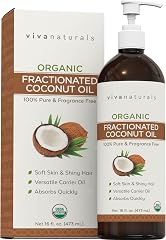
Verdict: For DIY skincare and essential-oil blending from a brand that also sells the cooking jar; not a kitchen oil.
Fractionated means the oil stays liquid at room temperature with no added scent. Type: fractionated, liquid. Organic status: USDA organic certified, hexane-free and non-GMO are stated. Size: 16 fl oz. Use: massage, carrier oil, hair and skin.
It is listed under carrier oils, not cooking oils, and the listing gives no cooking guidance, so keep it out of the pan. The trade-off is that you lose the coconut flavor and the solid texture bakers want. The listing pushes a few drops in shampoo, a leave-in routine, or a base for homemade lotions, aftershave and lip balm. For a bathroom shelf it is tidy and lightweight. For the kitchen, buy a virgin jar instead. At 16 fl oz it is also a small container compared with the cooking jars, so heavy DIY batches will run through it fast.
From the owner reports
Buyer feedback for this bottle is too thin to show a clear praise or complaint pattern, so the verdict rests on the stated claims.
Who it’s for: DIY lotion, serum and essential-oil blending Skip it if: You want an oil to eat or bake with. Use case: liquid carrier oil for DIY beauty
Yoken Fractionated 16 oz: single-ingredient skin oil

Verdict: For a lightweight, unscented body oil after the shower, with a one-ingredient label; skip it for cooking.
Checklist. Use: body oil, massage, makeup removal, essential-oil dilution. Type: fractionated, liquid, odorless and colorless. Organic status: USDA Organic stated, and the only active ingredient listed is organic coconut oil. Size: 16 fl oz.
The listing says it suits dry, normal and sensitive skin, but that is a brand claim, so patch-test it first. It also mentions soap making. The brand lists cruelty-free and paraben-free claims and third-party testing, but does not name the lab or the standard. The catch is that this is a skincare product with no food guidance on the listing, and the ordinary-looking name can fool you into buying it for the pantry. Treat it as a bathroom oil. Its strength is the short ingredient line, which is easy to check against your own sensitivities.
From the owner reports
Buyer feedback for this bottle is too thin to show a clear praise or complaint pattern, so the verdict rests on the stated label.
Who it’s for: Daily body oil and soap-making Skip it if: The third-party testing claim needs a named lab for you. Use case: after-shower body oil and soap making
PURA D'OR Fractionated 16 oz: massage-first oil

Verdict: For massage and aromatherapy blending where a glide-friendly, non-greasy oil matters more than anything edible.
Checklist. Type: fractionated MCT-style carrier that stays liquid at room temperature. Organic status: USDA Certified Organic stated, and hexane-free. Size: 16 oz. Use: massage, bath, hair, beard and cuticle care.
It is filed under bath oils, and the claims run long: wrinkles, eczema, redness and scars all appear on the spec sheet. Those are marketing claims, and the listing gives no evidence for them, so treat them with caution and ask a clinician about skin conditions. The practical downside is that it is the least food-adjacent pick here, with no culinary guidance at all. It earns the last slot for the kitchen shopper, not for the massage therapist. The listing describes a silky, fast-absorbing, non-greasy finish, which is the reason to pick it for bodywork.
From the owner reports
Buyer feedback for this bottle is too thin to show a clear praise or complaint pattern, so the verdict rests on the stated claims.
Who it’s for: Massage and aromatherapy blending Skip it if: You want proof behind the skin-condition claims. Use case: massage and essential-oil blending
Check the organic label first
What the certifier covers
The USDA National Organic Program sets the rules behind the USDA Organic seal. The Non-GMO Project runs a separate verification. Neither one is a halal mark. Below is the status each listing states.
- Viva Naturals 54 fl oz: USDA Organic and Non-GMO Project Verified, stated.
- Garden of Life: USDA Certified Organic and Non-GMO Project Verified, stated.
- NaturaleBio: USDA organic, stated.
- Viva Naturals Fractionated, Yoken, PURA D’OR: USDA organic, stated.
- Nature’s Way: organic in the title; the USDA seal is not stated.
No listing states halal certification. A statement on a listing is a claim, so check the jar for the seal and a certifier code.
Define the four criteria
Type
Virgin coconut oil is solid below about 73 to 76°F and tastes of coconut. Fractionated oil stays liquid and has no scent. For food, you need virgin. Anything else is for skin.
Organic status
A named certifier is enough. Look for USDA Organic stated outright, not just the word organic in a title.
Size
Match the jar to your use. A 16 fl oz bottle is a body-care size. 32 fl oz suits monthly baking. 54 fl oz suits weekly cooking.
Use
Check what the listing recommends. Cooking and baking guidance means food use. Massage, carrier or bath wording means a bathroom product.
Run this checklist before you order
- Virgin, not fractionated, for food: fractionated listings give no cooking guidance.
- USDA Organic stated: the title word organic alone names no certifier.
- Smoke point near 350°F: fine for sautéing and baking, weak for searing.
- Jar size you can finish: it melts above roughly 73 to 76°F, so slow use risks mess.
- Container type: Garden of Life ships in a plastic jar; the others list a bottle or give no detail.
- Halal mark if you need one: none of these listings state it.
What didn't make the list
- Handcraft Blends Organic Fractionated Coconut Oil, 8 fl oz: Smallest size here, and the listing gives conflicting origin details (imported from Indonesia/Malaysia, labeled India) while saying USDA Certified without naming the seal.
Deciding between them
Should I buy the 54 fl oz jar or a 32 oz one?
Buy 54 fl oz (Viva Naturals) if you cook or bake with coconut oil weekly, since the larger jar is the biggest here. Choose a 32 oz jar such as NaturaleBio or Nature’s Way if you use it a few times a month. Coconut oil is solid below roughly 73 to 76°F, so a big jar is only a saving if you finish it.
Is fractionated coconut oil worth buying over virgin?
Only for skin, massage or blending. Viva Naturals, Yoken and PURA D’OR fractionated oils stay liquid and carry no scent, and none of their listings give cooking guidance. For food, pick a virgin jar from the first four picks. Buying fractionated for the pantry is the main mistake in this category.
Does a USDA Organic label matter for coconut oil?
It matters if you want a named certifier. The USDA National Organic Program sets the standard, and the listings for Viva Naturals, Garden of Life, NaturaleBio, Yoken and PURA D’OR state it. Nature’s Way names organic in the title but not the seal, so read that jar before you rely on it.
Is virgin coconut oil good for frying?
For medium heat, yes. The Viva Naturals listing gives a smoke point of 350°F, and Nature’s Way cites cooking up to 350 degrees. That covers sautéing and baking. For searing above that, use a refined oil with a higher smoke point, and expect a coconut taste from any unrefined jar.
Do any of these state halal certification?
None of the seven listings state halal certification. Coconut oil is a single plant ingredient, but if you need a certificate, look for a halal mark on the jar from a body you trust. Garden of Life states Kosher, which is a different certification and does not substitute for halal.
Buy this one
Viva Naturals 54 fl oz is the pick for a household that cooks or bakes with coconut oil weekly and wants USDA Organic stated. Garden of Life wins if the raw label matters more than jar size.
Skip the category entirely if you need a halal certificate on the label: none of these listings on muslimrestaurant.com’s shortlist state one, so look for a certified jar elsewhere.
What changed
- Published guide
Automated desk
Food & Pantry Desk
Food & Pantry Desk is an automated editorial section of muslimrestaurant.com, not a person. It covers Halal Pantry, Ingredients, Halal Snacks, Whole Spices, Sauces & Condiments, South Asian Spice Blends and 45 more categories. Its guides compare the specifications manufacturers publish on product listings; nothing is bought or handled, and the desk holds no professional credentials.