As an Amazon Associate we earn from qualifying purchases. Prices and availability are accurate as of the date shown and are subject to change.
Buying the wrong oats is surprisingly easy: picking a size you'll never finish, paying an organic premium you don't need, or grabbing quick oats when a recipe demands old-fashioned texture.
Those are the three mistakes shoppers make most often when searching for the best rolled oats. Getting the container size wrong means stale oats before the bag is half-empty — or constant reordering. Paying extra for organic certification matters if glyphosate residues concern you, but it adds cost that not every shopper needs to absorb. And confusing quick oats with old-fashioned rolled oats can ruin a batch of cookies or granola bars, because the two cut sizes absorb liquid differently and deliver different textures.
To help you avoid all three, we reviewed six products — from a compact 18 oz canister to a 50 lb food-service bag — weighing specs, verified owner feedback, and price-to-value ratios. Whether you’re fuelling weekday breakfasts, batch-baking for a crowd, or stocking a commercial kitchen, this guide has a pick for you. We’ve also put together a buying guide and FAQ at the end so you can shop with real confidence. You can find more pantry roundups at muslimrestaurant.com.
Key Takeaways
- Size mismatch is costly: An 18 oz canister suits a solo eater, but a family of four or a regular baker will get far better value from a 10 lb or 42 oz format.
- Old-fashioned and quick oats differ: Old-fashioned rolled oats keep their shape in baked goods and give a chewier bowl; quick oats cook faster but can turn mushy in cookies or granola.
- Organic adds cost but real assurances: USDA Organic and Non-GMO certifications matter if you want to avoid pesticide residues, but conventionally milled oats from reputable brands are also rigorously tested.
- Bulk only makes sense if turnover is high: A 50 lb bag is exceptional value per ounce, but oats can go rancid or pick up off-flavors if they sit unsealed for months — only buy bulk if you'll use it within a reasonable period.
- Soluble fiber is the real nutritional story: All whole-grain rolled oats deliver beta-glucan soluble fiber, which is linked to heart-health benefits — the brand matters less than ensuring you're buying whole grain, not refined.
Our Top Picks for Rolled Oats
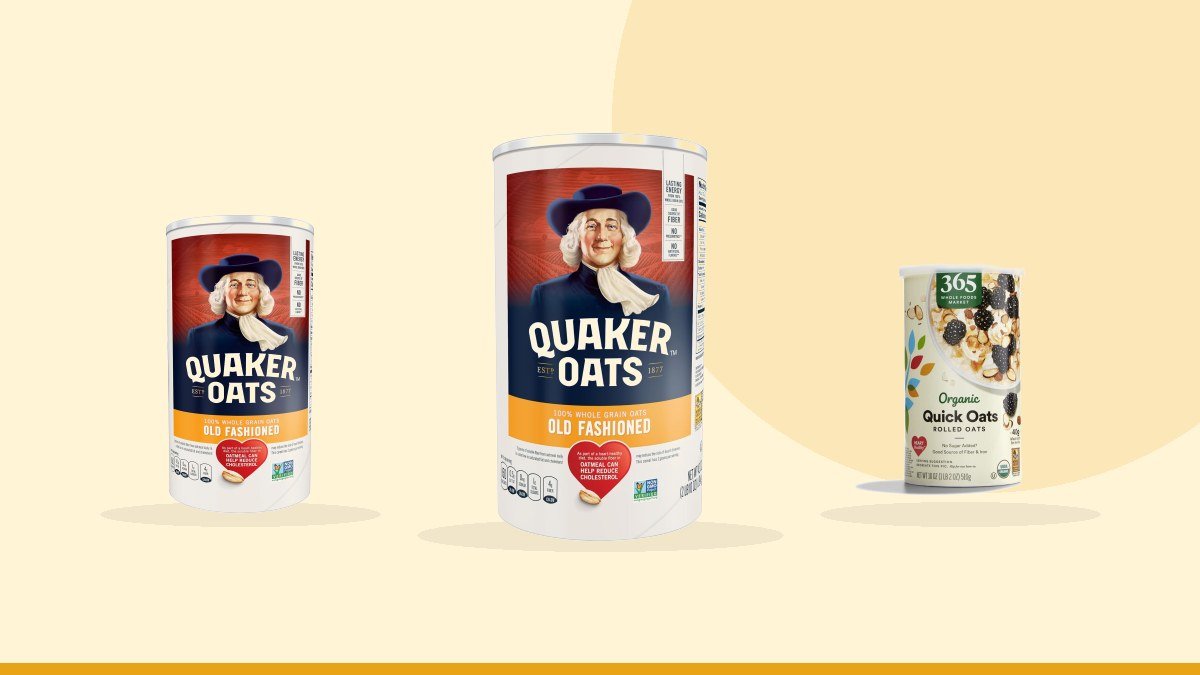
- Best Overall — Quaker Old Fashioned Oats 42 oz: The biggest owner satisfaction base, classic texture, and the best cost-per-serving in the canister category.
- Best Organic — 365 by Whole Foods Organic Quick Oats: Glyphosate-free, no added sugar, and a 1-minute cook time that owners consistently praise for busy mornings.
- Best Bulk Value — Kirkland Whole Grain Rolled Oats 10 lb: A resealable 10 lb bag at a warehouse-club price point, ideal for high-turnover households and batch bakers.


The Best Rolled Oats: Reviewed
1. Quaker Old Fashioned Oats — Best Large Canister
Verdict: The classic reference point for rolled oats: a well-loved 42 oz canister with a massive owner satisfaction record, reliable texture, and strong value for regular eaters.
Quaker’s 42 oz canister is the product most shoppers picture when they think of rolled oats, and the owner feedback across thousands of reviews backs that reputation up. The 150-calorie, 4g-fiber-per-serving profile is consistent with whole-grain old-fashioned rolled oats, and the absence of artificial preservatives keeps the ingredient list clean.
At this size, the cost-per-serving undercuts smaller canisters meaningfully. Owners mention using it for overnight oats, hot cereal, and baked goods — the versatility is a recurring theme. The creamy texture and heart-healthy positioning (soluble fiber from oatmeal may reduce the risk of heart disease when eaten as part of a diet low in saturated fat) are consistently praised.
The main honest caveat is cook time: some owners say it’s ready in minutes while others find it takes longer than expected, likely depending on whether they use a stovetop or microwave and how much water they add. This is old-fashioned rolled oats, not instant, so a little attention at the stove is warranted. The canister format is also not resealable, which means transferring to an airtight container is advisable for long-term freshness.
For anyone who eats oatmeal several times a week or bakes regularly, this is the smartest starting point in the category.
What Owners Say
Owners consistently praise the creamy texture, reliable flavor, and heart-healthy benefits — cholesterol improvement is a frequently mentioned positive. Versatility gets strong marks, with mentions of overnight oats, fruit bowls, and office breakfasts. Cook time generates mixed signals: most find it quick in the microwave, but a subset report it taking longer than expected, which seems linked to stovetop preparation or differing liquid ratios rather than a product defect.
Pros
- Enormous owner satisfaction base gives high confidence
- Versatile for hot cereal, overnight oats, and baking
- Good source of fiber (4g per serving), no artificial preservatives
- Strong cost-per-serving value at the 42 oz size
Cons
- Cook time feedback is mixed — stovetop requires more attention than microwave
- Canister is not resealable; transfer to airtight storage recommended
- No organic or Non-GMO certification
Best for: Everyday oatmeal eaters and regular bakers who want a trusted, cost-effective staple Not for: Shoppers specifically seeking organic or certified Non-GMO oats
| Calories | 150 |
|---|---|
| Whole Grains | ✔ |
| No Artificial Preservatives | ✔ |
| Wholesome Goodness | ✔ |
| Delicious Flavor | ✔ |
| Heart Healthy | ✔ |
2. Quaker Old Fashioned Oats 18 oz — Ideal Starter Size
Verdict: The same trusted Quaker formula in a smaller 18 oz canister — a smart pick for solo eaters, first-time buyers, or anyone who wants to keep stock fresh.
This is essentially the same product as the 42 oz canister — whole-grain old-fashioned rolled oats with 4g of fiber per serving, no artificial preservatives, and Quaker’s well-established quality control — in a format that suits smaller households or those who want to cycle through stock quickly.
With over 8,700 reviews and a 4.7 rating, owner confidence is exceptionally high. Feedback highlights easy microwave preparation (2–3 minutes is a commonly cited time), great flavor, and noted health benefits including cholesterol support. One recurring use case is the office breakfast: quick to prepare, portable, and satisfying.
The honest drawback at this size is straightforward: you pay more per serving than you would with the larger canister, and a common complaint among owners is that the package feels smaller than expected when it arrives. That’s not a quality issue — it’s a reminder that 18 oz of oats is a modest quantity for a committed oat eater. Still, for anyone who wants to try Quaker oats before committing to a bigger size, or who simply doesn’t use oats often enough to justify buying more, this is the right call.
What Owners Say
Owners describe the flavor as delicious and frequently note that cholesterol benefits were noticeable over time. Easy microwave prep — often cited as 2–3 minutes — is a strong positive pattern. A recurring complaint is that the size feels smaller than expected, which is a fair point at 18 oz; several owners recommend sizing up if oats are a daily habit.
Pros
- Massive verified owner base (8,700+ reviews) signals consistent quality
- Quick microwave prep praised repeatedly
- Heart-healthy soluble fiber profile
- Good for trialing the product before committing to a larger size
Cons
- Higher cost-per-serving than larger formats
- Package size feels smaller than expected — a common owner complaint
- No organic or Non-GMO certification
Best for: Solo eaters, office breakfasts, or first-time Quaker buyers Not for: Families or regular bakers who will go through oats quickly
| Calories | 150 |
|---|---|
| Whole Grains | ✔ |
| No Artificial Preservatives | ✔ |
| Wholesome Goodness | ✔ |
| Delicious Flavor | ✔ |
| Heart Healthy | ✔ |
3. 365 by Whole Foods Organic Quick Oats — Top Clean-Label Pick
Verdict: A glyphosate-free, no-sugar-added organic quick oat that cooks in 1 minute — the go-to for health-focused shoppers who want a fast, clean breakfast.
The 365 by Whole Foods Market range is built around strict ingredient standards — over 300 additives banned across the product line — and these organic quick oats reflect that philosophy. USDA Organic certification, no added sugars, and freedom from glyphosate are the headline credentials, and owner feedback confirms they deliver on taste too.
The 1-minute cook time is genuine quick-oat performance: owners regularly mention how easy it is to prepare in the microwave, and the creamy texture with a pleasant chew is a strong pattern across reviews. The product is vegan, low fat, and sodium free, making it one of the most nutritionally straightforward options in this roundup.
The 18 oz canister format is on the smaller side, and — like the Quaker 18 oz — the cost-per-serving is higher than bulk or larger-format alternatives. Quick oats also aren’t ideal for every baking application; if a recipe calls for old-fashioned rolled oats specifically, the finer cut of quick oats will change the texture of the finished dish. For daily hot cereal or blended smoothie bowls, though, this product is hard to beat at its price tier.
What Owners Say
Owners consistently praise the taste, the organic and glyphosate-free credentials, and the creamy texture. Easy microwave preparation is a repeated positive. The generous size relative to price is appreciated — with one owner noting that a little goes a long way. No significant negative patterns emerge in owner feedback, though the smaller canister format and quick-oat cut may not suit all baking uses.
Pros
- USDA Organic, glyphosate-free, and no added sugar
- 1-minute cook time praised by owners for busy mornings
- Creamy texture and good chew consistently noted
- Vegan, low fat, sodium free
Cons
- Higher cost-per-serving than non-organic alternatives
- Quick oat cut is not ideal for recipes requiring old-fashioned texture
- 18 oz canister runs out quickly for regular eaters
Best for: Health-focused buyers who want organic certification and a fast morning routine Not for: Shoppers who need old-fashioned rolled oats for baking, or who prioritise lowest price
| Brand Name | 365 by Whole Foods Market |
|---|---|
| Diet Type | Vegan |
| Flavor | Unflavored |
| Age Range Description | Adult |
| Item Form | Flaked |
| Specialty | Organic |
| Allergen Information | Wheat |
| Manufacturer | 365 by Whole Foods Market |
| UPC | 099482479725 |
| Container Type | Canister |
4. Kirkland Whole Grain Rolled Oats 10 lb — Warehouse-Club Value
Verdict: A resealable 10 lb bag of whole grain rolled oats at a warehouse-club price — the smartest pick for high-use households and frequent bakers who want solid value without committing to 50 lbs.
Kirkland Signature’s 10 lb rolled oats sit in the sweet spot between a modest canister and a commercial bulk bag. The Canadian-grown oats are packed in the USA and come in a resealable bag — a practical detail that the other canister products in this roundup largely lack, and one that matters for keeping a large quantity fresh over weeks of use.
With a 4.7 rating across 53 reviews, the early satisfaction signal is positive. Whole grain, egg-free, and unflavored — there are no hidden additives to navigate. The 10 lb format suits a household that goes through oats regularly: morning porridge, batch granola, overnight oats prep, or regular baking will work through this quantity at a comfortable pace.
The limitations are straightforward. Owner feedback volume is still relatively low compared to the Quaker options, so confidence built on reviews alone is more limited. There’s no organic certification, and nutritional spec detail in the listing is thin — shoppers looking for a confirmed fiber count per serving or calorie breakdown will need to check the physical label. That said, whole grain rolled oats are a well-understood commodity, and at this size and price tier, Kirkland delivers dependable value.
What Owners Say
Owner feedback is positive but limited in volume at this stage. The resealable bag format and whole-grain quality are noted positives. No strong negative patterns have emerged, though the smaller review count means less certainty about edge cases like consistency across production batches.
Pros
- Resealable bag keeps a large quantity fresh longer
- Strong cost-per-serving value for the 10 lb size
- Whole grain, unflavored, egg-free — clean label
- Product of Canada, packed in the USA
Cons
- No organic or Non-GMO certification
- Review count is still relatively low — less owner data than leading competitors
- Nutritional detail in the listing is sparse
Best for: Regular oat eaters and home bakers who want bulk savings with practical resealable packaging Not for: Shoppers who need organic certification or detailed nutritional transparency from the listing
| Brand Name | KIRKLAND |
|---|---|
| Flavor | Unflavored |
| Age Range Description | Adult |
| Item Form | Flaked |
| Specialty | Egg Free |
| Region of Origin | United States |
| Manufacturer | Kirkland Signature |
| UPC | 196633951977 |
| Container Type | Bag |
| Cuisine | American |
5. Nutricost Pantry Organic Rolled Oats 2 lb — Certified Clean Choice
Verdict: A USDA Organic, Non-GMO, NSF-certified 2 lb bag with strong quality credentials — best for shoppers who prioritise third-party manufacturing standards above all else.
Nutricost brings its supplement-brand discipline to pantry oats: this 2 lb bag carries USDA Organic, Non-GMO, and vegan certifications, and is manufactured in an NSF Certified, GMP Compliant, FDA Registered facility. That level of quality-assurance documentation is uncommon in the oats category and will appeal to shoppers who want to know exactly what they’re getting.
Owner feedback — though modest in volume at 128 reviews — is enthusiastic: great taste, a chewy texture, and good value for money are the consistent themes. At roughly 18 servings per container, the 2 lb size is a sensible trial or top-up size rather than a primary monthly supply.
The trade-off is straightforward: you pay a per-serving premium for the certifications and the smaller format. If you cook oats every day, the 2 lb bag will run out faster than most buyers expect, and reordering more frequently erodes the value proposition. It also carries a wheat allergen notice — relevant to anyone managing cross-contamination concerns despite the clean-label positioning. For health-focused buyers who want the tightest quality assurance in the roundup, this is a genuine option; for everyday cost-conscious shopping, larger formats offer more per dollar.
What Owners Say
Owners praise the taste and chewy texture specifically, and several describe the product as good value given its organic credentials. The feedback base is positive but still relatively small, so patterns are less established than for higher-review competitors. No significant negative themes appear in the available feedback.
Pros
- USDA Organic, Non-GMO, vegan certified
- NSF Certified and GMP Compliant manufacturing — uncommon in the category
- Owners consistently praise taste and chewy texture
- 5g fiber per serving
Cons
- Small 2 lb format runs out quickly for daily eaters
- Higher cost-per-serving than larger conventional alternatives
- Wheat allergen notice may concern cross-contamination-sensitive shoppers
- Smaller review base limits confidence versus category leaders
Best for: Health-focused buyers who want maximum quality certification and are happy to reorder a smaller format Not for: Cost-conscious shoppers or high-volume users who need a large bag
| Brand Name | Nutricost |
|---|---|
| Diet Type | Vegan |
| Serving Range | 18 |
| Item Form | Rolled |
| Specialty | Organic |
| Coin Variety 1 | Oats |
| Allergen Information | Wheat |
| UPC | 810139574590 |
| Item Highlight | 5g Fiber Per Serving |
| Manufacturer | Nutricost |
6. Triplenet 50 lb Bulk Rolled Oats — Food-Service Grade
Verdict: A 50 lb bag of old-fashioned whole grain oat flakes built for restaurants, bakeries, and very high-volume home kitchens — extreme value per ounce, but only if the turnover justifies it.
Fifty pounds of rolled oats is a commitment. Triplenet’s bulk bag is aimed squarely at food service operations — restaurants, cafeterias, bakeries, and meal-prep businesses — and at the cost-per-ounce level it is likely the most economical option in this roundup by a wide margin. The whole-grain oat flakes deliver the classic chewy texture suitable for hot cereal, granola, cookies, muffins, oatmeal bars, and savory recipes.
The practical reality of a 50 lb bag in a home setting deserves honest mention. Without proper airtight storage containers, oats at this volume are vulnerable to moisture, pests, and off-flavors over time. Anyone buying this for home use should have a plan for storage before ordering. The product is dairy free, which is relevant for allergen-conscious food service environments.
With only 22 reviews, the owner feedback picture is limited, and no detailed customer sentiment patterns are available for this product. The 4.4 rating is respectable but the lowest in the roundup, and the listing notes an apple flavor in the specs — which appears to be a data anomaly rather than a flavored product, given the old-fashioned plain oat description. Buy this if your throughput is high enough to justify it; otherwise, the Kirkland 10 lb is a far more practical large-format choice.
What Owners Say
Owner feedback for this product is limited in volume, making it difficult to identify strong patterns. The available ratings suggest general satisfaction with the product’s quality and suitability for bulk cooking and baking, but the low review count means shoppers should treat this pick with more caution than the higher-reviewed options in the roundup.
Pros
- Best cost-per-ounce value in the roundup for high-volume use
- Suitable for hot cereal, baking, granola, and savory recipes
- Dairy free — useful for allergen-managed food service kitchens
- Classic chewy whole-grain texture
Cons
- Requires serious airtight storage planning at home — 50 lbs is a large commitment
- Very low review count (22) limits purchase confidence
- Not practical for typical household use
- No organic certification; listing contains a likely spec anomaly (apple flavor noted)
Best for: Restaurants, bakeries, cafeterias, and meal-prep businesses with high weekly oat turnover Not for: Home cooks without bulk storage infrastructure, or shoppers wanting organic or well-reviewed products
| Brand Name | Triplenet Pricing |
|---|---|
| Flavor | Apple |
| Age Range Description | Adult |
| Item Form | Flaked |
| Specialty | Dairy Free |
| Manufacturer | Triplenet Pricing |
| UPC | 840529621122 |
| Container Type | Bag |
| Cuisine | American cuisine |
| Model Number | Grain, 384097 |
How They Compare
The Quaker 42 oz canister edges out the competition on the combination of owner confidence volume and cost-per-serving, making it the default recommendation for most households. The 18 oz version of the same product suits smaller needs but costs more per serving — only choose it if you genuinely won’t use a larger format.
The 365 Whole Foods organic quick oats are the top pick for clean-label buyers who want fast prep, but the quick-oat cut is a real limitation for baking. If you want organic and old-fashioned texture, the Nutricost 2 lb is the alternative — with stronger manufacturing credentials than Whole Foods’ own label, though at a higher cost and smaller size.
Kirkland’s 10 lb resealable bag is the standout value for high-use homes, and the resealable format gives it a meaningful practical edge over the Quaker canisters at scale. The Triplenet 50 lb bag is genuinely only appropriate for food service or bulk buyers with proper storage; for home kitchens, 50 lbs of oats is more burden than benefit.
What to Look for in Rolled Oats
Cut Type: Old Fashioned vs. Quick Oats
The biggest functional difference in the category. Old-fashioned rolled oats hold their shape in baking and give a chewier bowl. Quick oats cook faster but can turn mushy in cookies or granola bars.
Look for: Old-fashioned rolled oats for baking and textured bowls; quick oats for fast morning prep or blended uses
Avoid: Using quick oats as a drop-in replacement for old-fashioned oats in baking recipes without adjusting liquid ratios
Container Size vs. Your Turnover Rate
Oats stored improperly or left too long go stale and can turn rancid. Matching the size you buy to how quickly you use oats is more important than chasing the lowest price per ounce.
Look for: Resealable packaging for larger formats; a size you'll realistically finish within a few months
Avoid: Buying 50 lb bulk bags for home use unless you have airtight storage and very high weekly consumption
Organic and Non-GMO Certification
USDA Organic certification means the oats were grown without synthetic pesticides, including glyphosate. Relevant to health-conscious shoppers, but it adds meaningful cost per serving.
Look for: USDA Organic seal and Non-GMO Project verified or equivalent; NSF certification adds manufacturing quality assurance
Avoid: Assuming 'natural' labelling is equivalent to certified organic — it has no regulatory definition
Allergen and Cross-Contamination Transparency
Oats are naturally gluten-free, but most facilities also handle wheat. If you're buying for someone with celiac disease or a wheat allergy, certified gluten-free oats from a dedicated facility are necessary.
Look for: A certified gluten-free label if cross-contamination is a concern; clear allergen statements on the packaging
Avoid: Assuming standard rolled oats — even organic ones — are safe for celiac sufferers without a certified gluten-free label
Value for Money at Scale
The cost-per-serving gap between an 18 oz canister and a 10 lb bag can be substantial. Run a quick per-ounce comparison before adding to your cart.
Look for: Larger resealable formats if you eat oats daily; warehouse-club or bulk options if you bake frequently
Avoid: Paying a small-format premium on a product you'll need to reorder every two weeks
Rolled Oats Buying Guide
Old Fashioned vs. Quick Oats: Which Do You Actually Need?
Every product in this roundup is a form of rolled oats, but the cut matters more than most shoppers realise. Old-fashioned rolled oats are steamed and rolled into thick flakes. They hold their shape during cooking and baking, giving you a chewy texture in a bowl and structural integrity in cookies, granola bars, and crumbles. Quick oats are rolled thinner and cut smaller, so they hydrate faster — often in 60–90 seconds in the microwave — but they turn softer and sometimes mushy in baked goods.
If your primary use is a hot breakfast bowl or overnight oats, either cut works well. If you bake regularly, old-fashioned rolled oats are the right default. The 365 Whole Foods product in this roundup is a quick oat; all others are old-fashioned or described as whole-grain flake equivalents.
How to Match Container Size to Your Habits
This is the decision most shoppers get wrong. An 18 oz canister holds roughly 9–10 servings. A daily oat eater will run through that in under two weeks. The 42 oz canister lasts roughly a month for a solo eater or two weeks for a couple. The 10 lb Kirkland bag will last a single person several months — and its resealable design keeps the oats fresh throughout. The 50 lb bulk bag requires airtight food-grade containers and regular high-volume use to be sensible.
A practical rule: if you eat oats more than four times a week, skip the small canister and go straight to the 42 oz or 10 lb format. You’ll spend less per serving and reorder less often.
Understanding Organic Certification on the best rolled oats Labels
USDA Organic means the oats were grown without synthetic pesticides, herbicides (including glyphosate), or synthetic fertilisers. Non-GMO certification addresses genetic modification separately — a product can be Non-GMO without being organic. For most healthy adults, conventional oats from reputable brands present no documented risk, but if pesticide residues are a concern for you or your family, the Nutricost or 365 Whole Foods organic options are the right picks.
NSF Certification — which Nutricost carries — goes a step further by verifying manufacturing conditions independently. This is more common in the supplement world than in food, and it signals a higher standard of quality control than most pantry-food brands provide.
Storing Oats to Preserve Freshness
All rolled oats contain natural oils that can go rancid over time, particularly once a package is opened. A few straightforward rules help: transfer any non-resealable package to an airtight container after opening, store away from heat and direct light, and keep moisture out. Most rolled oats have a shelf life of 12–24 months unopened; once open, aim to use them within 6 months for best flavour. For the 50 lb bulk bag especially, having food-safe storage buckets ready before the order arrives is not optional.
Nutritional Basics: What All Whole-Grain Rolled Oats Share
Regardless of brand, whole-grain rolled oats deliver a similar nutritional profile: roughly 150 calories per half-cup dry serving, 4–5g of dietary fiber (including beta-glucan soluble fiber), and a moderate protein content. The FDA allows a heart-health claim for products providing at least 3g of soluble fiber from oatmeal daily in a diet low in saturated fat and cholesterol. Every whole-grain product in this roundup qualifies for that claim. Flavored, instant, or pre-sweetened oat products are a separate category and were not considered here.
How We Picked
Each product was evaluated by analysing the listed specs, features, and certifications alongside patterns identified in verified owner feedback. Where a product had high review counts (1,000+), owner sentiment data carries significant weight in the final score. Products with fewer than 100 reviews were scored more conservatively, with greater emphasis on spec quality and price-to-feature value rather than feedback patterns alone.
Ranking prioritised three factors in order: overall owner satisfaction and volume of verified feedback, the practical cost-per-serving value for the target buyer, and the relevance of certifications or format features to specific use cases. No physical testing was conducted; all conclusions are drawn from the supplied product data and documented owner feedback.
Frequently Asked Questions
What is the difference between rolled oats and instant oats?
Rolled oats (old-fashioned oats) are whole oat groats that are steamed and pressed into thick flakes. They take 5 minutes on the stovetop or 2–3 minutes in the microwave. Instant oats are pre-cooked, dried, and rolled much thinner, so they need only hot water and a minute or less. The trade-off is texture: instant oats are softer and less suitable for baking, while rolled oats hold their shape better in recipes and bowls.
Are rolled oats gluten-free?
Oats are naturally gluten-free, but most facilities also process wheat, barley, or rye, creating cross-contamination risk. None of the products in this roundup carry a certified gluten-free label. If you have celiac disease or a medically diagnosed gluten sensitivity, you need oats that are specifically certified gluten-free from a dedicated facility — standard rolled oats, including organic ones, are not safe for that purpose without that certification.
How should I store a large bag of rolled oats once opened?
Transfer opened oats to an airtight container — glass, BPA-free plastic, or food-grade storage buckets for large quantities — and keep them in a cool, dry place away from direct sunlight. Rolled oats contain natural fats that oxidise and go rancid when exposed to air, heat, or moisture. Properly stored, open oats are best used within six months. The Kirkland 10 lb resealable bag has a practical edge here over non-resealable canisters.
Can I use quick oats and old-fashioned oats interchangeably in baking?
Not without adjustment. Quick oats absorb liquid faster and have a finer texture, so using them in a recipe written for old-fashioned oats will typically produce a denser, softer result. Cookies may spread less; granola bars may bind differently. Old-fashioned rolled oats are the safer default for baking. If you only have quick oats on hand, reduce the liquid slightly and watch cook times, but expect a texture difference in the finished product.
Is buying bulk rolled oats worth it for home use?
It depends on your weekly turnover. A 50 lb bag offers the best cost-per-ounce in this roundup, but it requires airtight bulk storage containers and consistent high-volume use to stay fresh. For most home cooks, a 10 lb resealable bag — like the Kirkland option — hits the value sweet spot without the storage burden. Reserve 50 lb bags for food service, large families with weekly batch-cooking habits, or home bakers running a cottage business.
Final Thoughts
The best rolled oats for most shoppers in 2026 is the Quaker 42 oz canister: it balances trusted quality, wide versatility, and excellent cost-per-serving with the largest verified owner satisfaction base in the category. If organic credentials matter to you, the 365 Whole Foods quick oats or Nutricost 2 lb are the honest alternatives. Match your format size to how often you actually eat oats, and you'll get far better value from whatever you choose.
- Match container size to your weekly usage before comparing prices — paying per-ounce for a bag you'll never finish is a false economy.
- Choose old-fashioned rolled oats as your default; only switch to quick oats if speed is your single priority and baking is not.
- Organic certification is worth the premium if pesticide residues concern you, but whole-grain conventional oats from reputable brands are a dependable, honest choice.
Picking the best rolled oats is less about brand loyalty and more about matching format, cut type, and certification level to how you actually cook. For most people, the Quaker 42 oz canister is the right answer: well-tested by thousands of owners, versatile, and great value at scale. Step up to organic if it matters to your household, and consider the Kirkland 10 lb resealable bag if you cook or bake with oats several times a week. Get those three decisions right, and your oats will work hard in your kitchen every morning.