As an Amazon Associate we earn from qualifying purchases. Prices and availability are accurate as of the date shown and are subject to change.
Three mistakes buyers make with a pressure cooker like this: buying the wrong size, ignoring safety valve quality, and expecting a whisper-quiet kitchen. All three matter more than most shoppers realise.
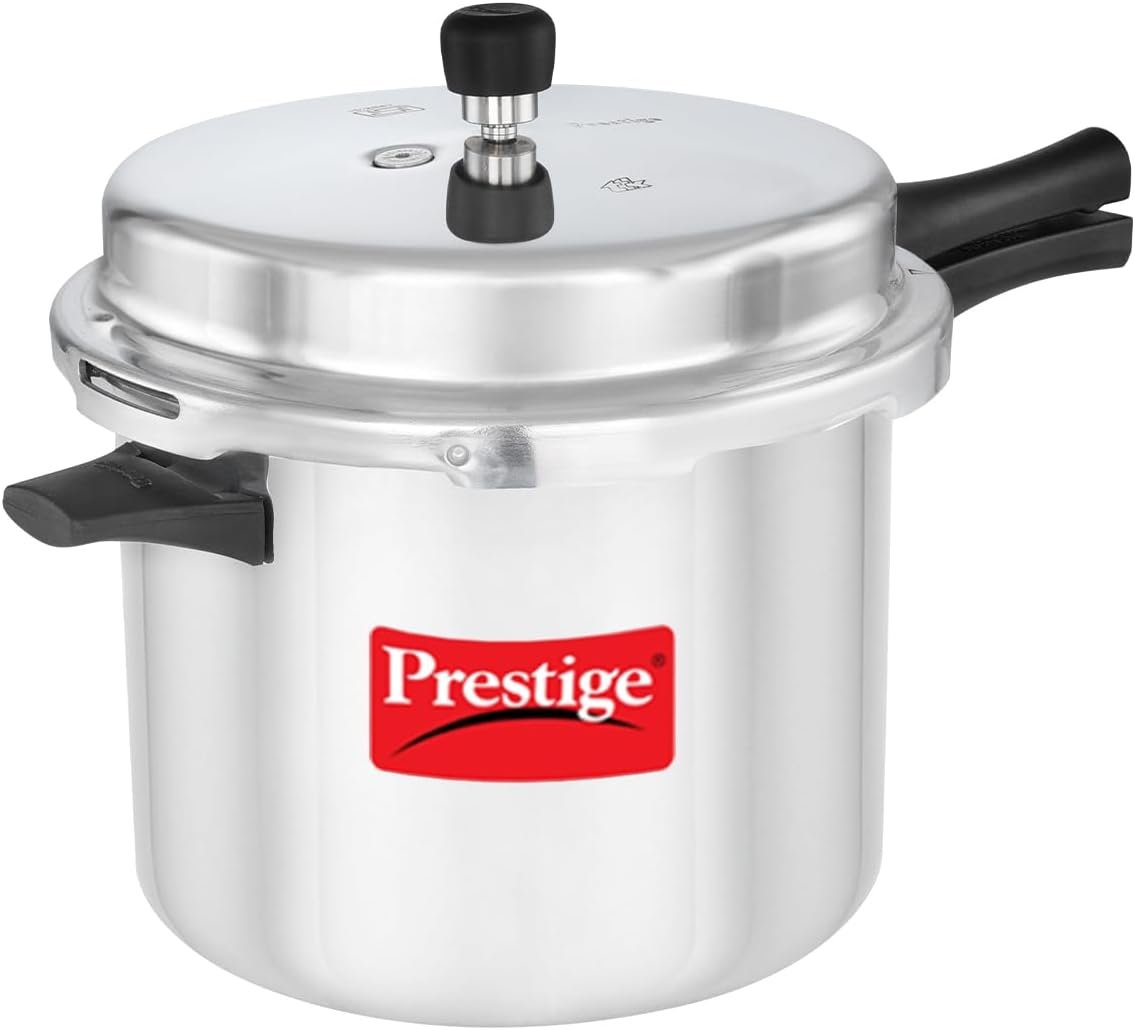
This Prestige Popular Pressure Cooker review takes an honest, numbers-first look at one of the most widely purchased aluminium pressure cookers in the market. With over 21,000 ratings and a 4.0-star average, the data pool here is large enough to spot real patterns — not just outliers. The 10-litre model (PPAPC10) weighs 5.2 pounds and measures 10″ D × 14″ W × 10″ H, making it a genuinely spacious pot for a South Asian household cooking biryani, dal makhani, or a full pot of nihari.
Prestige builds the Popular line from virgin aluminium with reinforced lugs and a thick base. Safety credentials include a GRS (Gasket Release System) and an MSP (Metallic Safety Plug), plus ISI certification. On paper, that is a solid specification sheet. In practice, as you will see in the owner feedback section, the story gets more complicated — particularly around the lid, the noise, and long-term durability. This review, published on muslimrestaurant.com, lays out every number and every recurring complaint so you can make a confident decision.
Key Takeaways
- 10 litres fits large family meals: At 10L you can comfortably cook enough biryani or haleem for six to eight people in a single batch — size complaints in owner reviews mostly relate to smaller variants in the same range.
- Cooking speed is the standout strength: 88% of speed-related owner mentions are positive; reviewers consistently report full meals ready in under 15 minutes, which directly cuts gas or electric energy use.
- Lid closure requires a break-in period: Only 10% of lid-related mentions are positive — this is the single most problematic aspect, and new owners should expect a stiff fit for the first several uses.
- Durability concerns are real and documented: Just 14% of durability mentions are positive; reported issues include peeling aluminium coating, safety valves blowing off, and cracked handles — worth factoring into long-term value calculations.
- Noise level is higher than typical: Only 10% of noise mentions are positive; several owners describe steam release that sounds far louder than a standard whistle — important if you cook in a small flat or late at night.
Prestige Popular 10L Aluminium Pressure Cooker — Large-Batch Workhorse

Verdict: A fast, spacious pressure cooker well-suited to South Asian and Middle Eastern home cooking, let down by a stiff lid and durability concerns that demand close attention.
The Prestige Popular 10-litre sits at the intersection of capacity and speed that South Asian home cooks often need. At 10 litres, you are looking at enough room for a full pot of chicken biryani, a large batch of lentil dal, or a generous serve of slow-cooked mutton for a weekend gathering. The aluminium body keeps total weight at 5.2 pounds — manageable even when full — and the thick base distributes heat evenly, which matters when you are building a biryani dum or slow-simmering a korma.
Cooking speed is the clear headline. Owner data shows 88% positive sentiment on this aspect, with multiple buyers noting meals ready in under 15 minutes. Beans, pulses, and root vegetables — staples of halal home cooking — respond especially well to pressure cooking, and this pot handles them quickly. The ISI certification and dual safety systems (GRS + MSP) add a credible layer of confidence on paper.
The friction starts at the lid. With only 10% positive sentiment on lid closure, a stiff fit is not an edge case — it is a consistent pattern. Several owners note it eases after a break-in period, but others report being unable to close it at all out of the box. Pair that with the noise complaints (also 10% positive) and a durability score of just 14% positive, and this cooker demands more careful monitoring than its ISI badge implies.
For someone cooking dal makhani or chole three nights a week, the speed and capacity advantages are real and measurable. For daily high-frequency use over multiple years, the durability data suggests you should inspect the valve and coating regularly and budget for part replacements.
What Owners Say
Owners overwhelmingly praise the cooking speed — 88% of speed mentions are positive, with many noting beans, rice, and vegetables ready in well under 15 minutes. Cooking performance scores a perfect 100% positive, with buyers specifically calling out one-pot meals like rice-dal combos and family-sized portions. Reliability and size are more divisive, sitting at 67% and 55% positive respectively; the 10L model avoids the ‘too small’ criticism aimed at smaller variants. The durability picture is the most concerning: only 14% of durability mentions are positive, with recurring reports of peeling aluminium coating, safety valves blowing off after limited use, and cracked handles. Lid closure is equally problematic at 10% positive, with several buyers unable to close the lid at all. Noise draws the same 10% positive rate, with owners describing steam release more like a burst than a whistle.
Pros
- Rapid heat-up and cook times under 15 minutes (88% positive owner sentiment)
- 100% positive cooking performance score — consistent results for rice, dal, vegetables
- 10-litre capacity handles large South Asian family meals in one batch
- ISI certified with dual safety systems (GRS and MSP) for added peace of mind
- 5.2-pound aluminium body is lighter than comparable stainless steel pots
Cons
- Lid closure is extremely stiff — only 10% positive owner sentiment, some cannot close it at all
- Durability is a significant concern — 14% positive, with reports of peeling coating and valves blowing off
- Steam release is loud and abrupt rather than a standard whistle (10% positive on noise)
- Value for money is only 50% positive — roughly half of buyers feel the quality does not justify the cost
Best for: Families cooking South Asian or Middle Eastern dishes like biryani, dal, chole, or nihari who prioritise cooking speed and large capacity over long-term durability. Not for: Daily heavy users expecting multi-year reliability without maintenance, or anyone in a noise-sensitive environment such as a shared flat.
| Brand | Prestige |
|---|---|
| Capacity | 10 liters |
| Material | Aluminum |
| Color | Silver |
| Finish Type | Aluminium |
| Product Dimensions | 10"D x 14"W x 10"H |
| Special Feature | Gas Stovetop Compatible |
| Wattage | 1000 watts |
| Item Weight | 5.2 pounds |
| Control Method | Touch |
What to Look for in a Prestige Popular Pressure Cooker Review
Capacity vs. Household Size
Pressure cooker capacity should match your typical batch size. Too small and you end up cooking in multiple rounds; too large and heat distribution suffers.
Look for: A 10L cooker suits 5–8 people; if you regularly cook full pots of biryani or haleem, this is the minimum you should consider.
Avoid: Buying a 2L or 3L for a family of five — owner feedback consistently flags this as a disappointment.
Safety Valve Quality
The pressure regulator and safety valve are the most safety-critical components. Failure here is not just an inconvenience — it is a hazard.
Look for: ISI certification and named safety systems like GRS and MSP. Inspect the valve before first use and after every few cooking sessions.
Avoid: Ignoring early signs of valve stiffness or irregular whistling — owner reports show this can escalate to the valve blowing off under pressure.
Lid Mechanism
A lid that is hard to seal wastes time before every cook and introduces frustration, especially mid-recipe when your onions are already browning.
Look for: A lid that seats firmly but turns with moderate effort. Some stiffness on a brand-new unit is normal and typically eases after a few uses.
Avoid: Continuing to force a lid that will not seat at all — this suggests a manufacturing defect and the unit should be returned.
Aluminium Coating Integrity
Peeling or flaking interior coating is a food-safety concern, not just a cosmetic one. With aluminium cookers, the finish of the interior surface matters.
Look for: A smooth, even interior with no visible marks or chips out of the box. Virgin aluminium without additional coating is safer than a poorly applied finish that flakes.
Avoid: Units that show surface irregularities on arrival — owner reports of peeling coating appearing after just two uses suggest the issue can be present from the start.
Noise Output
A standard pressure cooker whistle is a controlled sound. An irregular steam burst is not — it signals the pressure regulator is not cycling correctly.
Look for: A consistent, rhythmic whistle that you can count. This confirms the regulator is working as designed.
Avoid: A pot that skips the whistle phase and releases pressure in a single loud burst — this is a sign the regulator is too tight or misaligned.
Prestige Popular Pressure Cooker Review Buying Guide
Choosing the Right Size for South Asian and Middle Eastern Cooking
Capacity is the first number to get right. A pot of chicken biryani for a family of six needs room not just for the rice and meat, but for the steam that does the cooking — pressure cookers should never be filled more than two-thirds full. At 10 litres, the Prestige Popular gives you a working capacity of roughly 6.5 litres, which comfortably handles a family biryani, a pot of nihari, or a full batch of chana dal. If you regularly host larger gatherings — think Eid meals or weekend daawats — 10L is the sensible floor, not a luxury.
Owners of the smaller Prestige Popular variants consistently flag that the compact sizes feel too restrictive for anything beyond a two-person meal. The 10L avoids this complaint almost entirely in the owner data, which is worth noting when you compare price tiers across the range.
Understanding the Safety Systems: GRS and MSP Explained
The Prestige Popular includes two safety mechanisms. The GRS (Gasket Release System) is designed to release steam through the gasket groove if pressure builds beyond a safe threshold — a secondary failsafe if the main valve sticks. The MSP (Metallic Safety Plug) is a melt-away plug that activates only under extreme conditions, acting as a last line of defence.
These are well-conceived systems on paper, and the ISI certification confirms they meet a recognised standard. The practical concern flagged by owners is that the primary pressure regulator valve can become too tight or misaligned, which pushes load onto these secondary systems earlier than intended. Check the valve moves freely before every use. If your cooker is releasing pressure in a single loud burst rather than a rhythmic whistle, the regulator is not cycling correctly and needs attention before the next cook.
Aluminium vs. Stainless Steel: What the Numbers Tell You
Aluminium conducts heat roughly 14 times faster than stainless steel by thermal conductivity figures, which directly explains the fast heat-up times that 88% of owners praise. For stovetop cooking of beans, lentils, and root vegetables — all daily staples in halal South Asian kitchens — this thermal efficiency translates into real energy savings over hundreds of cooking sessions.
The trade-off is surface durability. Owner reports of the interior coating peeling after just two uses are a genuine concern. Virgin aluminium without a flaking overlay is not inherently dangerous, but a poorly applied finish that mixes into food is. Inspect the interior surface on arrival and after the first few uses. If you see visible flaking, treat that as a return-worthy defect.
Pressure Cooking for Specific Halal Dishes: Practical Numbers
Pressure cooking cuts conventional cook times dramatically for the dishes most relevant to halal home kitchens. Dried chickpeas that would need 60–90 minutes of simmering cook through in a fraction of the time under pressure. Whole spices used in biryani — cardamom, cloves, bay leaves — infuse more intensely when sealed under pressure. Tougher cuts of halal meat used in nihari or karahi benefit from the high-pressure steam, which breaks down collagen efficiently without requiring hours on the stove.
The 10L size also makes it practical for cooking components simultaneously — rice and dal in a separator insert, for example — which is a genuine time-saver on a weeknight. The consistent one-pot performance that 100% of cooking-performance reviewers praise reflects this versatility.
Lid Break-In and Long-Term Maintenance
A stiff lid on a brand-new pressure cooker is not unusual — rubber gaskets and fresh aluminium surfaces need several cycles to seat properly. What the owner data shows, however, is that for this model the stiffness is more pronounced than average, and a small number of buyers are unable to close the lid at all. Before your first use, apply a thin layer of food-grade oil around the gasket ring. Run the cooker once with just water to allow the parts to work in together. If the lid still will not seat after three attempts, that is a defect, not a break-in issue.
Long-term, replace the gasket every 12–18 months if you cook under pressure several times a week. Gasket kits for Prestige cookers are widely available. Inspect the safety valve before each session. These two habits address the two most common failure points identified in the owner feedback data and significantly extend the useful life of the cooker.
How We Picked
This Prestige Popular Pressure Cooker review is based on a structured analysis of published product specifications, manufacturer feature claims, and a large owner feedback dataset drawn from over 21,000 ratings. Each aspect — cooking speed, performance, reliability, size, durability, lid closure, noise, and value — was assessed using the percentage of positive mentions among buyers who specifically commented on that attribute. Aspects with 80%+ positive sentiment were treated as genuine strengths; those below 30% were flagged as consistent weaknesses rather than isolated complaints.
Scoring accounts for how critical each weakness is in real-world use. A stiff lid and a failing safety valve carry more weight in the final score than a noisy whistle, because they affect safety and usability directly. Price-band value judgements are relative to the 10L aluminium cooker category. No physical testing was conducted; all conclusions reflect documented owner experience and specification analysis.
Frequently Asked Questions
Is the Prestige Popular Pressure Cooker safe for everyday halal cooking?
The cooker carries ISI certification and includes both a GRS and MSP safety system, which are credible features. However, owner data shows only 14% positive durability sentiment, with reports of safety valves blowing off. Used correctly — never overfilling, checking the valve before each cook, and replacing the gasket annually — it can be used safely. Irregular steam bursts are a warning sign that should not be ignored.
How long does it take to cook biryani or dal in this pressure cooker?
Owner feedback consistently reports heat-up and cook times under 15 minutes for most contents. Lentils and soft vegetables typically cook even faster. For a full chicken biryani, you would still prepare the base separately, but the rice and meat pressure stage is substantially quicker than stovetop methods. The 88% positive cooking-speed sentiment across a large review pool makes this one of the more reliable claims attached to this product.
Why is the lid so hard to close on the Prestige Popular?
Only 10% of lid-related owner mentions are positive, so this is a widespread issue, not a one-off. New aluminium pressure cookers often have tight-fitting lids that ease after several uses. Applying food-grade oil to the gasket and running a water-only cycle first can help. If the lid is impossible to close from the start, that indicates a manufacturing alignment issue and the unit should be returned or exchanged.
Does the 10-litre size work for a family of five or six people?
Yes — owner feedback on the 10L specifically calls out suitability for five to six people, and several reviewers mention cooking for this group with no capacity issues. The rule of thumb is to fill no more than two-thirds of the pot, giving you a working volume of around 6.5 litres. That is enough for a generous pot of biryani, chana, or nihari for a mid-sized family in a single batch.
What is the difference between the GRS and MSP safety features?
The GRS (Gasket Release System) vents excess pressure through the gasket groove if the main valve fails to release — it acts as a secondary steam-relief path. The MSP (Metallic Safety Plug) is a melt-away plug that activates only under extreme heat or pressure, functioning as a last-resort failsafe. Both are passive systems that require no user action. They supplement, but do not replace, the need to keep the primary pressure regulator clean and correctly seated before each use.
Final Thoughts
The Prestige Popular 10L earns its place in a South Asian or Middle Eastern kitchen on the strength of its speed and capacity — two attributes that owner data backs up clearly. The durability and lid concerns are real, documented, and worth planning for rather than dismissing. Buy it for fast, large-batch cooking of biryani, dal, and stews; maintain the valve and gasket proactively; and treat any irregular steam behaviour as an immediate signal to inspect before cooking again.
- Speed and 10L capacity are genuine strengths backed by strong owner sentiment — ideal for biryani, dal, and large halal family meals.
- Durability (14% positive) and lid closure (10% positive) are the two weakest points and require active maintenance, not passive trust.
- For the price tier, value is split 50/50 in owner opinion — factor in gasket replacement costs and realistic lifespan when you do the maths.
This Prestige Popular Pressure Cooker review lands in a clear place: it is a fast, spacious, and affordable cooker that performs exactly as advertised for speed and cooking results, but asks more of the owner in terms of maintenance and vigilance than the price point might suggest. If you cook biryani, nihari, chole, or dal for a family of five or more and you respect the valve-check routine, this pot will serve you well. If you want a set-and-forget appliance with no durability worries, the owner data says to look elsewhere or budget for more frequent part replacement.